High indoor humidity makes your heat pump work harder, increasing energy consumption. It has to dehumidify the air while maintaining your desired temperature, which extends the compressor’s operation and uses more electricity. As moisture levels rise, efficiency drops, leading to higher utility bills. Keeping humidity between 30% and 50% can help your system run more smoothly. To discover how moisture management can save you energy and money, continue exploring these helpful tips.
Key Takeaways
- High humidity increases the heat pump’s workload due to added dehumidification, leading to higher energy consumption.
- Excess moisture causes longer compressor run times, elevating electricity use during humid conditions.
- Lower indoor humidity reduces dehumidification efforts, improving overall energy efficiency.
- Managing humidity levels between 30% and 50% can help optimize heat pump performance and reduce energy costs.
- Using supplemental dehumidifiers and proper maintenance minimizes humidity-related energy increases.
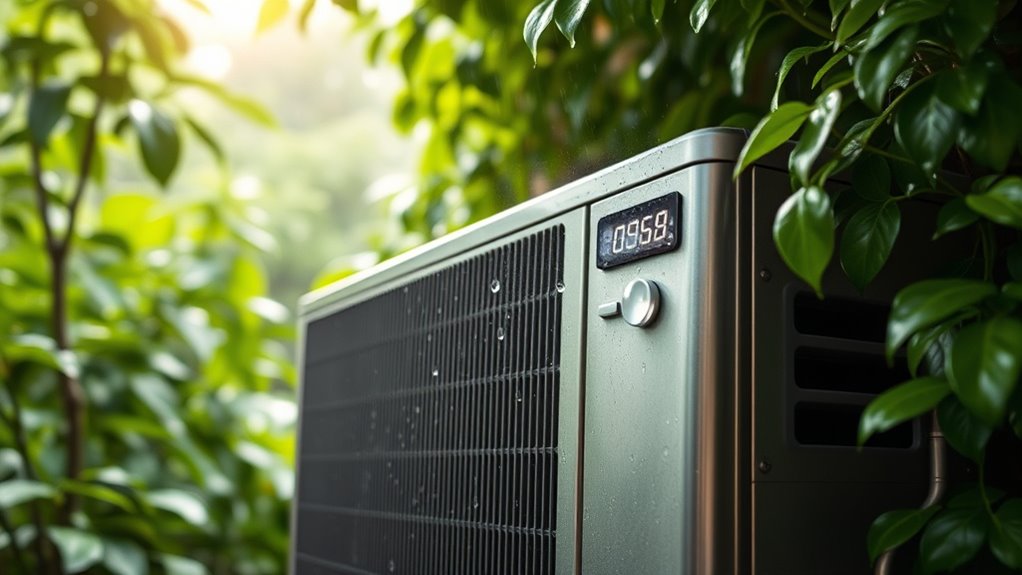
Humidity levels substantially influence how efficiently your heat pump uses energy. When the air is humid, your heat pump has to work harder to dehumidify the space, which can lead to increased energy consumption. Conversely, in dry conditions, the system can operate more effectively since it doesn’t need to remove excess moisture from the air. Understanding how humidity impacts your heat pump’s performance helps you optimize energy efficiency and reduce utility bills.
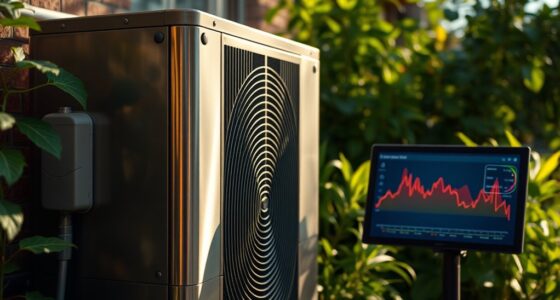
High humidity levels make it more challenging for your heat pump to maintain a comfortable indoor temperature. As the air becomes more saturated with moisture, your system expends additional energy to dehumidify the space while heating or cooling. This extra effort causes the compressor to run longer and more frequently, consuming more electricity. In humid environments, your heat pump’s energy efficiency drops because it is not only managing temperature but also fighting against excess moisture. This increased workload means higher energy bills, especially during muggy seasons.
High humidity hampers heat pump efficiency, increasing energy use to dehumidify and maintain comfort.
On the other hand, low humidity conditions generally support better energy efficiency. When the air is dry, your heat pump doesn’t need to allocate energy to remove moisture, allowing it to focus solely on temperature regulation. This reduces the strain on the system, enabling it to operate more effectively. During colder months when humidity naturally decreases, your heat pump can perform at its best, providing comfort without unnecessarily increasing energy use. Proper humidity levels, ideally between 30% and 50%, help make certain your system functions at its best, saving you money and prolonging the lifespan of your equipment.
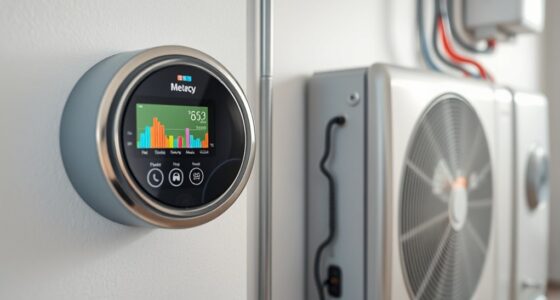
To improve energy efficiency in humid conditions, you might consider using a dehumidifier in conjunction with your heat pump. Keeping indoor humidity within recommended levels minimizes the workload on your system, allowing it to operate more effectively. Additionally, regular maintenance like cleaning filters and ensuring proper refrigerant levels can help your heat pump handle humidity fluctuations better. Installing a smart thermostat that adjusts settings based on humidity levels can also contribute to more efficient operation and lower energy costs. Being aware of humidity levels and their impact on your system helps you take proactive steps for better performance.
Ultimately, managing indoor humidity is vital for maximizing your heat pump’s energy efficiency. Recognizing how humidity levels affect your system allows you to take proactive steps, such as controlling moisture and maintaining optimal settings. Doing so not only keeps your home comfortable but also helps you save on energy bills, making your heat pump work smarter rather than harder. By paying attention to humidity, you make certain your system remains efficient, reliable, and cost-effective throughout the year.
Frequently Asked Questions
How Does Humidity Impact Heat Pump Defrost Cycles?
Humidity increases ice buildup on your heat pump’s outdoor coil, leading to more frequent defrost cycles. Higher moisture levels cause frost to form faster, so your system must defrost more often to maintain efficiency. This increased defrost frequency temporarily reduces heating output and energy efficiency. To minimize this, guarantee proper maintenance and consider installing a defrost control system, especially in humid climates, to reduce unnecessary defrost cycles and improve performance.
Can Low Humidity Improve Heat Pump Efficiency?
Low humidity effects can improve your heat pump’s efficiency. When the air is drier, your system doesn’t need to work as hard to extract moisture and heat, leading to less energy consumption. This results in energy savings and a more cost-effective operation. Keep in mind, though, extremely low humidity might cause discomfort, so maintaining a balanced level ensures peak performance and comfort.
What Role Does Humidity Play in Heat Pump Lifespan?
Humidity levels directly impact your heat pump’s lifespan. Proper humidifier maintenance guarantees your system doesn’t work harder to regulate moisture, preventing wear and tear. Implementing moisture control strategies helps avoid excess humidity that can cause corrosion or mold, while low humidity may lead to dried-out components. By maintaining balanced humidity, you reduce strain on your heat pump, extending its operational life and ensuring reliable, efficient performance over time.
Are There Specific Humidity Levels Optimal for Heat Pump Operation?
Did you know that maintaining humidity levels between 30-50% guarantees heat pump performance? Proper humidity control helps prevent excessive moisture, which can strain your system. Keeping moisture levels in this range ensures your heat pump operates efficiently and lasts longer. If humidity drops too low or rises too high, it can cause operational issues or damage, so monitoring and adjusting humidity control is key for maximum performance.
How Does Humidity Influence Indoor Air Quality With Heat Pumps?
You notice that higher humidity levels can worsen indoor air quality with your heat pump. Excess moisture promotes indoor mold growth and dust accumulation, which can trigger allergies and respiratory issues. To maintain healthy air, keep humidity levels balanced—around 40-50%. Proper ventilation and dehumidifiers help prevent mold and dust buildup, ensuring your indoor environment stays comfortable, safe, and free from potential health hazards caused by excessive humidity.
Conclusion
As humidity rises, it’s like trying to run a marathon through a thick fog—you’ll work harder, and your energy drain deepens. Understanding this relationship helps you navigate the weather’s whims, keeping your heat pump’s performance steady like a lighthouse against stormy seas. By managing humidity, you prevent your energy savings from slipping through your fingers like grains of sand. Embrace this knowledge, and let your heat pump shine brightly, guiding you safely through the fog.