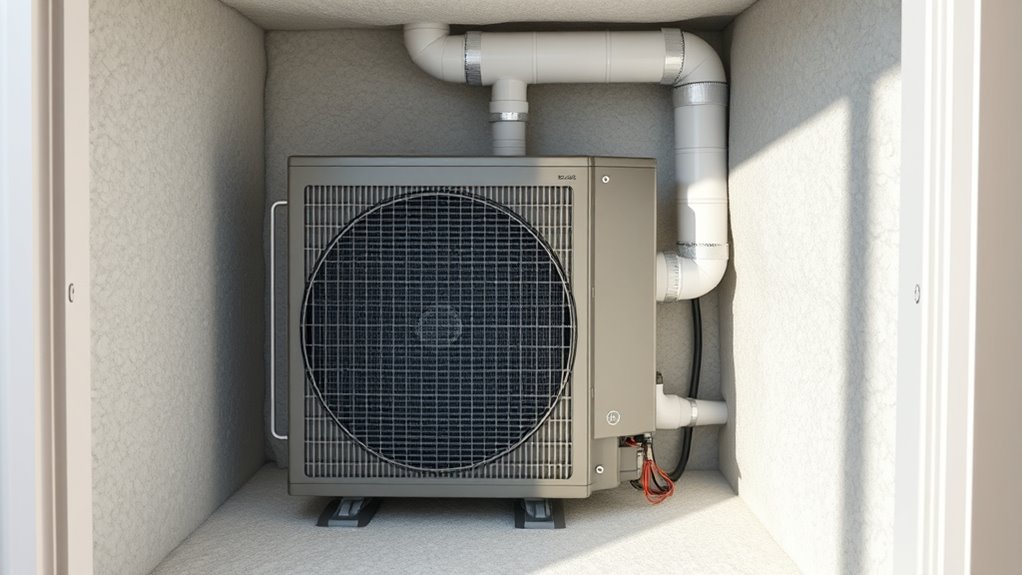

Proper insulation helps your heat pump work more efficiently by reducing heat transfer in and out of your home. When your home is well-insulated, your heat pump doesn’t have to run as often or as hard, saving energy and lowering utility bills. Good insulation also creates a stable indoor environment and prevents temperature fluctuations. For more tips on how insulation can further cut your energy costs, keep exploring how to optimize your home’s efficiency.

Get backup power and energy gear delivered free with Prime
- Fast, free delivery on millions of items
- Prime Video, Amazon Music and more included
- Member-only deals all year
Key Takeaways
- Proper insulation minimizes heat transfer, reducing the workload on heat pumps and decreasing energy consumption.
- High R-value insulation creates a better thermal barrier, maintaining indoor temperatures more efficiently.
- Sealing gaps and thermal bridging prevents heat loss or gain, enhancing heat pump performance.
- Insulating ducts and other areas limits energy loss during air transfer, optimizing overall system efficiency.
- A comprehensive insulation strategy stabilizes indoor temperatures, reducing the frequency and energy use of heat pump cycling.
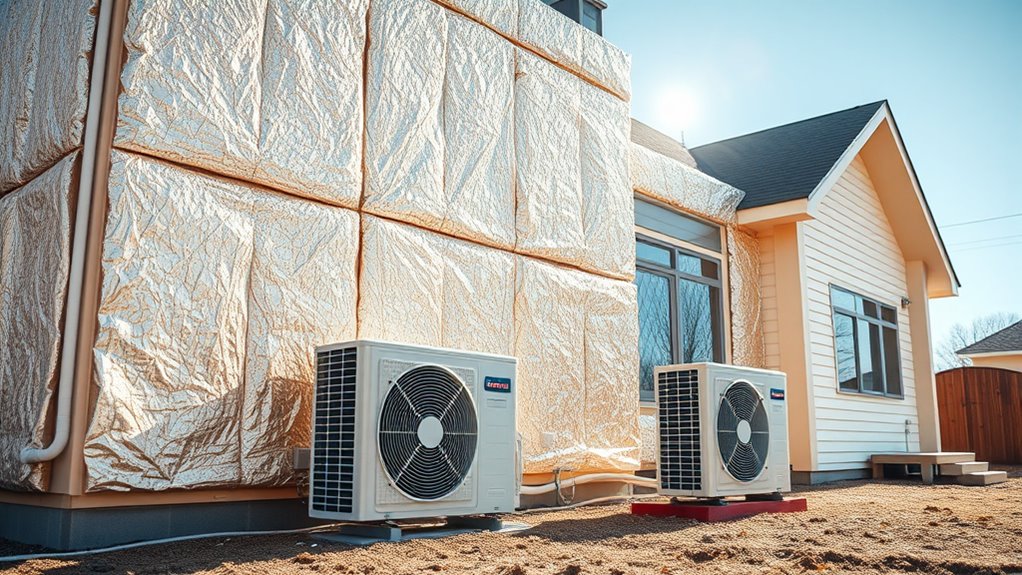
Proper insulation plays a vital role in reducing the energy needed for heat pumps to maintain comfortable indoor temperatures. When your home is well-insulated, it acts as a barrier that keeps warmth inside during winter and blocks heat from entering during summer. This means your heat pump doesn’t have to work as hard to keep your indoor environment stable, leading to lower energy consumption and cost savings. The key to effective insulation lies in choosing the right insulation materials, which determine the thermal resistance of your walls, attic, and floors. Thermal resistance, often measured as R-value, indicates how well a material resists heat flow. The higher the R-value, the better the material insulates and the less energy your heat pump needs to compensate for heat loss or gain.
You’ll want to select insulation materials that provide high thermal resistance while fitting your budget and installation requirements. For example, fiberglass batts, spray foam, and rigid foam boards are common options that offer varying levels of R-value. Proper installation is equally important; gaps, compression, or improper sealing can undermine the effectiveness of even the best materials. When insulation is correctly installed, it minimizes thermal bridging—areas where heat bypasses insulation through framing or other structural elements—further improving efficiency. This ensures the heat pump can operate at optimal levels, reducing the frequency and duration of its cycles. Additionally, incorporating proper ventilation can help maintain insulation effectiveness and prevent moisture buildup that could compromise thermal performance.
In addition to choosing the right materials, you should consider the overall insulation strategy for your home. Insulating walls, attic spaces, basements, and ductwork creates a comprehensive barrier against unwanted heat transfer. Duct insulation, in particular, can significantly improve heat pump performance by preventing energy losses as air travels through your system. It’s also important to evaluate your existing insulation’s condition; aging or damaged insulation can lose its thermal resistance, causing your heat pump to work harder. Upgrading or adding insulation in these areas can instantly boost energy efficiency, resulting in lower bills and a smaller carbon footprint.
Frequently Asked Questions
How Does Insulation Impact Heat Pump Efficiency in Extreme Climates?
In extreme climates, insulation boosts heat pump efficiency by increasing thermal resistance, which minimizes heat transfer. Proper insulation also controls moisture, preventing condensation that can reduce insulation effectiveness and cause damage. By maintaining a stable indoor temperature and preventing moisture buildup, your heat pump works less hard, saving energy and reducing costs. So, investing in high-quality insulation helps your system perform better, especially in harsh weather conditions.
What Types of Insulation Are Most Effective for Heat Pump Systems?
Choosing the right insulation material and installation techniques can markedly boost your heat pump’s efficiency. Rigid foam boards, spray foam, and mineral wool are top options, offering superior thermal resistance. Proper installation guarantees no gaps or compression, maximizing insulation effectiveness. You’re better off selecting high-quality insulation materials and paying close attention to installation details, as these choices help your heat pump run smoothly and save energy, especially in challenging climates.
Can Insulation Upgrades Significantly Reduce Heat Pump Energy Bills?
Yes, insulation upgrades can considerably reduce your heat pump energy bills by minimizing heat loss or gain. While insulation cost varies, investing in quality insulation is often worthwhile. Keep in mind, installation challenges may arise, especially in hard-to-reach areas or existing structures. Overcoming these challenges can lead to better energy efficiency, lower utility bills, and a more comfortable home. Proper insulation ensures your heat pump works more effectively year-round.
How Often Should Insulation Be Inspected or Replaced for Optimal Performance?
You should inspect your insulation at least every 3 to 5 years to guarantee it remains effective. Look for signs of damage, moisture, or compression that can reduce its insulating properties. Follow replacement guidelines from manufacturers or a professional’s advice, typically replacing insulation every 10 to 15 years or sooner if it’s deteriorated. Regular inspections help maintain peak performance and energy efficiency for your heat pump system.
Are There Specific Insulation Standards Recommended for Heat Pump Systems?
Did you know that properly installed insulation can cut heat pump energy use by up to 15%? For maximum performance, follow specific insulation standards like R-values suited to your climate and guarantee compatibility with your system. These standards help maximize efficiency, prevent energy loss, and prolong equipment life. Always verify that your insulation meets local building codes and manufacturer recommendations for the best results and system performance.
Conclusion
By improving your home’s insulation, you can cut your heat pump’s energy use markedly—up to 30%, according to recent studies. Better insulation keeps the warm or cool air inside, reducing the workload on your heat pump. This not only lowers your energy bills but also extends your system’s lifespan. So, investing in quality insulation isn’t just about comfort; it’s a smart move that saves you money and energy in the long run.
Fall Picks
fall essentials
As an affiliate, we earn on qualifying purchases.