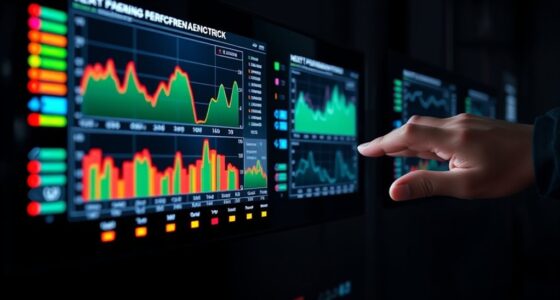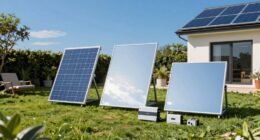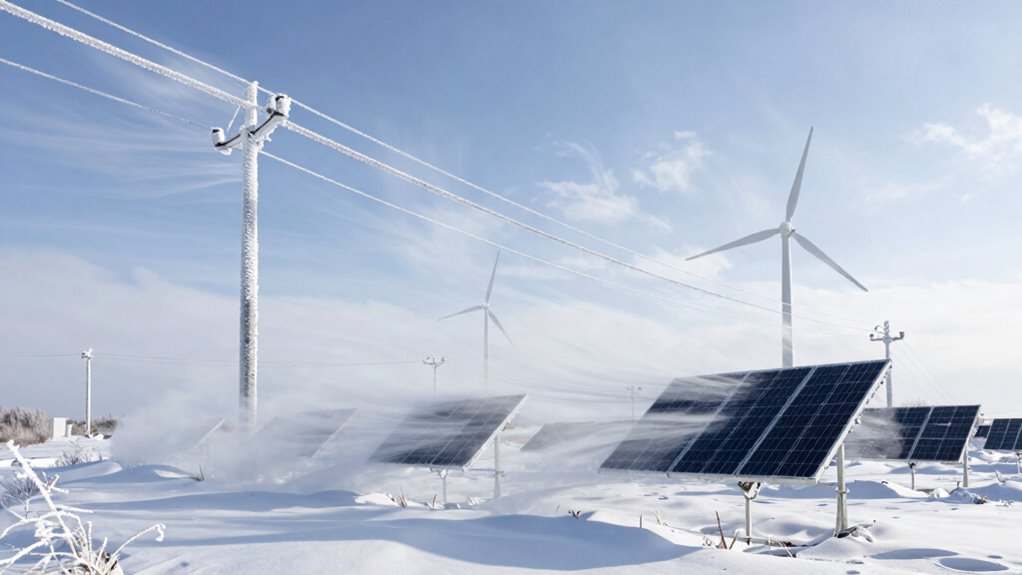

Snow, ice, and wind can distort your energy use data by blocking sensors or causing inaccurate readings. Heavy snow and ice may cover solar panels, lowering their efficiency, while icy conditions can shut down equipment. Wind storms cause rapid fluctuations in turbine output, making it hard to gauge actual energy production. These environmental factors also affect sensor calibration, leading you to misjudge your energy needs. Keep exploring to understand how these conditions impact renewable energy and your energy management.
Key Takeaways
- Snow and ice can block sensors, leading to inaccurate energy consumption readings.
- Wind storms cause rapid turbine output fluctuations, distorting renewable energy data.
- Snow cover on solar panels reduces sunlight absorption, underestimating solar energy generation.
- Cold weather increases heating demand, but measurement errors may obscure true energy consumption.
- Wind variability during storms complicates precise assessment of wind energy production.
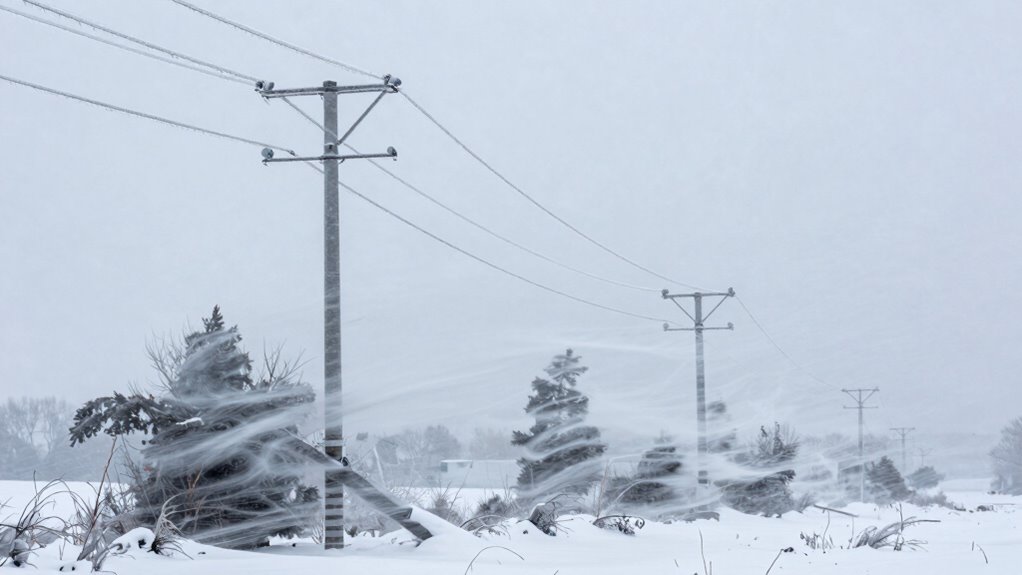
Snow, ice, and wind can considerably distort energy consumption measurements, making it harder to accurately assess how much power is truly being used. When these elements are active, they often cause fluctuations in energy readings that don’t accurately reflect actual usage. For example, heavy snowfall can block sensors or reduce the efficiency of renewable energy sources like solar panels, leading to underestimations of energy generation. Similarly, icy conditions can cause equipment to shut down or operate less efficiently, skewing data used to evaluate overall energy consumption. Wind, especially during storms, can cause rapid changes in wind turbine output, making it difficult to determine true energy use or production levels. Additionally, the variability in environmental conditions can challenge the calibration of measurement devices, further complicating accurate data collection. Sensor calibration plays a significant role in maintaining measurement accuracy under varying weather conditions, but these environmental factors often compromise calibration efforts. Moreover, consistent calibration is essential for developing reliable models that inform energy management strategies amidst unpredictable weather. A thorough understanding of these measurement challenges is vital for improving data accuracy and optimizing energy systems. These environmental factors influence renewable energy’s role in the grid. When snow and ice cover solar panels, their ability to convert sunlight diminishes, causing a dip in renewable energy supply. This sudden drop can distort the perception of how much renewable energy is available, complicating efforts to integrate more sustainable sources into the power mix. Wind turbines, meanwhile, are highly sensitive to wind speed changes. During gusts or lulls, their power output varies unpredictably, which can lead operators to misjudge actual energy production or consumption. As a result, grid managers might overcompensate by relying on fossil fuels, inadvertently increasing carbon emissions and amplifying the climate impact. Recognizing the importance of weather variability helps in designing more resilient energy systems that can adapt to environmental fluctuations. Furthermore, these weather conditions can interfere with energy monitoring systems themselves. Snow and ice can obscure sensors or cause false readings, leading to inaccurate data collection. When data is unreliable, it becomes harder to develop precise models for predicting energy needs or optimizing renewable energy deployment. This disruption hampers efforts to reduce reliance on fossil fuels and fight climate change, as policymakers and energy producers depend heavily on accurate measurements to make informed decisions. Recognizing the impact of sensor accuracy and environmental conditions is crucial for improving measurement reliability and ensuring better energy management. In colder climates or during winter months, the challenge intensifies. The need for heating increases energy consumption, but if measurements are distorted by snow and ice, you might underestimate the actual demand. This can result in inadequate planning, leading to shortages or surpluses that don’t match real needs. Over time, these inaccuracies hinder the shift toward a cleaner, more sustainable energy system because they obscure the true impact of renewable energy and its potential to lessen climate impact.

Electric Solar Panel Cleaning Kit, 20FT Solar Panel Cleaning Brush and Pole with Soap Dispenser, Telescopic Water Fed Pole, 100Mins Runtime, Solar Panel Cleaner Solution for Windows, Roof (Black)
Out-of-the-Box Ready. We've Got You Covered: Your time is precious. That's why this solar panel cleaning brush kit…
As an affiliate, we earn on qualifying purchases.
As an affiliate, we earn on qualifying purchases.
Frequently Asked Questions
How Does Snow Accumulation Affect Energy Demand in Urban Areas?
Snow accumulation increases energy demand in urban areas because it provides insulation, reducing heat loss from buildings. You’ll notice that during snowfalls, urban heating needs rise as residents and businesses turn up their heating systems to stay warm. The snow’s insulating effect traps heat, but it also prompts more energy use to maintain comfortable indoor temperatures. This cycle leads to higher overall energy consumption during snowy periods.
Can Ice Formation Damage Energy Infrastructure and Cause Outages?
Ice buildup on energy infrastructure is like a thief in the night, quietly causing damage. It can weaken power lines, clog transformers, and cause outages, especially during storms. This challenges infrastructure resilience, making it more vulnerable to failure. You should regularly inspect and maintain your systems, remove ice when possible, and reinforce critical components. Doing so helps prevent costly outages and keeps energy flowing smoothly during harsh winter conditions.
How Do Wind Patterns Influence Renewable Energy Efficiency?
Wind patterns directly influence renewable energy efficiency by affecting wind turbine performance. You’ll notice that wind turbulence, caused by irregular airflow, reduces efficiency and increases wear on turbines. Additionally, changes in atmospheric pressure can alter wind speed and direction, impacting energy production. When winds are steady and strong, turbines generate more power, but turbulent or unpredictable winds decrease efficiency and can cause mechanical stress, reducing lifespan and output.
What Measures Can Mitigate Energy Loss Due to Winter Weather?
You can mitigate energy loss during winter by improving thermal insulation in your home to retain heat better. Upgrading windows and sealing leaks helps maintain heating efficiency, reducing energy consumption. Use programmable thermostats to optimize heating schedules, and consider adding insulated curtains or draft stoppers. These measures guarantee your heating system works more efficiently, minimizing energy waste caused by snow, ice, and wind, and keeping your home warmer with less energy.
Are There Specific Regions More Vulnerable to Weather-Related Energy Distortions?
You’ll find that northern regions, especially those with harsh winters like Siberia or Scandinavia, are incredibly vulnerable to weather-related energy distortions. These areas face extreme cold, high winds, and heavy snow, which challenge climate resilience and disrupt energy forecasting. The unpredictable weather patterns can cause sudden spikes in energy demand or supply issues, making it crucial to develop robust strategies tailored to these vulnerable regions to guarantee stable energy use during winter.

Vibration-Based Condition Monitoring of Wind Turbines (Applied Condition Monitoring, 14)
As an affiliate, we earn on qualifying purchases.
As an affiliate, we earn on qualifying purchases.
Conclusion
So, next time you marvel at your energy bill, remember the weather’s sneaky role. Snow, ice, and wind might seem like mere seasonal nuisances, but they actually distort your energy use more than you realize. Ironically, these natural elements are both the cause and the cover-up, making it harder to truly gauge how much energy you’re consuming. In the end, Mother Nature’s playful tricks leave you guessing, even when you think you’ve got everything under control.

Professional Sound Level Calibrator Decibel Meter Calibration with Three Calibration Level at 94dB & 104dB & 114dB, SPL Meter Calibrator for dB Noise meter
Three Calibration Level 114dB, 94dB and 104dB with calibration frequency at 1KHz. The cavity diameter of this sound…
As an affiliate, we earn on qualifying purchases.
As an affiliate, we earn on qualifying purchases.

Eyedro Home Energy Monitor – Real-Time Electricity Usage Monitor with Solar Net Metering – Whole House Power Consumption Monitor – WiFi/Ethernet Smart Energy Meter with Reports & History, 2 Sensors
Take Control of Your Power Use in Real Time: The Eyedro Home Energy Monitor gives you instant insight…
As an affiliate, we earn on qualifying purchases.
As an affiliate, we earn on qualifying purchases.