
GPM ratings can confuse you because they only measure water flow under perfect lab conditions and don’t consider pressure differences in your home. In reality, water pressure varies, affecting how much water actually flows through your pipes and fixtures. A high GPM doesn’t always mean faster flow if your pressure is low. To get a true picture, you need to understand both GPM and pressure. Keep exploring, and you’ll see why understanding these parts together matters more than just the rating.

Get backup power and energy gear delivered free — and shop member deals
- Fast, free delivery on millions of items
- Access to Prime Big Deal Days deals on October 6–7
- Prime Video, Amazon Music and more included
Key Takeaways
- GPM measures water flow per minute but depends heavily on pressure, which can vary in real-world settings.
- Ratings are based on ideal lab conditions and don’t reflect actual household pressure fluctuations.
- Higher GPM doesn’t guarantee better flow if pressure drops, leading to misunderstandings.
- GPM alone ignores how pressure impacts actual water delivery, causing confusion.
- Considering both GPM and pressure provides a clearer, more accurate understanding of system performance.
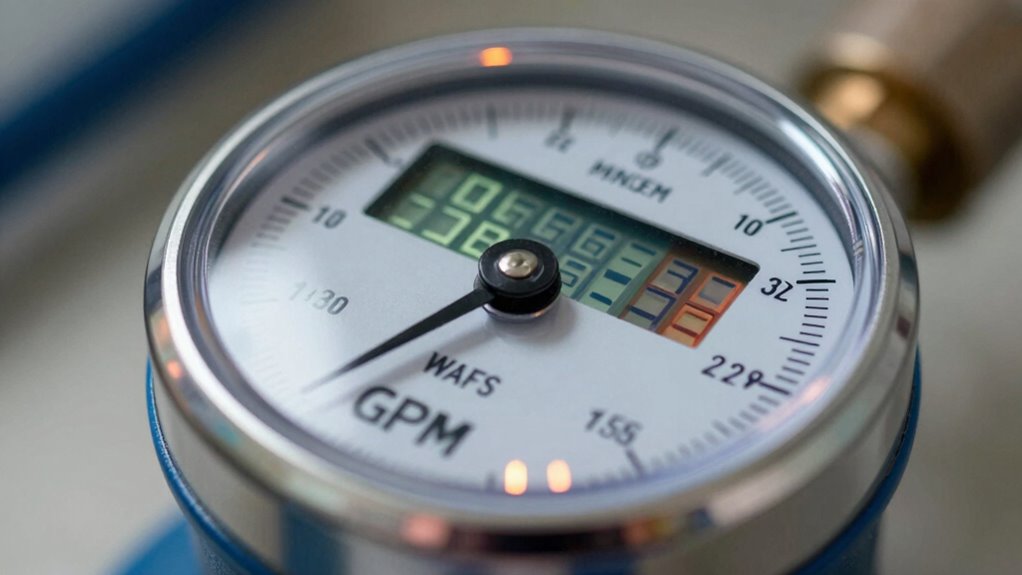
Have you ever looked at a GPM (gallons per minute) rating and felt completely lost? It’s a common experience because GPM ratings can seem like a confusing jumble of numbers and terms. When you’re trying to figure out water flow, these ratings often don’t seem to translate into what you actually need. The problem is that GPM isn’t just a simple number; it’s tied to how pressure measurement affects water flow, and that connection isn’t always clear at first glance.
GPM ratings can be confusing because they depend on pressure, not just water flow alone.
The core of the confusion lies in understanding how water flow relates to pressure. GPM measures how much water passes through a fixture or pipe every minute, but it doesn’t tell you how hard that water is pushing. That’s where pressure measurement comes in. If you imagine water flow like a river, pressure is what pushes the water forward. Higher pressure generally means more water flow, but it’s not a direct one-to-one relationship. A high GPM rating doesn’t necessarily mean better performance if the pressure isn’t sufficient to push that volume of water effectively.
When you look at a GPM rating, you might assume it’s the same regardless of your setup, but that’s not true. The actual water flow you get depends heavily on your water pressure. For example, a garden hose rated at 10 GPM might deliver less water if your home’s water pressure is low. Conversely, with high pressure, that same hose could easily exceed its rated flow. This variation is why understanding pressure measurement is essential. Without it, you’re only seeing part of the picture, which can lead to overestimating or underestimating what your system can do.
Another reason GPM ratings confuse everyone is because they’re often based on ideal conditions. Manufacturers test these ratings in laboratories where pressure is controlled and consistent. But in real-world applications, pressure fluctuates due to distance from the source, pipe diameter, or other factors. So, if you’re trying to select equipment based solely on GPM ratings, you might end up with something that doesn’t perform as expected. This disconnect between rated water flow and actual performance adds to the confusion. Recognizing that pressure variation can significantly impact flow rates helps clarify why ratings may not always match real-world results.
Additionally, understanding how pressure impacts flow rates can help clarify why GPM ratings can be misleading. In essence, what makes GPM ratings so confusing is that they don’t stand alone. You need to factor in how pressure measurement influences water flow, and that relationship isn’t always straightforward. Recognizing the importance of pressure measurement alongside GPM ratings can help you make more accurate assessments. Moreover, considering the interaction between pressure and flow can give you a better sense of a system’s true capability. To make smarter choices, you should look at both GPM and pressure specs together. Knowing how pressure and flow work together can prevent surprises and ensure your water system operates efficiently.
As an affiliate, we earn on qualifying purchases.
Frequently Asked Questions
How Is GPM Calculated for Different Types of Pumps?
You calculate GPM for different pumps by measuring flow and considering pump efficiency. For a simple flow measurement, you track how much water passes in a minute. Pump efficiency impacts GPM because some energy is lost during operation. You’ll need to adjust the flow rate based on the pump’s efficiency to get an accurate GPM rating. Different pump types, like centrifugal or reciprocating, may require different formulas for precise calculations.
What Causes Variations in GPM Ratings Between Models?
Imagine a river twisting through varied terrain—that’s how pump models differ in GPM ratings. Variations happen because of pump efficiency, which acts like a filter, and flow consistency, like steady currents. Smaller differences in design or materials can cause big shifts in output. As you compare models, remember that these factors shape the flow, making each pump’s performance unique, even if they seem similar on paper.
Are GPM Ratings Affected by Fluid Viscosity?
Yes, GPM ratings are affected by fluid viscosity because viscosity effects influence pump efficiency. When fluid is more viscous, it resists flow, reducing the pump’s ability to move it at the rated GPM. This means that higher viscosity fluids can lower the actual flow rate compared to the rated GPM, especially if the pump isn’t designed to handle such viscosity levels efficiently. Always consider viscosity effects when selecting a pump for specific applications.
How Do Temperature Changes Impact GPM Readings?
Temperature effects can notably impact GPM readings because as temperature changes, viscosity influence comes into play. When temperatures rise, fluids become less viscous, allowing them to flow more easily, which can increase GPM readings. Conversely, cooler temperatures increase viscosity, slowing flow and decreasing GPM measurements. So, you should always consider temperature variations when interpreting GPM data, as they directly affect flow rates and accuracy.
Can GPM Ratings Be Directly Compared Across Brands?
Did you know that GPM ratings can vary up to 20% between brands? You can’t directly compare GPM ratings across brands because pump efficiency and design influence these numbers. Brand reputation plays a role, too, since well-established brands often provide more reliable data. Always consider the pump’s intended use and efficiency ratings, rather than just GPM numbers, to make the best choice for your needs.
As an affiliate, we earn on qualifying purchases.
Conclusion
Understanding GPM ratings might feel like trying to read a foreign map at first, but once you get the hang of it, you’ll see it’s just a guide through the maze. Don’t let the initial confusion drown your confidence; every expert was once a beginner. Remember, clarity often comes after the storm of confusion clears. Keep learning, and soon, you’ll navigate these ratings with ease, turning the puzzle into a clear path forward.
As an affiliate, we earn on qualifying purchases.
As an affiliate, we earn on qualifying purchases.
Halloween Picks
halloween
As an affiliate, we earn on qualifying purchases.