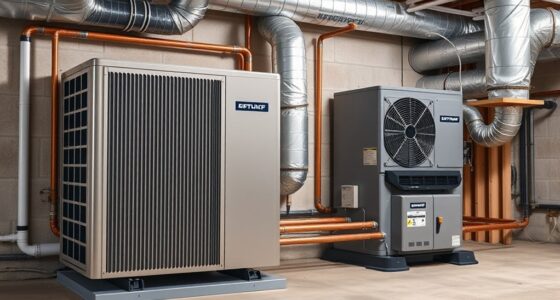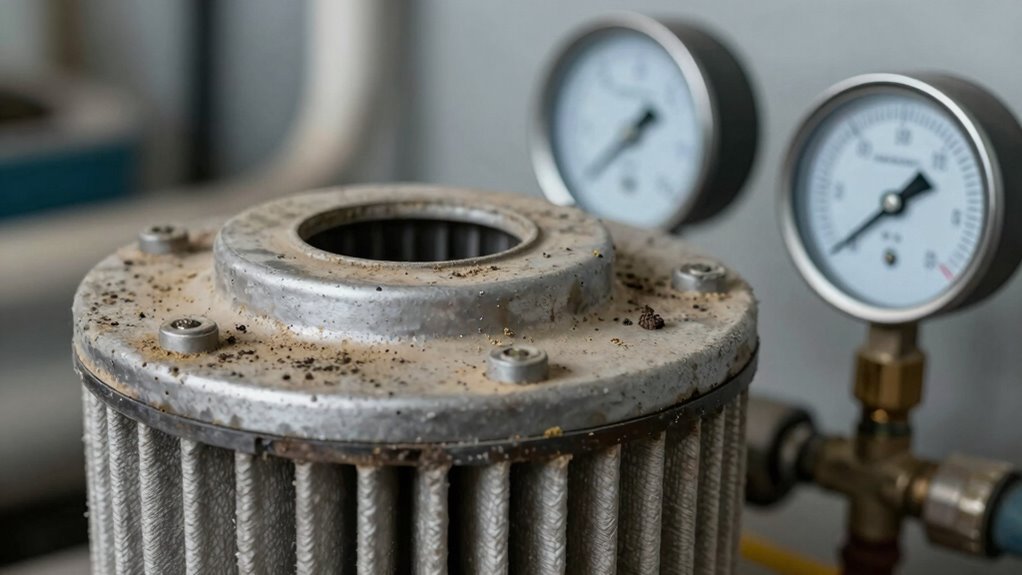

When your filter’s pressure drop increases, it forces your system to work harder, wasting energy and lowering efficiency. Dust, dirt, and debris clog filters over time, creating resistance that reduces airflow and strains your equipment. Regular monitoring reveals these hidden issues early, preventing costly energy use. Proper maintenance and choosing the right filters help avoid performance drops. To learn how to keep your system running smoothly and save energy, keep exploring these strategies.

Get backup power and energy gear delivered free with Prime
- Fast, free delivery on millions of items
- Prime Video, Amazon Music and more included
- Member-only deals all year
Key Takeaways
- Elevated filter pressure drop increases system resistance, forcing the fan and motor to work harder, reducing overall efficiency.
- Accumulated dust and debris on filters cause airflow obstruction, leading to higher energy consumption and decreased system performance.
- Regular monitoring of pressure levels helps identify resistance buildup early, preventing efficiency loss.
- Clogged filters require more energy to maintain airflow, resulting in increased operational costs and reduced filtration effectiveness.
- Proper maintenance and timely filter replacement prevent pressure drops from impairing system efficiency.
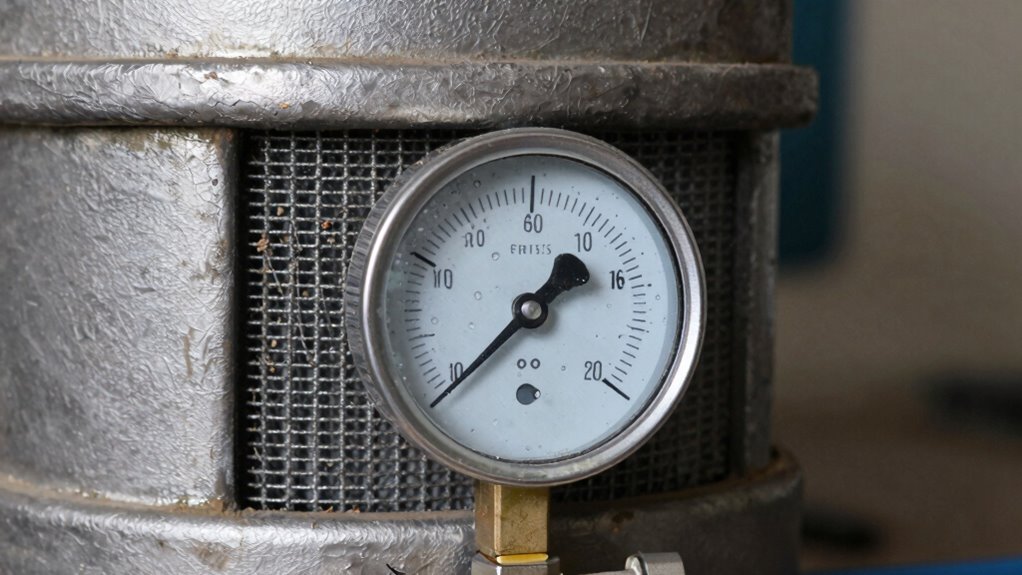
Have you ever wondered why your filtration system seems less efficient over time? One key reason is the increasing filter pressure drop, which directly impacts how well your system performs. As dust, dirt, and debris accumulate on the filter surface, they create a barrier that airflow must push through. This buildup increases airflow resistance, forcing your system to work harder to maintain the same airflow levels. When airflow resistance rises, your system’s motor consumes more energy, and overall efficiency drops. This is why, despite regular use, filters often become less effective without proper maintenance.
The pressure drop across the filter is a vital factor in system performance. When the pressure difference between the filter’s inlet and outlet rises, it indicates that airflow is being hindered. A higher pressure drop not only reduces the volume of air passing through but also causes strain on the entire system. As a result, you might notice increased energy bills, reduced airflow, or uneven filtration. These symptoms often point to the growing filter pressure drop problem, which is a common challenge in maintaining maximum system efficiency. Regular monitoring of filter performance can help identify early signs of increased resistance before they significantly impact the system. Ensuring that filters are correctly rated for your specific environment can also help mitigate this issue and prolong filter lifespan.
Dealing with this issue isn’t just about replacing filters more frequently; it also involves understanding maintenance challenges. Over time, filters become clogged faster if your environment produces a lot of particulate matter, or if your filtration system isn’t designed for the specific air quality conditions. Regular inspections and timely replacements are essential, but they can be tricky because it’s easy to underestimate how much dirt has accumulated. Some filters can look clean even when airflow resistance has already increased considerably. This makes it difficult to judge when a filter needs replacing, leading to prolonged periods of reduced efficiency. Utilizing pressure gauges or sensors can provide real-time data to help make more informed maintenance decisions.
To combat these challenges, you need to monitor pressure drops regularly. Installing pressure gauges or sensors helps you catch rising airflow resistance early before it hampers your system’s performance. Proper maintenance routines, including scheduled filter replacements and cleaning, are vital to prevent pressure drops from escalating. Upgrading to filters designed with lower resistance or higher dirt-holding capacity can also ease maintenance challenges and keep airflow resistance in check. Additionally, understanding the pressure drop concept helps you optimize your system’s operation and avoid unnecessary wear and tear. By staying proactive, you ensure your system remains efficient, costs stay manageable, and airflow remains smooth, avoiding the trap of decreased filtration effectiveness caused by pressure drop issues.
As an affiliate, we earn on qualifying purchases.
Frequently Asked Questions
How Does Filter Pressure Drop Affect Energy Consumption?
When filter pressure drop increases, your system consumes more energy to push air or fluids through the filter, reducing filtration efficiency. This extra load strains your equipment, risking system reliability. Higher pressure drops mean your system works harder, leading to increased energy costs and potential wear and tear. Managing pressure drop ensures peak filtration efficiency and maintains system reliability, helping you save energy and prolong equipment lifespan.
Can Filter Material Choice Reduce Pressure Drop?
Choosing the right filter material is like selecting a smooth-running engine—your goal is low resistance. Opting for materials with high pressure resistance reduces pressure drop, making airflow easier and energy use lower. Lightweight, permeable filter media allow air to pass freely, decreasing pressure drop and increasing efficiency. So, by prioritizing filter materials with excellent pressure resistance, you directly cut energy costs and improve overall system performance.
What Maintenance Practices Minimize Pressure Drop Increases?
To minimize pressure drop increases, you should regularly perform filter replacement before it becomes clogged, ensuring peak airflow. Additionally, system calibration helps maintain proper operation and detects early signs of pressure issues. Keep an eye on pressure gauges and schedule maintenance proactively. Combining timely filter replacement with accurate system calibration prevents unnecessary pressure buildup, improves efficiency, and extends equipment lifespan, ultimately maintaining your system’s best performance.
How Does Airflow Rate Influence Pressure Drop?
A rising tide lifts all boats, and in airflow dynamics, increasing airflow rate can elevate pressure drop across filters. When you push more air through a filter, it faces greater resistance, especially if the filter design isn’t optimized. To maintain efficiency, you need to balance airflow rate with filter capacity, ensuring your system’s performance stays steady without overburdening the filter. Proper filter design helps control pressure drop while maximizing airflow.
Are There Industry Standards for Acceptable Pressure Drops?
Yes, industry standards set acceptable pressure drops for filters, typically ranging from 1 to 2 inches of water column, depending on the application. Maintaining ideal pressure drops helps extend filtration lifespan and minimizes cost implications by preventing premature filter replacements. You should regularly monitor pressure levels and choose filters that meet these standards to guarantee efficiency, reduce operational costs, and maintain air quality.
high efficiency air filters for HVAC
As an affiliate, we earn on qualifying purchases.
As an affiliate, we earn on qualifying purchases.
Conclusion
So, next time you notice increased resistance in your filter system, remember that pressure drop isn’t just a minor hassle—it directly affects your efficiency. By addressing this issue proactively, you can keep your system running smoothly and save energy. Don’t you want to get the most out of every operation? Tackling the filter pressure drop problem head-on ensures peak performance and longevity. Isn’t that a goal worth pursuing?
As an affiliate, we earn on qualifying purchases.
replacement air filters for system
As an affiliate, we earn on qualifying purchases.
As an affiliate, we earn on qualifying purchases.
Columbus Day / Indigenous Peoples' Day Picks
long weekend sales
As an affiliate, we earn on qualifying purchases.