
We have all experienced the intense heat of climate change, but what if there was an innovative solution to fight against it?
Play games included with Prime
Start a Prime free trial and play with Amazon Luna on your devices.
As an affiliate, we earn on qualifying purchases.
Enter the heat pump revolution. These energy-efficient devices are not only reducing greenhouse gas emissions, but also offering sustainable and eco-friendly benefits.
Imagine a world where we can drastically decrease our carbon footprint and make a real impact on climate change. In this article, we explore how heat pumps are transforming the battle against global warming.
Get ready to be inspired by the power of technology and nature combined.

Key Takeaways
- Governments play a crucial role in promoting the adoption of heat pumps by providing financial incentives.
- Heat pumps significantly reduce greenhouse gas emissions by utilizing renewable energy sources and improving energy efficiency.
- Switching to heat pumps offers environmental benefits such as reducing carbon emissions, promoting energy efficiency, and reducing reliance on non-renewable resources.
- Heat pumps, as a sustainable solution for climate change, can be integrated with renewable energy sources and contribute to a more sustainable future.
The Role of Energy-Efficient Heat Pumps in Mitigating Global Warming
One of the key ways we can combat global warming is by using energy-efficient heat pumps to reduce greenhouse gas emissions.
The role of government in promoting the adoption of these heat pumps can’t be overstated. Governments can play a crucial role in providing financial incentives to encourage individuals and businesses to invest in energy-efficient solutions.
These incentives can take various forms, such as tax credits, grants, or subsidies, which help to offset the initial cost of purchasing and installing heat pumps.
By implementing such measures, governments can effectively lower the financial barriers associated with transitioning to energy-efficient technologies. This, in turn, motivates more people to adopt heat pumps, leading to a significant reduction in greenhouse gas emissions.

The role of government in providing financial incentives is therefore essential in catalyzing the widespread adoption of energy-efficient heat pumps and combating global warming.
How Heat Pumps Reduce Greenhouse Gas Emissions
By significantly reducing the use of fossil fuels and improving energy efficiency, heat pumps play a crucial role in lowering greenhouse gas emissions. Heat pumps are a sustainable alternative to traditional heating and cooling systems, offering energy efficient heating and cooling solutions for residential and commercial buildings. Compared to conventional heating systems, heat pumps can reduce carbon emissions by up to 70%. This reduction is achieved by utilizing renewable energy sources, such as air, water, or the ground, to transfer heat rather than burning fossil fuels. The table below highlights the environmental benefits of heat pumps, showcasing their ability to reduce carbon emissions and promote energy efficiency.
| Environmental Benefits of Heat Pumps | ||
|---|---|---|
| Reduces carbon emissions | Improves energy efficiency | Utilizes renewable energy sources |
| Up to 70% reduction | Lower energy consumption | Sustainable heating and cooling |
Heat pumps not only combat global warming by reducing greenhouse gas emissions but also pave the way for a more sustainable future.
The Environmental Benefits of Switching to Heat Pumps
Switching to heat pumps offers us significant environmental benefits, such as reducing carbon emissions and promoting energy efficiency. Heat pumps are a renewable technology that can provide substantial energy savings compared to traditional heating and cooling systems.

According to research, heat pumps can reduce carbon emissions by up to 70% compared to gas or oil furnaces. This reduction in emissions is crucial in combating global warming and mitigating climate change.
Additionally, heat pumps operate on electricity, making them more energy-efficient than fossil fuel-based systems. This efficiency translates into lower energy consumption and reduced reliance on non-renewable resources.
By embracing heat pumps, we can contribute to a more sustainable future and make a positive impact on the environment.
Now, let’s explore how heat pumps offer a sustainable solution for climate change.
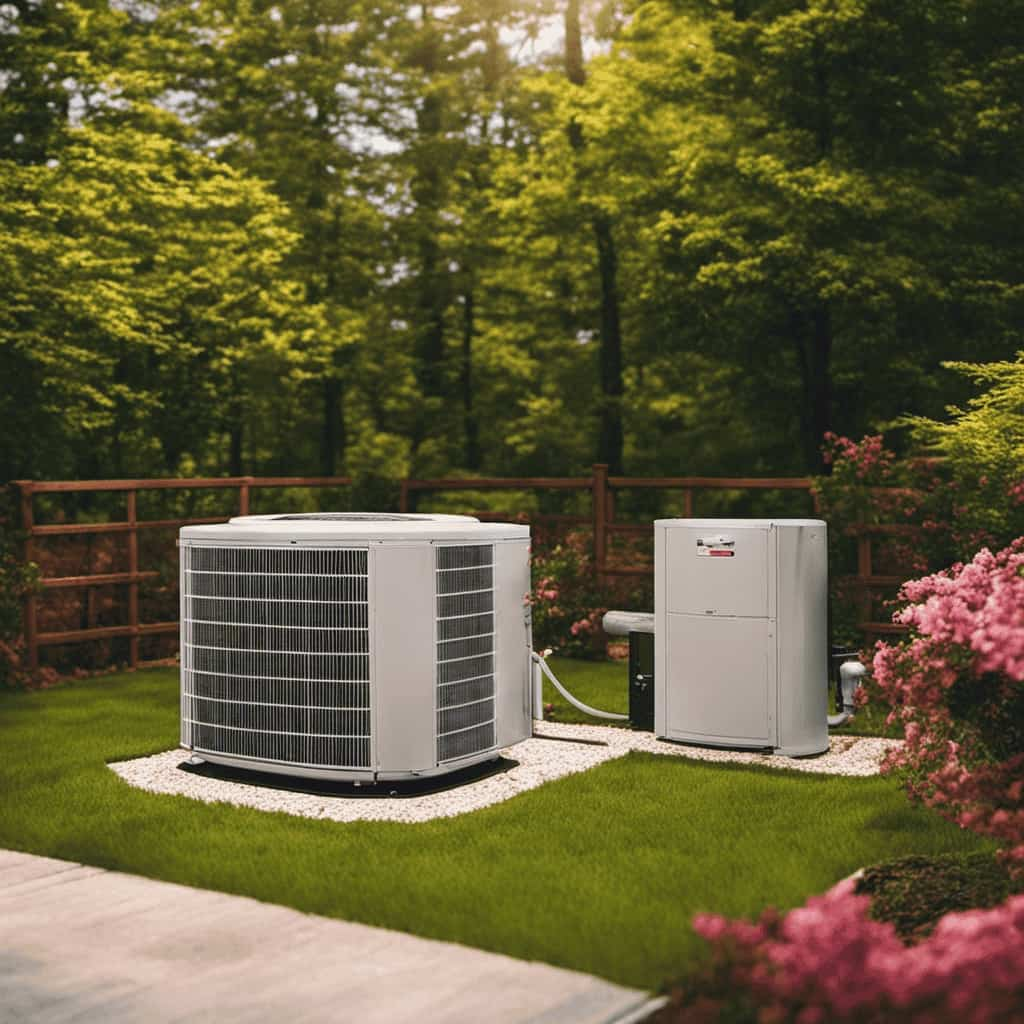
Heat Pumps: A Sustainable Solution for Climate Change
As we delve into the topic of heat pumps as a sustainable solution for climate change, it becomes evident that their efficient and renewable technology holds great potential in reducing greenhouse gas emissions and combating global warming.
Heat pumps are a form of energy efficient heating that utilize the principles of thermodynamics to transfer heat from one location to another. By extracting heat from the air, ground, or water, heat pumps can provide a reliable and renewable source of warmth for residential and commercial spaces.
Compared to traditional heating systems, heat pumps can achieve significant energy savings, with some models boasting efficiency ratings of over 300%. Additionally, heat pumps can also be integrated with renewable energy sources, such as solar panels, further reducing carbon emissions and promoting a sustainable future.
The Impact of Heat Pump Technology on Global Carbon Footprint
With the adoption of heat pump technology, we can significantly reduce our global carbon footprint and contribute to the fight against climate change. Here are four key ways in which heat pump technology can have a positive impact on our carbon emissions:

-
Energy efficiency: Heat pumps use a small amount of electricity to transfer heat from one place to another, making them highly efficient compared to traditional heating and cooling systems. This reduces the amount of fossil fuels burned for energy production, resulting in lower carbon emissions.
-
Renewable energy integration: Heat pumps can be powered by renewable energy sources such as solar or wind, further reducing reliance on fossil fuels and decreasing carbon emissions.
-
Reduced energy consumption: Heat pumps require less energy to operate, leading to lower overall energy consumption and, consequently, a decrease in carbon emissions.
-
The economic implications of heat pump adoption: Widespread adoption of heat pump technology can lead to job creation, economic growth, and energy savings for consumers.
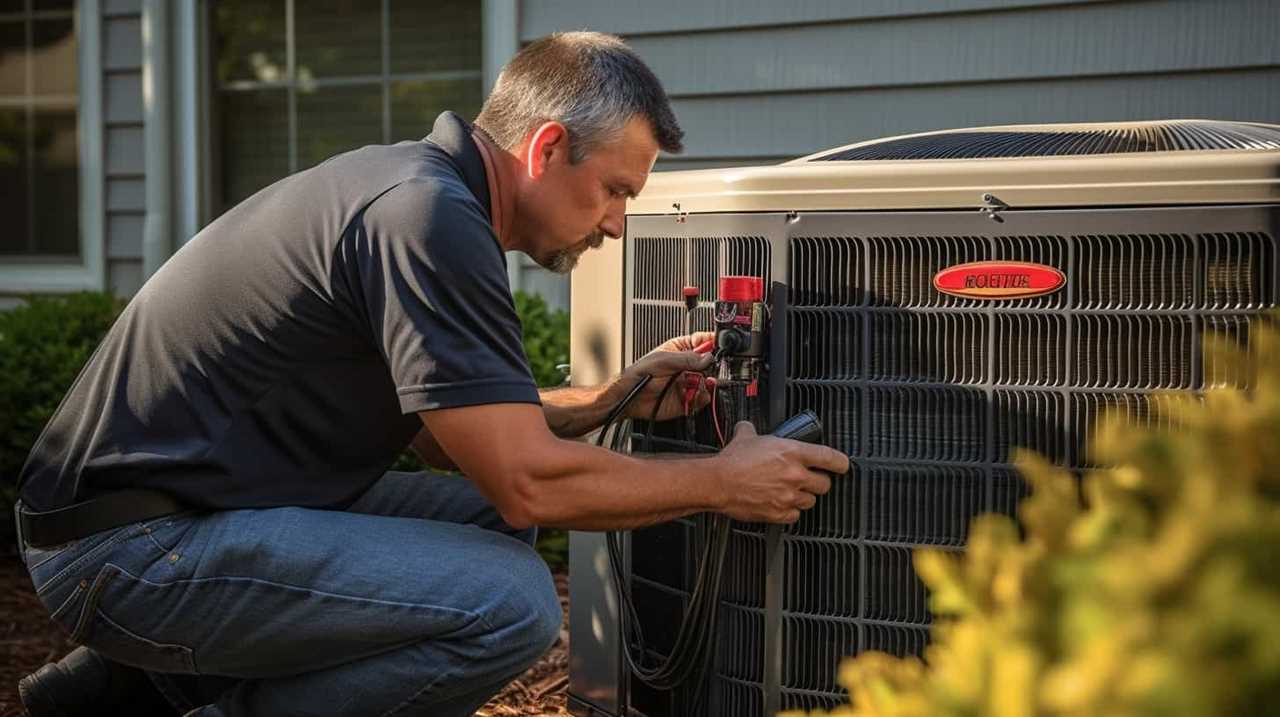
The future of heat pump technology and innovation looks promising, with ongoing research and development aiming to improve efficiency, affordability, and scalability. As technology advances, heat pumps have the potential to play an even larger role in reducing our global carbon footprint.
Frequently Asked Questions
How Do Heat Pumps Work and What Makes Them More Energy-Efficient Than Traditional Heating and Cooling Systems?
Heat pumps work by transferring heat from one location to another using refrigerant. This technology is more energy-efficient than traditional systems because it doesn’t rely on burning fossil fuels. The advantages of heat pumps include lower carbon emissions and reduced energy consumption.
What Are the Potential Cost Savings Associated With Switching to Heat Pumps?
Potential cost savings associated with switching to heat pumps include reduced energy consumption and lower utility bills. Additionally, heat pumps offer environmental benefits by reducing greenhouse gas emissions, making them a sustainable and efficient choice for combatting global warming.
Are Heat Pumps Suitable for All Types of Buildings and Climates?
Heat pump effectiveness and limitations vary based on building type and climate. While heat pumps can be suitable for many buildings and climates, factors such as extreme temperatures or inadequate insulation may impact their performance.

How Does the Installation Process of Heat Pumps Compare to Traditional Heating and Cooling Systems?
The installation process of heat pumps is straightforward and efficient compared to traditional systems. They offer superior energy efficiency, reducing carbon emissions and combating global warming. Join the heat pump revolution for a sustainable future.
What Are the Long-Term Environmental Impacts of Widespread Adoption of Heat Pumps?
The long-term environmental impacts of widespread adoption of heat pumps include significant reductions in greenhouse gas emissions, increased reliance on renewable energy sources, and improved air quality.
Conclusion
In conclusion, heat pumps offer a sustainable solution for combatting global warming and reducing greenhouse gas emissions.
By harnessing the power of renewable energy sources, heat pumps significantly decrease our carbon footprint and contribute to a cleaner, healthier planet.

Just as a beacon of light guides ships through treacherous waters, heat pumps act as a guiding force in our fight against climate change, leading us towards a more sustainable future.
NFL season / tailgating Picks
team gear
As an affiliate, we earn on qualifying purchases.