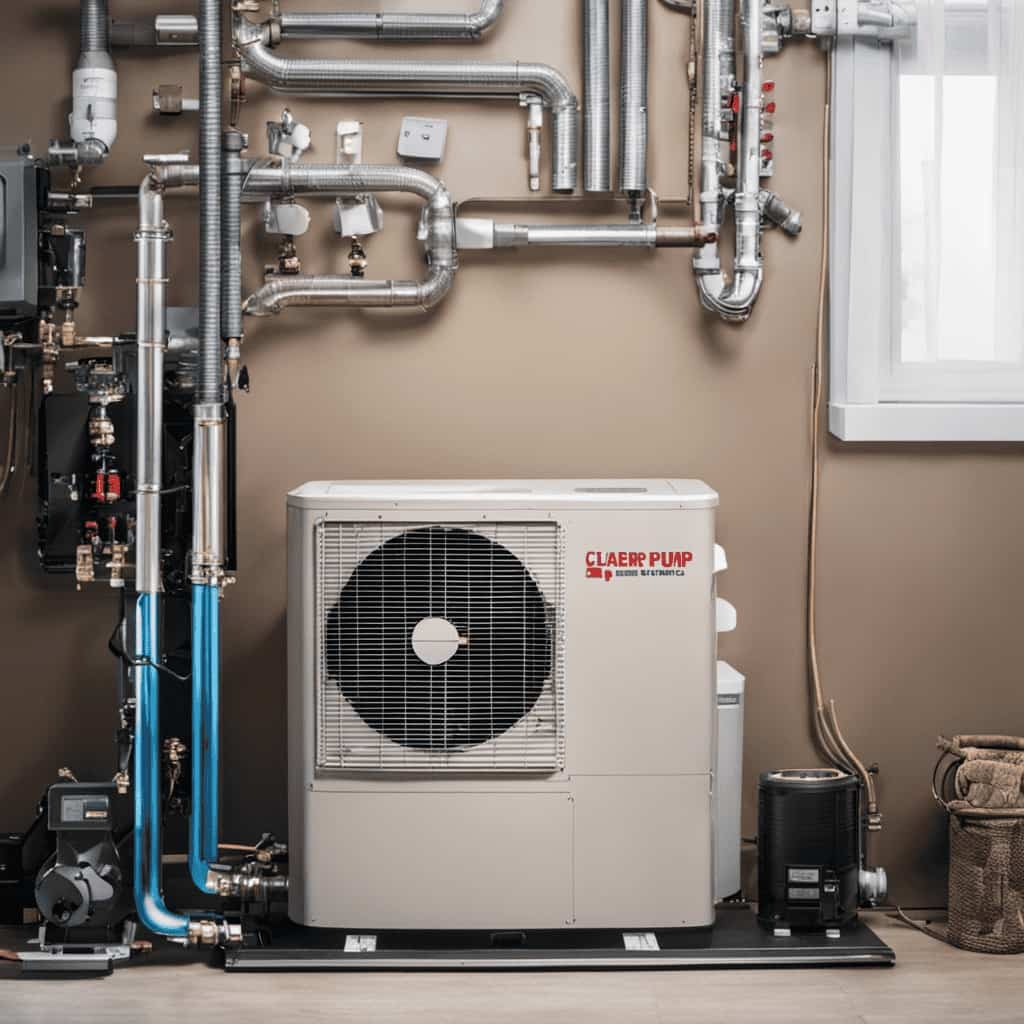
When comparing heating systems, heat pumps are highly efficient in moderate climates, using electricity to move heat and often exceeding a COP of 3. Boilers, especially modern condensing types, can reach up to 98% efficiency by burning fuel and recovering heat from exhaust gases, making them reliable in cold weather. Your choice depends on your climate, energy costs, and home insulation—keep exploring to discover which system best suits your needs.
Key Takeaways
- Heat pumps typically have higher Coefficient of Performance (COP) than boilers, making them more energy-efficient in moderate climates.
- Modern condensing boilers can reach up to 98% efficiency, but their performance drops in very cold temperatures.
- Heat pumps move heat rather than generate it, resulting in lower electricity consumption and higher efficiency.
- System maintenance, proper sizing, and insulation significantly impact the overall efficiency of both heat pumps and boilers.
- Climate and local energy costs influence the most efficient choice; heat pumps excel in mild weather, boilers perform better in cold conditions.
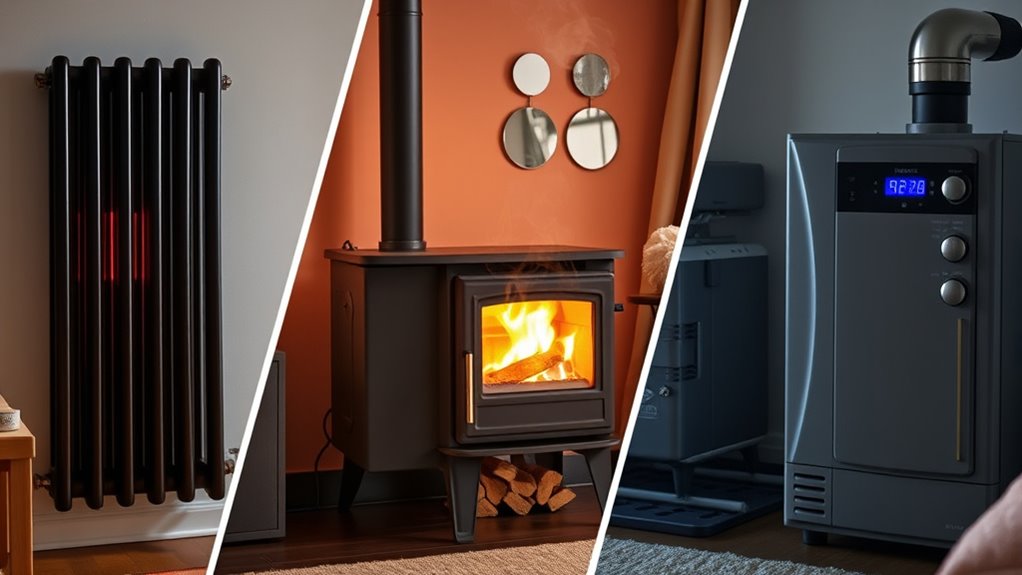
Have you ever wondered how much energy your heating system consumes and whether it’s using that energy efficiently? Understanding the efficiency of different heating options can help you save money and reduce your carbon footprint. One popular choice is the heat pump, which works by extracting heat from the outside air or ground and transferring it indoors. Unlike traditional systems, heat pumps don’t generate heat by burning fuel; instead, they use electricity to move heat efficiently. This makes them a highly energy-efficient option, especially in moderate climates. When comparing heat pumps to other systems, you’ll find that their coefficient of performance (COP) often exceeds 3, meaning they produce more heat energy than the electrical energy they consume. This high efficiency translates into lower utility bills and less environmental impact. However, it’s essential to contemplate the climate because in extremely cold weather, some heat pumps may lose efficiency, requiring supplementary heating sources.
On the other hand, boilers have been a staple in home heating for decades. Boilers operate by burning fuel—such as natural gas, oil, or propane—to heat water, which then circulates through radiators or underfloor systems. The key to understanding boiler efficiency lies in the percentage of fuel’s energy that is converted into useful heat. Modern condensing boilers can reach efficiencies of up to 98% because they recover heat from flue gases that would otherwise escape. This makes them more efficient than older, non-condensing models. But even with high boiler efficiency, you need to ponder how well your system is maintained and how effectively it is distributing heat throughout your home. Proper insulation, regular servicing, and correctly sized radiators all play roles in maximizing the efficiency of your boiler. Additionally, advances in automation technology are helping optimize boiler operation and reduce energy waste.
When comparing these systems, it’s clear that a heat pump can offer greater efficiency overall, especially if your climate is suitable. They tend to consume less electricity and produce fewer emissions. Boilers, particularly high-efficiency condensing models, are reliable and perform well in colder environments. Your choice depends on your local climate, energy costs, and your home’s insulation. To make the most of your heating system, regularly maintain and service it, regardless of type. Knowing how your system operates and its efficiency levels helps you make smarter decisions, ensuring you’re not wasting energy or money. Ultimately, investing in an efficient heating system tailored to your needs can lead to significant savings and a smaller environmental impact.

Westinghouse Natural Gas Tankless Water Heater Indoor Installation Max 7.9 GPM 180,000 BTU, WIFI Enable Temp Self Modulating Non Condensing High Efficiency for House or Commercial, APOLO Performance
【On-Demand Efficiency】 Westinghouse tankless water heater works only needed, saving energy and costs. Compact yet powerful for whole-home...
As an affiliate, we earn on qualifying purchases.
Frequently Asked Questions
How Do Installation Costs Impact Overall System Efficiency?
Installation costs directly impact the overall system efficiency because higher costs often mean better, more advanced equipment and proper setup. When you invest more upfront, the efficiency impact is usually positive, leading to lower energy bills and improved performance over time. Conversely, cutting corners to save on installation costs can reduce efficiency, cause frequent repairs, and increase long-term expenses. So, a higher initial investment often results in better efficiency and savings.
What Maintenance Routines Maximize Heating System Lifespan?
To maximize your heating system’s lifespan, follow essential maintenance tips like regularly changing filters, scheduling annual professional inspections, and cleaning vents to prevent dust buildup. Keep an eye on thermostat settings and address minor issues promptly. Consistent maintenance not only guarantees efficient operation but also extends the system’s lifespan. By staying proactive, you reduce breakdowns, improve energy efficiency, and save money on costly repairs or replacements over time.
Are There Regional Differences in Heating System Efficiency?
Regional variations do impact heating system efficiency, as climate adaptability plays a key role. In colder regions, you’ll find systems designed for extreme cold perform better, while in milder climates, energy-efficient options suit your needs more effectively. By choosing a heating system suited to your area’s climate, you optimize energy use and reduce costs. Always consider regional differences when selecting or maintaining your system to guarantee maximum efficiency year-round.
How Do User Behaviors Influence Energy Consumption?
Your behavioral patterns and occupancy habits are the puppeteers pulling energy consumption strings. When you keep doors and windows open, or set the thermostat too high, you’re inviting inefficiency to dance in your home. By adjusting your habits—like maintaining consistent temperatures and optimizing usage—you can tame this energy beast. Small changes turn your home into a well-orchestrated symphony of comfort and efficiency, saving you money and energy.
What Are the Environmental Impacts of Each Heating System?
You should consider that each heating system impacts the environment differently. Systems powered by renewable resources, like solar or geothermal, notably reduce emissions and promote sustainability. Conversely, fossil fuel-based systems emit more greenhouse gases, contributing to climate change. By choosing eco-friendly options, you help achieve emission reduction goals and support a cleaner environment. Your decisions directly influence the ecological footprint of your home heating, making sustainability a key factor.
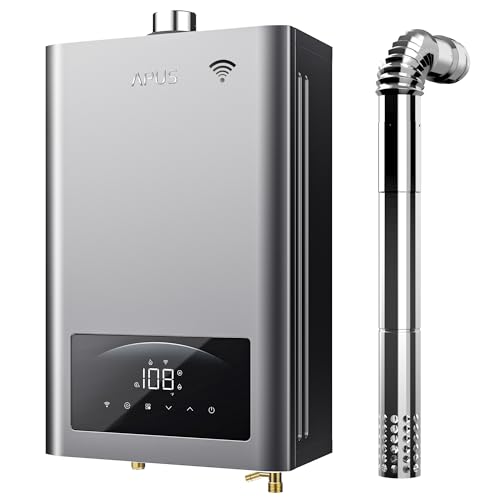
APUS Tankless Water Heater Propane, 140,000 BTU Indoor Installation Up to 6.8 GPM, Zero Cold Water Technology for Instant Hot Water on Demand, Smart Wi-Fi App Control
Instant Hot Water: This upgraded smart propane tankless water heater delivers consistent performance with its 140,000 BTU burner...
As an affiliate, we earn on qualifying purchases.
Conclusion
When choosing a heating system, remember that “you get what you pay for.” While some options may seem cheaper upfront, their energy inefficiency can cost you more in the long run. By weighing each system’s efficiency and your needs, you’ll make a smarter, more sustainable choice. Ultimately, investing in an energy-efficient heater not only saves money but also helps protect the environment—proving that patience and wise decisions pay off.
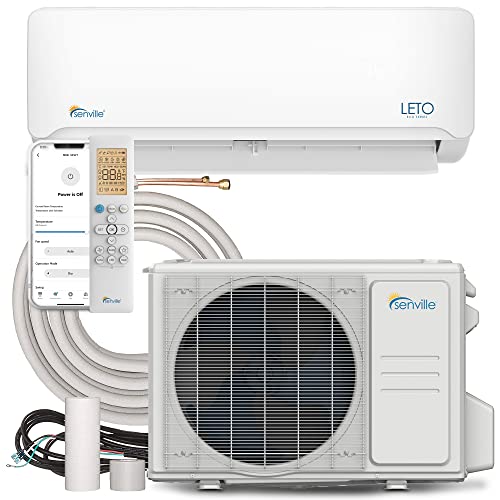
Senville LETO Series Mini Split Air Conditioner Heat Pump, 12000 BTU 110/120V, Inverter, Works with Alexa, SEER2 20.8, 1 Ton, White
Alexa Enabled Mini Split AC/Heating System: Integrate with voice control or app, allowing you to adjust your mini...
As an affiliate, we earn on qualifying purchases.

23000 BTU Mini Split AC & Heat Pump, 230v Energy Efficient Wall-Mounted Ductless Air Conditioner with WiFi Control, r32 Eco-Friendly Refrigerant, Cools/Heats Up to 1500 Sq.Ft, Quiet Operation
Powerful Cooling & Heating - This 23000 BTU mini split system delivers reliable cooling (63-90℉) and heating (32-80℉)...
As an affiliate, we earn on qualifying purchases.