TL;DR
Energy Star’s thermal enclosure checklist and the IECC’s air-barrier and insulation table developed alongside one another, rather than one simply copying the other. Their similar aims can produce different results because definitions, inspection and enforcement differ.
Energy Star’s thermal enclosure checklist and the International Energy Conservation Code’s (IECC) air-barrier and insulation table developed in parallel, according to a November 13, 2026 article by Robby Schwarz. The distinction matters to builders because the programs share goals for reducing air leakage and improving insulation, but differences in definitions, inspection and enforcement can affect what is required and how work is checked.

Get backup power and energy gear delivered free with Prime
- Fast, free delivery on millions of items
- Prime Video, Amazon Music and more included
- Member-only deals all year
The article challenges the assumption that Energy Star’s Thermal Bypass Checklist was simply the model for the IECC’s modern Air Barrier, Air Sealing, and Insulation Installation Table. Schwarz describes the two as related efforts that evolved together, rather than a direct sequence in which one program created the approach and the other adopted it.
The article traces the code side of that history to the Model Energy Code, first published in 1983 by the Council of American Building Officials. The International Code Council later took over development of the model energy code, and the IECC emerged in the late 1990s as part of the ICC family of building codes.
Residential energy requirements in the 2000 and 2003 IECC were arranged across chapters addressing systems analysis, component performance and simplified prescriptive requirements. The 2006 IECC brought those requirements into a structure closer to the one used today, consolidating residential provisions in Chapter 4 and including specific requirements to seal the building thermal envelope. Schwarz identifies those provisions as part of the development leading to the modern table, including Table R402.5.1.1 in the 2024 IECC.
Energy Star vs. the IECC Two paths to a better thermal envelope
Energy Star and the IECC developed related air-sealing and insulation requirements alongside one another. Similar goals do not make their checklists interchangeable.
Two related efforts
The article rejects the idea that the modern IECC table was simply copied from Energy Star.
- Thermal Enclosure Checklist
- Parallel effort toward better envelope performance
- Air Barrier, Air Sealing, and Insulation Installation Table
- Developed through model energy code provisions
How the code took shape
The IECC’s residential requirements shifted structure over time, with envelope-sealing provisions forming part of the path to today’s table.
Why similar checklists differ
Builders and homeowners may see different requirements or verification because each system defines and checks work in its own way.
What counts as compliant
Different definitions can change how envelope details are specified and reviewed.
How work is checked
Verification procedures may differ, affecting what gets reviewed on a project.
Which rules apply
The governing code and program criteria depend on the project and its location.
Check the project requirements
The excerpt does not compare specific checklist items or establish which rules apply everywhere.
- Identify the locally applicable IECC edition and amendments.
- Confirm any separate Energy Star criteria being followed.
- Compare relevant definitions and verification steps before treating checklists as substitutes.
Why Similar Checklists Differ
For builders and code officials, similar checklists do not automatically mean identical obligations. The article highlights definitions, inspection and enforcement as areas where Energy Star and the IECC differ, with the potential to change how envelope details are specified, reviewed and verified on a project.
That distinction is relevant to homeowners, too. The thermal envelope affects how air moves through a home and how insulation performs. Requirements intended to limit gaps and poorly installed insulation can support energy-efficiency goals, but the result depends in part on how the applicable program defines acceptable work and how compliance is checked. The article frames these as two related routes to better envelope performance, not as interchangeable rule sets.
Because the article describes the programs’ requirements at a high level, it does not establish which checklist applies to a particular project. That depends on the applicable code and program requirements; builders should check the governing documents and local implementation rather than assume one checklist substitutes for the other.
Products Worth Considering

Philips Hue Starter Kit with Bridge Pro and 4 A19 E26 Smart Bulbs
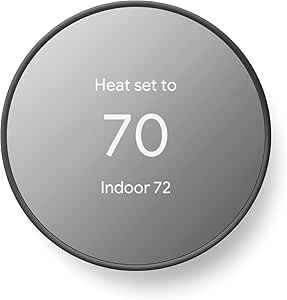
Google Nest Smart Thermostat, Programmable Wi-Fi, Charcoal

Levoit Eleva 300X Air Purifier with Sealed HEPA Filtration
As an affiliate, we earn on qualifying purchases.
From Model Code to 2024 Table
The code’s development provides context for why its current table is not simply a copy of an Energy Star checklist. The MEC began in 1983, before the IECC took shape within the ICC system. Early IECC editions then organized residential energy rules differently from later editions, spreading requirements across multiple chapters.
In 2006, the IECC gathered residential energy provisions in Chapter 4, including rules for the thermal envelope, mechanical systems and service water heating. The article points to this edition’s envelope-sealing provisions as an important step in the code’s later development. The current example it names is the 2024 IECC’s Table R402.5.1.1.
Schwarz’s account presents Energy Star and the IECC as developing their respective checklist approaches alongside each other. The available article excerpt does not provide a detailed timeline for the Energy Star checklist or set out a year-by-year comparison of the two programs. The reported historical point is narrower: the modern IECC table grew from code provisions while the Energy Star checklist developed as a parallel effort.
“The two evolved together.”
— Robby Schwarz, in the November 13, 2026 article
Project Rules Still Depend on Place
The article excerpt does not spell out the exact differences in definitions, inspection procedures or enforcement, nor does it provide side-by-side checklist language. It therefore does not establish how a particular item would be treated under each program or which inspection steps apply in a given jurisdiction.
It is also not clear from the excerpt which editions or local amendments govern any specific building project. The 2024 IECC table is identified as a modern code example, but the excerpt does not say that the 2024 edition applies everywhere. Readers should not infer that every jurisdiction has adopted the same edition or that Energy Star and code compliance are equivalent.
Check the Applicable Requirements
The article does not announce a new code change, deadline or upcoming decision. Its immediate practical takeaway is to identify which requirements govern the project: the locally applicable IECC edition and amendments, and any separate Energy Star program criteria being followed.
Builders and reviewers can then compare the relevant definitions and verification steps rather than relying on the assumption that one checklist replaces the other. The detailed comparison promised by the article’s framing would be needed to establish how particular envelope details are treated under both systems; that detail is not present in the available excerpt.
Source: rss
Key Questions
Did Energy Star’s checklist come before the IECC table?
The article says the two approaches developed together and rejects the idea that the modern IECC table was simply modeled on Energy Star’s checklist.
What is the IECC table discussed in the article?
It is the IECC’s Air Barrier, Air Sealing, and Insulation Installation Table. The article identifies Table R402.5.1.1 in the 2024 IECC as a modern version.
Why can the two approaches lead to different results?
The article points to differences in definitions, inspection and enforcement. It does not provide enough detail in the available excerpt to compare specific checklist items.
Does the 2024 IECC apply to every building project?
The article does not say that every jurisdiction has adopted the 2024 edition. Which code applies depends on the rules adopted for the project’s location and any local amendments.
Source: greenbuildingadvisor.com