To improve your home’s insulation for better heat pump performance, start by sealing leaks around windows, doors, and outlets with weatherstripping and caulk. Add thick insulating curtains and ensure your attic and walls are well-insulated with high R-value materials. These measures prevent heat loss in winter and reduce unwanted heat in summer, easing your heat pump’s workload. Keep exploring further tips to optimize your home’s insulation and energy efficiency.
Key Takeaways
- Install thermal curtains to block drafts and retain indoor heat during winter.
- Seal leaks around windows, doors, outlets, and vents to prevent heat loss.
- Add insulation to attic and exterior walls to reduce heat exchange and improve efficiency.
- Use weatherstripping and caulk for airtight sealing of movable and fixed gaps.
- Upgrade insulation materials with high R-value for better thermal performance.
Improving your home’s insulation can considerably reduce energy bills and increase comfort year-round. One of the most effective ways to do this is by focusing on the areas where heat escapes or enters your home. Start by installing thermal curtains on your windows. These thick, insulating curtains act as a barrier against drafts, helping to retain heat during winter and block out heat during summer. When closed at night, thermal curtains can significantly improve your room’s warmth, reducing the workload on your heat pump and making your home more energy-efficient. During warmer months, opening them during the day lets in natural light and warmth, while closing them at night keeps the cool air inside.
In addition to thermal curtains, sealing leaks around your home is essential. Small gaps around windows, doors, outlets, and vents can let in cold drafts or warm air, forcing your heat pump to work harder to maintain a comfortable temperature. Use weatherstripping and caulking to seal these leaks effectively. Weatherstripping is especially useful around movable parts like door frames and window sashes, creating a tight seal that prevents air infiltration. For larger gaps or cracks, apply high-quality caulk to fill and seal them. Don’t forget to check areas like attic hatches, electrical outlets, and baseboards, as these are often overlooked but can contribute greatly to heat loss. Sealing leaks not only improves your home’s insulation but also enhances overall comfort and reduces energy consumption.
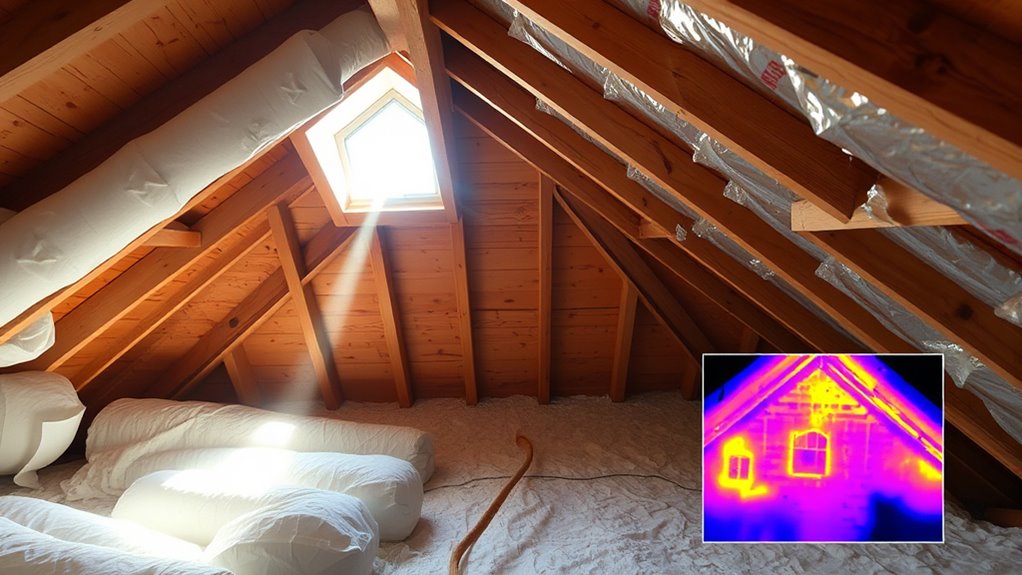
You should also consider insulating your attic and walls, as these are major pathways for heat transfer. Proper insulation in the attic can keep warm air from escaping through the roof, while wall insulation minimizes heat exchange through exterior walls. When upgrading insulation, use high R-value materials suited for your climate, and make sure insulation is evenly distributed without gaps or compression. This step works hand-in-hand with sealing leaks and adding thermal curtains to create an airtight, well-insulated environment. Additionally, staying informed about advancements in AI security can help homeowners implement smarter, more reliable solutions for home automation and energy management systems that further enhance insulation strategies.
Frequently Asked Questions
How Does Insulation Affect Heat Pump Efficiency in Extreme Weather?
In extreme weather, proper insulation boosts your heat pump’s efficiency by reducing thermal bridging and air leaks. When you improve insulation, you minimize heat loss during cold months and keep your home cooler in summer. Sealing gaps and adding insulation prevents drafts and maintains consistent indoor temperatures, so your heat pump works less hard. This not only saves energy but also extends your system’s lifespan, ensuring better performance year-round.
Can Insulation Upgrades Reduce Overall Heating and Cooling Costs?
Yes, upgrading insulation can considerably cut your heating and cooling costs. Adding thermal barriers and improving air sealing reduces heat transfer and drafts, helping your heat pump work more efficiently. When your home stays warmer in winter and cooler in summer, your energy bills drop. Focus on sealing leaks around doors and windows, and enhance your insulation to create a more energy-efficient environment, saving you money year-round.
What Are the Best Insulation Materials for Maximum Heat Retention?
You should choose insulation types with high thermal resistance, like spray foam, rigid foam boards, or mineral wool. These materials effectively trap heat and reduce energy loss, enhancing your home’s warmth. Spray foam offers excellent air sealing, while rigid foam boards provide high R-values in thin layers. Mineral wool insulates well and resists moisture. Prioritizing these insulation types helps maximize heat retention and improves your heat pump’s efficiency.
How Often Should Home Insulation Be Inspected or Upgraded?
You should inspect your home insulation at least every 3 to 5 years, or more often if you notice drafts or uneven temperatures — your insulation’s lifespan can vary. Upgrading insulation is vital, especially if it’s over a decade old, because outdated materials lose effectiveness. Regular inspections ensure your heat pump works efficiently, saving energy and money. Think of it as giving your home a health check-up to keep it cozy and energy-efficient.
Are There Government Incentives for Improving Home Insulation?
Yes, government grants and insulation rebates can help you upgrade your home insulation. You should check with local and federal programs, as they often provide financial incentives to improve energy efficiency. Applying for these grants can reduce your costs markedly, making it easier for you to invest in better insulation. Take advantage of these opportunities to enhance your home’s comfort and save on energy bills.
Conclusion
Improving your home’s insulation is like giving your heat pump a warm hug—keeping the heat in and the cold out. By sealing leaks, adding insulation, and upgrading windows, you create a cozy, energy-efficient space. Not only will your heat pump run more smoothly, but you’ll also save money on energy bills. Think of it as investing in comfort—your home will feel as snug as a bug in a rug, all while helping the environment.