
To boost energy efficiency in multi-family buildings, focus on smart metering to monitor consumption and identify waste. Integrate renewable energy sources like solar or wind to reduce reliance on fossil fuels and cut costs. Combining these strategies helps lower utility bills, support sustainability goals, and improve resident comfort. Implementing energy-efficient appliances and engaging tenants in conservation efforts further enhances your building’s performance. Discover how these solutions can transform your property into a more sustainable, cost-effective space.
Key Takeaways
- Implement smart metering systems to monitor and optimize energy, water, and heating usage in real time.
- Integrate renewable energy sources like solar panels to reduce reliance on fossil fuels and lower emissions.
- Use energy-efficient appliances and lighting to minimize overall energy consumption.
- Leverage data analytics for occupancy-based heating, cooling, and demand management strategies.
- Engage tenants actively in energy conservation practices to enhance overall building efficiency.

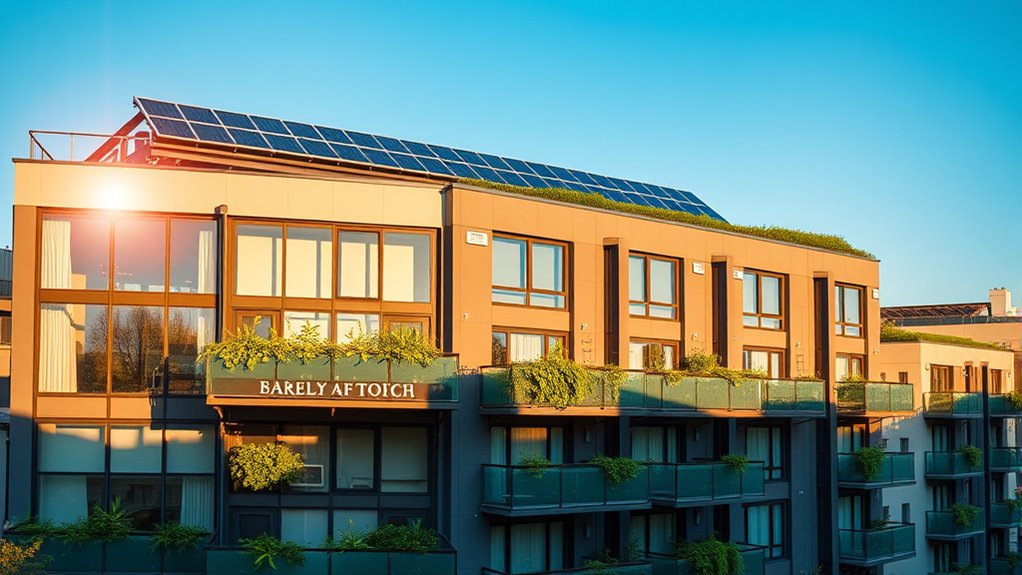
Energy efficiency in multi-family buildings is essential for reducing operational costs and minimizing environmental impact. As a building manager or resident, you can leverage smart metering to gain real-time insights into energy consumption patterns. Smart meters provide detailed data that helps identify wasteful usage and pinpoint areas for improvement. By monitoring electricity, water, and heating usage, you can make informed decisions to optimize energy use, ultimately lowering bills and reducing your carbon footprint. Implementing smart metering systems also enables proactive maintenance, preventing issues before they escalate into costly repairs. This technology creates transparency, encouraging tenants to participate actively in energy-saving efforts, fostering a culture of sustainability within the community. Incorporating energy-efficient appliances and lighting solutions can further enhance savings and reduce overall consumption. Renewable energy integration is another vital aspect of enhancing energy efficiency in multi-family buildings. Incorporating renewable sources like solar panels, wind turbines, or geothermal systems not only cuts reliance on fossil fuels but also stabilizes energy costs over time. When you integrate renewables, you generate your own clean energy, which can be stored or fed back into the grid, reducing overall energy demand from traditional sources. This shift helps lower greenhouse gas emissions and supports local sustainability goals. Properly designed renewable systems can offset a significant portion of a building’s energy consumption, especially during peak hours, making your property more resilient to energy price fluctuations. Furthermore, renewable integration often qualifies for incentives and tax credits, further improving the financial viability of upgrades. Combining smart metering with renewable integration creates a powerful synergy that maximizes energy efficiency. Smart meters can track how much renewable energy is produced and consumed in real time, offering valuable feedback on system performance. This data allows you to fine-tune renewable systems, ensuring they operate at peak efficiency and deliver maximum savings. Additionally, advanced analytics from smart metering can help you develop tailored energy management strategies, such as adjusting heating or cooling schedules based on occupancy patterns and renewable generation forecasts. By actively managing energy flow, you can minimize waste, reduce utility costs, and enhance your building’s sustainability credentials.
Frequently Asked Questions
How Do Energy Efficiency Measures Affect Residents’ Utility Bills?
Energy efficiency measures can lower your utility bills considerably. Installing smart thermostats helps you better control heating and cooling, reducing energy waste. Insulation upgrades keep your apartment warmer in winter and cooler in summer, cutting energy costs. These improvements make your living space more comfortable while saving money. By adopting smart thermostats and upgrading insulation, you actively reduce energy consumption and enjoy lower utility bills each month.
What Funding Options Are Available for Multi-Family Energy Upgrades?
You can access funding for multi-family energy upgrades through renewable incentives and tax credits. These options help reduce upfront costs by offering financial rewards for installing renewable energy systems or making efficiency improvements. Many government programs and utility companies provide these incentives, so you should explore local, state, or federal resources. Applying for these incentives can make your upgrades more affordable, helping you save on energy bills long-term.
How Can Building Management Encourage Resident Participation?
Ever wondered how to boost resident participation? You should offer resident incentives like discounts or rewards to motivate engagement. Hosting community events and sharing success stories foster community engagement and demonstrate the benefits of energy upgrades. Clear communication, transparency, and regular updates keep residents informed and involved. By making participation easy and rewarding, you encourage residents to take an active role in energy efficiency efforts, creating a more sustainable and united community.
What Are the Long-Term Maintenance Requirements for Energy-Efficient Systems?
You need to regularly inspect HVAC systems to guarantee ideal HVAC longevity, preventing breakdowns and maintaining efficiency. Keep insulation in good shape by checking for damage and replacing it when necessary, which supports energy savings. Schedule routine maintenance like filter changes and system calibrations. These ongoing efforts help sustain energy-efficient systems, reduce costly repairs, and extend their lifespan, ultimately saving your building money and ensuring residents enjoy consistent comfort.
How Do Local Policies Influence Energy Efficiency Initiatives?
You find that local policies, like zoning regulations and utility incentives, directly shape your energy efficiency initiatives. Zoning rules can limit or encourage the installation of green systems, while utility incentives make upgrades more affordable. By understanding and leveraging these policies, you can implement more sustainable solutions, reduce costs, and meet regulatory standards more effectively. Staying informed about local policy changes helps you maximize the benefits of your energy-efficient investments.
Conclusion
By embracing energy efficiency, you’re planting seeds for a greener future, watching your multi-family building blossom into a beacon of sustainability. Each small change is like a drop of water nourishing the environment, while savings grow like a sturdy tree beneath your feet. Together, you can turn your building into a shining star in the night sky of eco-conscious living. So, take the leap—your efforts will ripple outward, creating waves of positive change for generations to come.