
Using hydrogen as a backup for renewable heat pump systems can provide a clean and reliable energy supply during low renewable periods. However, it requires strict safety measures, advanced storage solutions, and robust infrastructure, since hydrogen is highly flammable and challenging to store safely. Implementing proper safety protocols and ongoing technological advancements are essential. To discover how to navigate these challenges and optimize system safety and efficiency, explore the detailed strategies further.

Get backup power and energy gear delivered free with Prime
- Fast, free delivery on millions of items
- Prime Video, Amazon Music and more included
- Member-only deals all year
Key Takeaways
- Hydrogen offers a clean, reliable backup energy source to ensure continuous operation of renewable heat pump systems.
- Safe handling and storage of hydrogen require specialized infrastructure, safety protocols, and leak detection systems.
- High-pressure and cryogenic storage methods pose safety challenges but are essential for large-scale hydrogen backup solutions.
- Advances in storage technologies and safety measures improve hydrogen’s practicality as a resilient backup fuel.
- Integrating hydrogen as a backup enhances system stability, reduces carbon emissions, and supports renewable energy reliability.
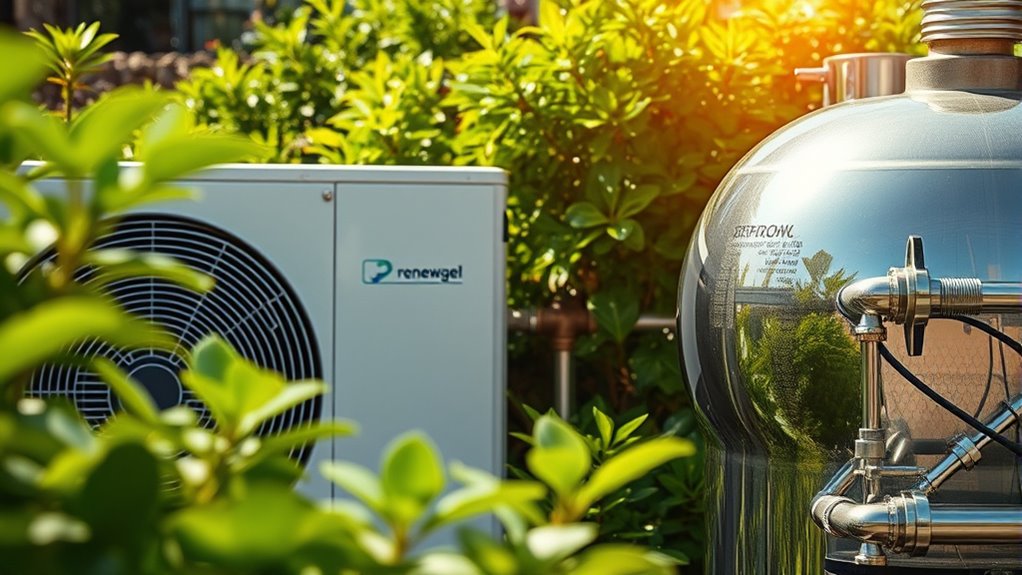
As renewable heat pump systems become more widespread, guaranteeing a reliable backup energy source is essential, especially during periods of low renewable output. Hydrogen presents a promising option because it can provide clean, on-demand energy when the sun isn’t shining and the wind isn’t blowing. However, integrating hydrogen as a backup involves steering through significant challenges related to hydrogen safety and storage. You need to understand the risks and develop strategies to mitigate them to guarantee a safe and efficient system.
Hydrogen safety is a critical concern. It’s the lightest element and highly flammable, which demands rigorous safety protocols. You must guarantee proper handling, storage, and transportation to prevent leaks or explosions. This involves using specialized materials resistant to hydrogen embrittlement, implementing leak detection systems, and establishing strict operational procedures. Additionally, safety standards and regulations are continually evolving, so staying up-to-date is vital. Proper training for personnel handling hydrogen can prevent accidents and foster a culture of safety, especially because hydrogen’s invisible, odorless nature makes leaks harder to detect. When contemplating hydrogen as a backup, you must also plan for emergency response strategies and safety infrastructure, such as ventilation systems and fire suppression, to minimize risks.
Hydrogen safety requires strict protocols, specialized materials, and ongoing training to prevent leaks and ensure safe handling.
Storage challenges are another significant hurdle. Hydrogen’s low density means it needs to be stored under high pressure, at very low temperatures as a liquid, or within chemical compounds, each method presenting its own complexities. High-pressure tanks require robust design and regular maintenance to prevent failures, while cryogenic storage involves insulation and energy-intensive cooling systems. Chemical storage options, like metal hydrides, are still in developmental stages and can be costly or inefficient. You also have to consider space limitations and the economic implications of large-scale hydrogen storage solutions. Balancing safety, cost, and efficiency becomes essential when designing a hydrogen backup system. The infrastructure for storing and refueling hydrogen must be reliable and resilient to support continuous energy supply, especially during extended periods of low renewable generation. Additionally, advances in hydrogen storage technology are crucial to overcoming current limitations and making hydrogen a more practical backup fuel.
Despite these challenges, hydrogen offers a versatile and clean backup energy source that can help stabilize your renewable heat pump system. By carefully addressing hydrogen safety concerns and overcoming storage challenges, you can create a resilient energy solution that enhances reliability and reduces carbon emissions. Investing in advanced storage technologies and safety measures is essential, as is collaborating with experts and regulators to guarantee compliance and safety. While hurdles remain, the potential benefits of hydrogen as a backup fuel make it a compelling option for a sustainable energy future.
hydrogen storage tanks for home use
As an affiliate, we earn on qualifying purchases.
As an affiliate, we earn on qualifying purchases.
Frequently Asked Questions
How Does Hydrogen Storage Impact Overall System Efficiency?
Hydrogen storage can reduce your system efficiency because it introduces energy losses during compression, cooling, and retrieval. These losses mean you need more input energy to store and access hydrogen, lowering overall efficiency. Additionally, the storage method’s effectiveness impacts how much hydrogen you can store and how quickly you can use it. While hydrogen offers a backup, managing storage loss is vital to maintaining peak system performance.
What Are the Safety Considerations for Hydrogen Backup Systems?
Imagine a world where hydrogen backup systems keep your heat pump running smoothly, but safety isn’t guaranteed. Hydrogen safety concerns, especially storage hazards like leaks or explosions, demand strict precautions. You must guarantee proper ventilation, robust containment, and regular safety checks. Recognize that handling hydrogen requires vigilance—any oversight could lead to dangerous leaks or fires. Staying informed and adhering to safety protocols keeps your system safe and reliable.
Can Existing Heat Pumps Integrate Hydrogen Backup Seamlessly?
You can integrate hydrogen backup systems with existing heat pumps, but it requires compatible hydrogen infrastructure and proper modifications. Policy incentives may support upgrades and safety standards, making the shift smoother. Make sure your system’s components are designed or adapted for hydrogen use, and stay informed about local regulations. With the right infrastructure and policy support, seamless integration becomes feasible, enhancing your heat pump’s reliability and sustainability.
What Is the Cost Comparison Between Hydrogen and Traditional Backup Fuels?
They say “you get what you pay for,” and that holds true here. Hydrogen infrastructure costs are currently higher than traditional backup fuels like natural gas or electricity. A detailed cost analysis reveals hydrogen’s initial setup is more expensive, but potential long-term benefits may balance the scales. While hydrogen offers a cleaner alternative, expect higher upfront costs compared to conventional fuels, making it a more strategic investment for future energy resilience.
How Quickly Can Hydrogen Backups Respond to Power Outages?
Hydrogen backups can respond within seconds to minutes during power outages, thanks to advanced fuel cell technology. The existing hydrogen infrastructure enables quick deployment, ensuring seamless power supply. When your system detects an outage, fuel cells activate rapidly, providing reliable backup energy. This swift response minimizes downtime, making hydrogen a viable and efficient backup solution for renewable heat pump systems.
As an affiliate, we earn on qualifying purchases.
Conclusion
By blending bold backup options like hydrogen, you boost your heat pump’s reliability and resilience. This dynamic duo delivers dependable, decarbonized comfort, ensuring your home stays cozy even when renewables falter. Embrace innovative integrations to increase independence and ignite your journey toward greener, greater goals. With hydrogen helping harness heat, you hold the power to secure sustainable, seamless comfort—all while simplifying your switch to smarter, cleaner heating solutions.
high-pressure hydrogen cylinders
As an affiliate, we earn on qualifying purchases.
As an affiliate, we earn on qualifying purchases.
As an affiliate, we earn on qualifying purchases.
Fall Picks
fall essentials
As an affiliate, we earn on qualifying purchases.