
Smart thermostats help you save energy by intelligently managing your home’s temperature and reducing unnecessary heating or cooling. They allow you to control your system remotely and adapt to your schedule, which optimizes energy use and cuts utility costs. Installing one is quick and simple, often DIY, and compatible with most HVAC setups. By integrating voice commands and automation, they make managing your comfort effortless. Keep exploring to discover how these devices can make your home more efficient and eco-friendly.
Key Takeaways
- Smart thermostats optimize energy use by adjusting temperatures based on occupancy and schedules.
- Voice control and remote access enable quick, effortless temperature adjustments, reducing unnecessary energy consumption.
- Integration with smart home systems allows for automated routines that enhance energy efficiency.
- Adaptive learning features help the thermostat fine-tune settings for maximum savings and comfort.
- Easy installation and setup encourage widespread adoption, leading to more energy-conscious home environments.
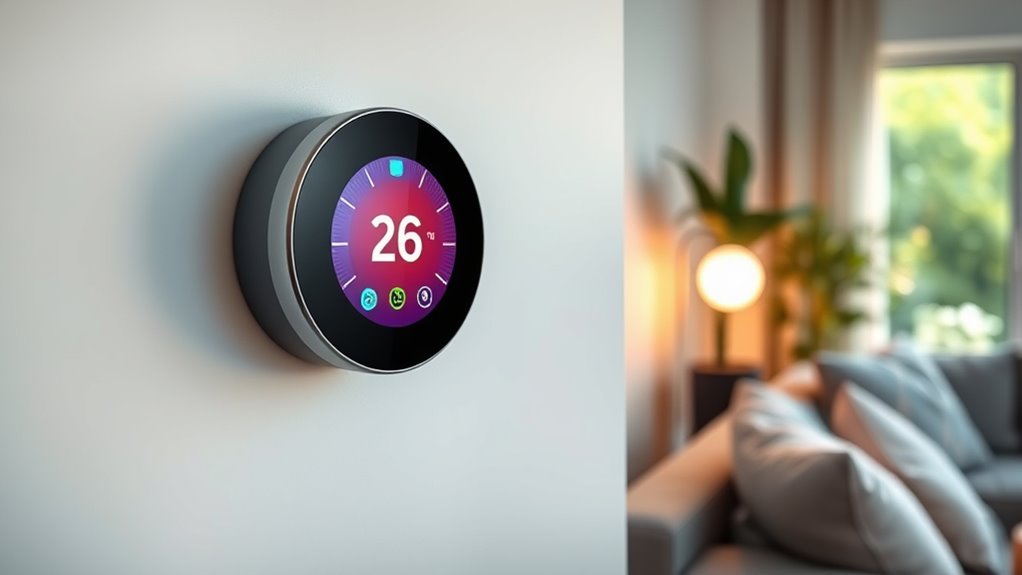
Smart thermostats are revolutionizing the way you control your home’s heating and cooling systems. With the integration of voice control, you can now adjust your home’s temperature effortlessly, just by speaking. Imagine telling your thermostat to turn up the heat or lower the AC without lifting a finger—this convenience makes managing your home environment simpler and more intuitive. Voice control features are often compatible with popular smart assistants like Alexa, Google Assistant, or Siri, allowing you to incorporate your thermostat into your existing smart home ecosystem seamlessly. You simply need to enable the feature through the device’s app, connect it to your Wi-Fi network, and grant the necessary permissions. Once set up, controlling your thermostat becomes as natural as having a conversation.
When it comes to the installation process, most smart thermostats are designed with user-friendliness in mind. In many cases, you can install one yourself without needing professional help. The process typically involves turning off your existing HVAC system’s power, removing your old thermostat, and mounting the new device on the wall. The manufacturer usually provides a step-by-step guide, and many models come with color-coded wiring diagrams that make identifying and connecting wires straightforward. Before starting, it’s essential to check if your HVAC system is compatible with the smart thermostat—most are compatible with common systems, but some older or more complex setups might require professional installation. Still, many users find that the installation process takes less than an hour, especially with clear instructions.
Understanding city dynamics and local climate can help you optimize your thermostat settings for maximum energy savings and comfort. During installation, you’ll connect the wires from your current thermostat to the corresponding terminals on the smart device. Many thermostats come with a built-in display and a simple setup wizard that walks you through connecting to Wi-Fi and configuring basic preferences. Once installed, you can download the app associated with your thermostat, which allows you to control, schedule, and monitor your system remotely. Additionally, these apps often include step-by-step troubleshooting guides, making it easier to resolve any issues that arise during setup. Overall, the installation process is designed to be quick and accessible, giving you immediate control over your home’s climate and energy use. With voice control capabilities and straightforward setup, smart thermostats empower you to optimize comfort and save energy without hassle.
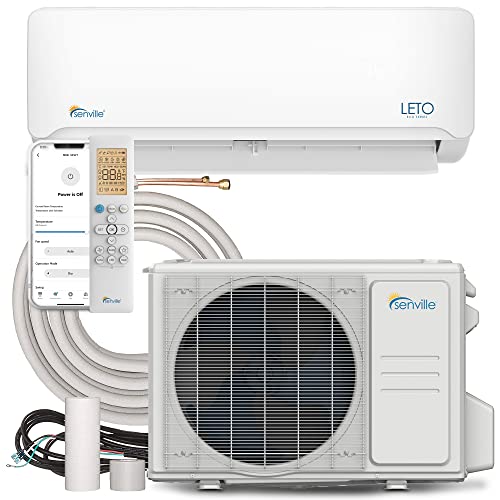
Senville LETO Series Mini Split Air Conditioner Heat Pump, 12000 BTU 110/120V, Inverter, Works with Alexa, SEER2 20.8, 1 Ton, White
Alexa Enabled Mini Split AC/Heating System: Integrate with voice control or app, allowing you to adjust your mini...
As an affiliate, we earn on qualifying purchases.
Frequently Asked Questions
Do Smart Thermostats Work With All HVAC Systems?
Smart thermostats don’t work with all HVAC systems due to compatibility concerns. Before buying, you should check your system’s wiring and features to guarantee they match the thermostat’s installation requirements. Some older or specialized systems may need additional components or may not be compatible at all. It’s best to consult your HVAC manufacturer or a professional installer to confirm compatibility and smooth installation.
How Secure Is My Data With a Smart Thermostat?
Think of your smart thermostat as a guarded treasure chest. While it holds your data, manufacturers use data encryption to lock it tight, reducing privacy concerns. Like a vigilant protector, these security measures keep your information safe from intruders. Still, stay cautious—regular updates and strong passwords act as your armor, ensuring your data remains private. Trust in robust security practices, and your information stays secure within your smart home.
Can Smart Thermostats Learn From My Behavior Automatically?
Yes, smart thermostats can learn from your behavior automatically. They use behavior learning and automation features to adapt to your schedule, adjusting temperatures based on when you’re home or away. Over time, they analyze your routines to optimize comfort and energy savings without needing manual input. This intelligent learning helps create a more personalized environment and enhances efficiency, making your home smarter and more responsive to your daily habits.
What Is the Typical Cost of Installing a Smart Thermostat?
The typical installation costs for a smart thermostat range from $100 to $250, depending on your home’s existing wiring and the model you choose. You should consider your budget considerations, as some models require professional installation, adding to the cost. While DIY options are available, make certain you’re comfortable with the setup process to avoid extra expenses. Overall, investing in a smart thermostat can save you money long-term through energy efficiency.
Are There Any Rebates or Incentives for Upgrading?
Yes, you can find rebate programs and government incentives that make upgrading to a smart thermostat more affordable. Many local utility companies and government agencies offer rebates to encourage energy efficiency. Check your area’s specific programs, as incentives can vary. Applying is usually straightforward, and these rebates can substantially reduce your overall installation costs, helping you save on energy bills while enjoying smarter climate control at home.
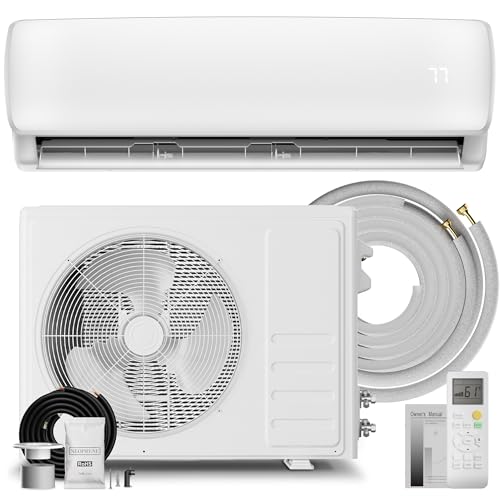
MEPTY 9000BTU Mini Split AC/Heating System, 19 SEER2 Energy Efficient Mini Split Air Conditioner with Heat Pump, 110V Cools Up to 450sq.ft, Ductless Inverter AC Unit with Pre-Charged Condenser
⭐Advanced Energy Saving: Advanced inverter technology with leading 19 SEER2 rating delivers superior performance through ensuring that the...
As an affiliate, we earn on qualifying purchases.
Conclusion
So, why sweat the small stuff—or your energy bills—when a smart thermostat can do it for you? With just a few taps, you’re basically giving Mother Nature a high-five while saving cash. Who knew being eco-friendly could be this easy? Skip the guesswork, embrace the future, and let your thermostat handle the boring stuff. After all, saving energy has never looked this slick—and sarcastic. Go ahead, upgrade and watch your bills shrink!

DELLA Motto Series Mini Split AC, 208-230V 17.5 SEER2 Cools up to 550 Sq.Ft, 12000 BTU Air Conditioner & Heater with 1 Ton Pre-Charged Heat Pump, Works with Alexa and WiFi
QUIET OPERATION & INSTALLATION: This system mandates professional installation as it's not a DIY mini split AC. This...
As an affiliate, we earn on qualifying purchases.

Manastin 12000BTU Mini Split Air Conditioner& Heater, 17 SEER2 115V Mini Spilt AC with Inverter Compressor, Covers Up to 750 Sq. Ft, Complete Installation Kit Included
【𝑭𝒂𝒔𝒕 𝑪𝒐𝒐𝒍𝒊𝒏𝒈 𝒂𝒏𝒅 𝑯𝒆𝒂𝒕𝒊𝒏𝒈 𝑷𝒆𝒓𝒇𝒐𝒓𝒎𝒂𝒏𝒄𝒆】Powered by a high-efficiency rotary compressor, this mini split air conditioner delivers rapid cooling...
As an affiliate, we earn on qualifying purchases.