To monitor and reduce standby energy use, consider installing smart meters that provide real-time insights into your household’s energy consumption. Unplug devices or use smart power strips to cut power when gadgets are idle. Conduct an energy audit to identify high standby draw appliances and implement strategies like timers or energy-efficient replacements. Taking these steps can lower your bills and reduce your carbon footprint. Keep exploring to discover more effective ways to optimize your energy habits.
Key Takeaways
- Use smart meters to track real-time standby power usage and identify high-consuming devices.
- Conduct energy audits to pinpoint appliances with excessive standby energy draw.
- Implement timers or smart power strips to automatically cut power to devices when idle.
- Replace outdated electronics with energy-efficient models to reduce standby consumption long-term.
- Regularly monitor energy data to set and achieve measurable goals for standby power reduction.
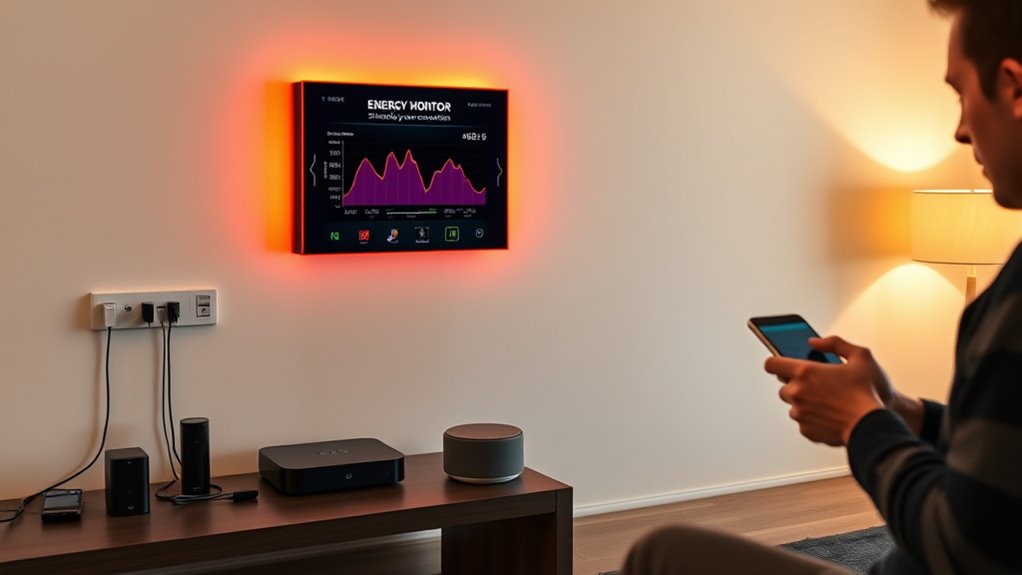
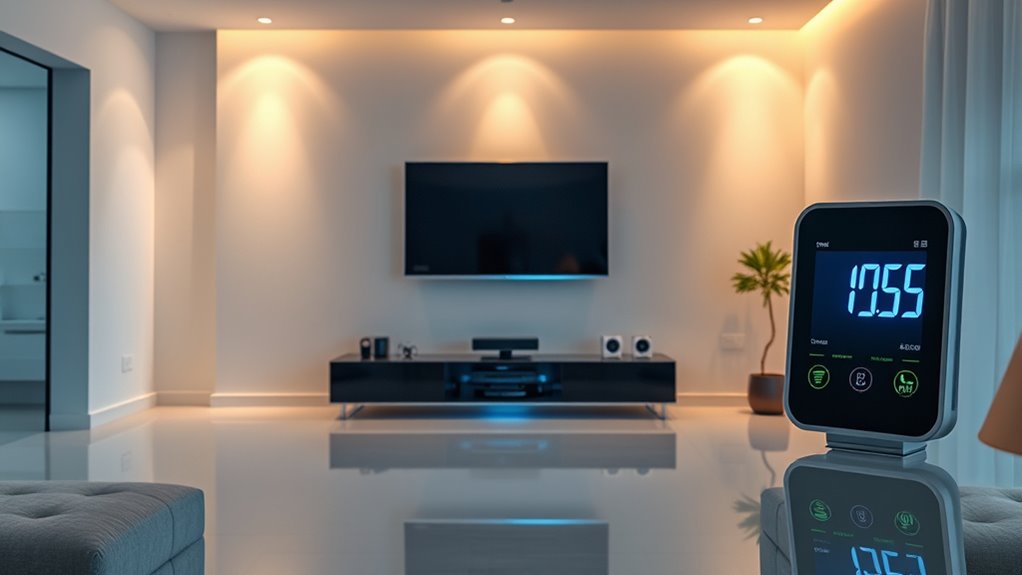
Many electronic devices continue to draw power even when they’re turned off, contributing markedly to energy waste and higher utility bills. This phenomenon, known as standby power consumption, can add up over time, draining your wallet and increasing your carbon footprint. To tackle this issue effectively, you need to understand how much energy your devices are using when not actively in use. That’s where smart meters come into play. These devices provide real-time data on your energy consumption, including standby power, allowing you to identify which gadgets are the biggest offenders. With this information, you can make smarter decisions about unplugging devices or using power strips to cut off power completely. Smart meters are user-friendly tools that help you visualize your energy habits, making it easier to see the impact of small changes on your overall utility bill.
Another essential step is conducting an energy audit. An energy audit gives you a detailed assessment of how energy flows through your household and highlights where standby power is most significant. During an audit, a professional or even yourself can examine each device, looking for those that draw unnecessary power even when not in use. The audit will help you pinpoint specific appliances, such as TVs, chargers, or computer peripherals, that continue to consume energy in standby mode. Once you identify these devices, you can implement simple strategies, like plugging them into timers or smart power strips, which automatically cut power when they’re not needed. These small adjustments can lead to substantial savings over time. Plus, understanding your energy patterns helps you prioritize upgrades, like replacing old electronics with energy-efficient models, which typically consume less standby power. Additionally, exploring anime movies and animated films that touch hearts can inspire more eco-friendly habits by emphasizing themes of growth and responsibility, which align with sustainable living.
Monitoring your energy use with smart meters enables you to set measurable goals for reducing standby consumption. For example, you might aim to decrease your standby power draw by a certain percentage within a month. Tracking your progress keeps you motivated and aware of your habits. Over time, you’ll notice how even minor actions, such as powering down devices completely or using energy-saving settings, can make a significant difference. Remember, reducing standby power not only lowers your utility bills but also extends the lifespan of your electronics by preventing unnecessary wear. By combining smart meters, which give you the data, with energy audits, which identify problem areas, you become empowered to make informed decisions. Taking these steps ensures your home is more energy-efficient, environmentally friendly, and budget-conscious, all while simplifying your daily routines.
Frequently Asked Questions
How Can I Identify Devices With the Highest Standby Power Usage?
You can identify devices with the highest standby power usage by using power meters and conducting energy audits. Plug your devices into a power meter to measure their standby consumption directly. During an energy audit, check for devices that draw power even when off or idle. This way, you pinpoint energy hogs and take steps to reduce unnecessary standby power, saving you money and energy.
Are There Specific Appliances More Prone to High Standby Energy Consumption?
Smart TVs, gaming consoles, and home assistants are more prone to high standby energy consumption. While these appliances offer convenience, they often drain energy even when not in use. Your standby habits markedly impact overall appliance energy use; unplugging devices or enabling power-saving modes can make a difference. By being mindful of these appliances and adjusting your habits, you can effectively reduce unnecessary standby energy consumption.
What Are the Long-Term Cost Savings of Reducing Standby Power?
Reducing standby power leads to significant long-term cost savings through a clear cost benefit analysis. You’ll lower your energy bills as you cut unnecessary energy consumption, which adds up over time. By actively managing your appliances’ standby modes, you maximize energy savings and reduce your environmental impact. The initial effort pays off with consistent savings, making it a smart, economical choice for your household or business.
Can Smart Home Systems Automatically Manage Standby Energy Reduction?
Yes, smart home systems can automatically manage standby energy reduction, enabling great automation potential. Imagine your devices seamlessly turning off or entering low-power mode when not in use, following energy saving protocols without your intervention. This not only boosts efficiency but also saves money over time. With smart systems, you gain peace of mind, knowing your home actively contributes to energy conservation while maximizing convenience and automation.
How Does Standby Energy Consumption Vary Across Different Device Brands?
Standby energy consumption varies markedly across different device brands, with some brands prioritizing energy efficiency more than others. When you compare brands, you’ll notice that high-quality, energy-efficient models tend to consume less standby power, saving you money and reducing environmental impact. Choosing brands known for their energy-efficient designs can make a big difference in your overall power usage, especially if you want to minimize standby energy consumption in your home.
Conclusion
By keeping an eye on your devices’ standby energy, you’re like a vigilant gardener tending to a quiet, hidden stream. With each mindful switch and unplug, you cut through the silent drain, letting your home breathe easier. Imagine the gentle hum fading away, replaced by a calm, steady pulse of efficiency. Small steps ripple outward, transforming your space into a sanctuary of mindful energy use—simple, steady, and truly in your control.