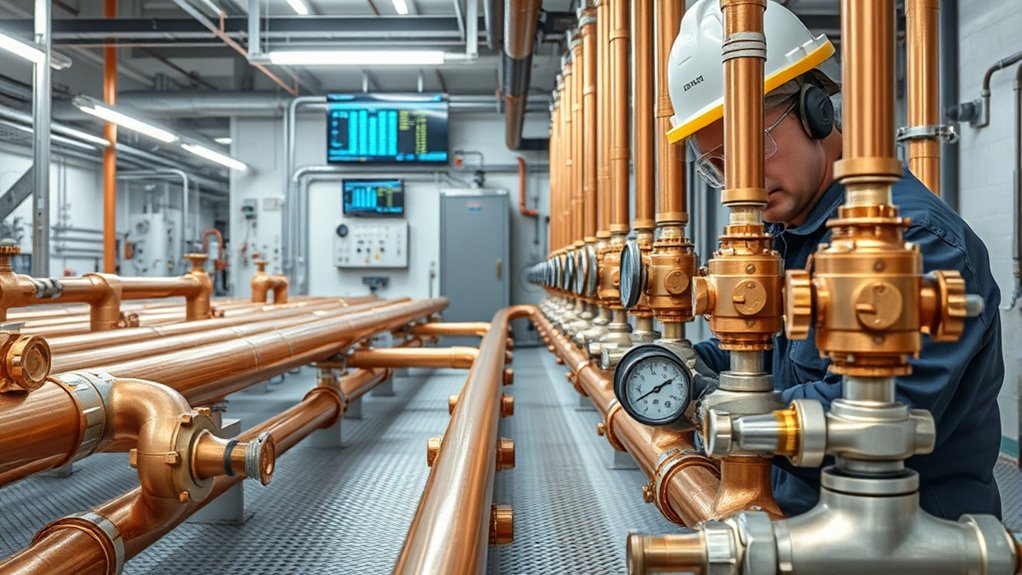

To guarantee your geothermal system lasts, it’s key to perform regular maintenance like loop flushing to remove mineral buildup and debris that can clog the system. Monitoring for early issues, such as leaks or corrosion, helps you catch problems before they worsen. Using corrosion prevention strategies, like inhibitors and sacrificial anodes, extends component life. Maintaining proper water chemistry also plays a crucial role. Keep these practices in mind, and you’ll discover more ways to keep your system running smoothly longer.

Get backup power and energy gear delivered free with Prime
- Fast, free delivery on millions of items
- Prime Video, Amazon Music and more included
- Member-only deals all year
Key Takeaways
- Regular loop flushing removes mineral buildup and debris, maintaining optimal flow and heat exchange efficiency.
- Continuous system monitoring and diagnostics help detect early signs of deterioration and prevent costly repairs.
- Implementing corrosion prevention strategies, like inhibitors and sacrificial anodes, extends component lifespan.
- Maintaining proper water chemistry, including pH balance, reduces corrosion and enhances system longevity.
- Combining routine maintenance with proactive inspections ensures consistent performance and maximizes system lifespan.

Have you wondered how to keep your geothermal system running efficiently? One of the most effective ways is through proper loop flushing and corrosion prevention. Loop flushing involves cleaning out the underground loops that transfer heat between your home and the earth. Over time, mineral buildup, debris, and algae can accumulate inside these loops, reducing heat transfer efficiency and causing your system to work harder. Regularly flushing the loops helps remove these deposits, restoring ideal flow and heat exchange. It’s a straightforward process that can prevent costly repairs down the line and extend your system’s lifespan. When you schedule a professional loop flushing, they use specialized equipment to circulate clean water or a flushing solution through the loop, dislodging and removing any obstructions. This maintenance step not only improves efficiency but also helps identify potential issues early, such as leaks or corrosion.
Additionally, focusing on system monitoring and diagnostics can help detect early signs of deterioration, allowing for timely intervention. Corrosion prevention is equally crucial. Since your geothermal system relies on buried pipes often made of metals like copper or steel, these materials are susceptible to corrosion over time. Corrosion can weaken your system’s components, leading to leaks, reduced efficiency, and eventually costly replacements. To prevent this, technicians often recommend installing corrosion inhibitors or using corrosion-resistant materials during installation. Regular inspections can also help catch early signs of corrosion, such as discoloration or small leaks. Applying protective coatings or sacrificial anodes can further shield your system’s components from corrosive elements, especially if your soil contains high mineral content or moisture levels that accelerate corrosion. Maintaining proper water chemistry is essential—improper pH levels or impurities can speed up corrosion processes. Ensuring your system’s water is balanced and free of corrosive contaminants can considerably prolong its operational life.
Combining loop flushing with proactive corrosion prevention measures creates a thorough maintenance strategy. This approach not only sustains peak system performance but also reduces the risk of unexpected breakdowns. When you stay on top of these maintenance tasks, you’re ensuring your geothermal system remains reliable and energy-efficient for years to come. Remember, routine inspections and professional servicing are key. Your technician can advise you on the best practices tailored to your specific system and local soil conditions. By investing in proper maintenance now, you’ll save money in the long run—avoiding costly repairs and ensuring your geothermal system continues to provide efficient heating and cooling for your home. Ultimately, consistent care, including loop flushing and corrosion prevention, is the foundation of maximizing your system’s longevity and performance.
As an affiliate, we earn on qualifying purchases.
Frequently Asked Questions
How Often Should Geothermal System Components Be Inspected?
You should schedule geothermal component inspections annually to guarantee peak performance. Regular maintenance scheduling helps identify potential issues early, preventing costly repairs and extending system lifespan. During these inspections, check the heat pump, underground loops, and electrical connections. Consistent upkeep keeps your geothermal system running efficiently, saving you energy and money. Staying proactive with inspections guarantees your system’s longevity and reliable operation year after year.
What Signs Indicate Geothermal System Failure?
You’ll notice geothermal system failure if you see signs like corrosion prevention issues or fluid leakage. Corrosion can cause pipes or components to weaken, while fluid leaks may reduce efficiency or damage the system. Unusual noises, temperature inconsistencies, or a sudden drop in performance also signal trouble. Regular inspections can catch these problems early, helping you prevent costly repairs and extend your system’s lifespan.
Are There Specific Maintenance Tips for Different Climate Zones?
Think of your geothermal system like a plant; it needs different care depending on the climate. In colder regions, you should schedule regular inspections to prevent freezing issues, while in warmer zones, focus on maintaining efficient heat exchange. Climate-specific maintenance and regional longevity tips guarantee your system runs smoothly year-round. By tailoring your approach, you extend your system’s life, just like a well-tended garden flourishes across diverse conditions.
How Does Seasonal Change Affect Geothermal System Performance?
Seasonal changes cause ground temperature fluctuations that impact your geothermal system’s performance. During colder months, the ground may be cooler, leading to seasonal efficiency variations as your system works harder to extract or disperse heat. Conversely, in warmer seasons, the ground stays warmer, improving efficiency. To maintain peak performance year-round, consider adjusting your system settings and scheduling regular maintenance to adapt to these seasonal efficiency variations.
What Are the Costs Associated With Geothermal System Repairs?
The costs for geothermal system repairs vary depending on the issue, but generally, you can expect a cost comparison to traditional HVAC repairs, often being more affordable long-term. Repair scheduling is essential to prevent major problems, so addressing minor issues early can save money. Keep in mind, regular maintenance minimizes unexpected expenses, ensuring your system runs efficiently and lasts longer, reducing overall repair costs over time.
As an affiliate, we earn on qualifying purchases.
Conclusion
Think of your geothermal system as a garden that needs regular care. With proper maintenance, you’re watering and tending its roots, ensuring it stays strong and vibrant through the seasons. Neglect, however, is like weeds taking over—choking its potential. By staying vigilant and attentive, you nurture a system that endures, growing more resilient with each passing year. Keep your geothermal garden healthy, and it’ll reward you with warmth and efficiency for decades to come.
geothermal system leak detection tools
As an affiliate, we earn on qualifying purchases.
As an affiliate, we earn on qualifying purchases.
sacrificial anodes for geothermal systems
As an affiliate, we earn on qualifying purchases.
As an affiliate, we earn on qualifying purchases.
Halloween Picks
halloween
As an affiliate, we earn on qualifying purchases.