
When developing geothermal installations, it’s vital to understand and follow the relevant regulations and permitting processes. You’ll need to secure licenses from local, state, and federal agencies by submitting detailed plans covering safety, environmental impacts, and land use. Early engagement with authorities and stakeholders helps avoid delays and fines. Staying informed about updates guarantees ongoing compliance. If you continue exploring, you’ll find how to streamline approvals and develop responsibly.
Key Takeaways
- Securing necessary licenses ensures compliance with local, state, and federal laws, preventing delays and legal issues.
- Environmental assessments, including EIAs, evaluate impacts on ecosystems, groundwater, and land use, facilitating approval.
- Engaging early with regulatory agencies and stakeholders promotes transparency and helps address concerns proactively.
- Understanding jurisdiction-specific permits related to water rights, land use, and habitat protection streamlines the permitting process.
- Non-compliance risks fines, project shutdowns, and legal repercussions, emphasizing the importance of thorough licensing and permitting.
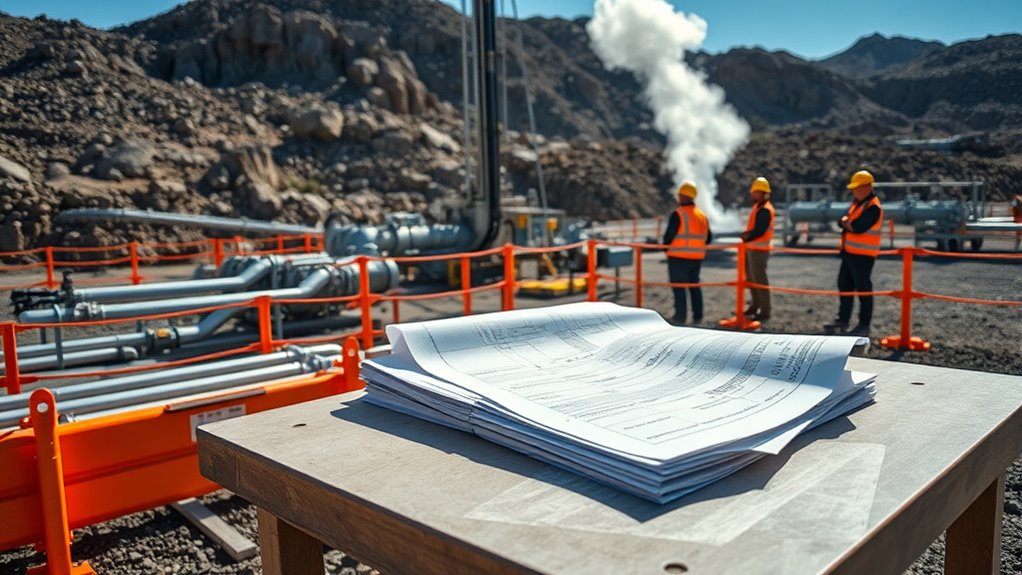
Navigating regulations and permitting for geothermal installations can seem daunting, but understanding the process is essential for a smooth project. Before you start drilling or installing any equipment, you’ll need to secure the appropriate geothermal licensing. This licensing ensures you comply with local, state, and federal laws governing geothermal energy development. The requirements vary depending on your location, but typically, you’ll need to submit detailed plans outlining your project’s scope, safety measures, and environmental considerations. Licensing agencies want to confirm that your project won’t interfere with other underground utilities or cause environmental harm. Securing geothermal licensing early in the process helps you avoid costly delays later on.
Securing geothermal licenses early prevents delays and ensures compliance with environmental and safety standards.
Alongside licensing, obtaining environmental approvals is a critical step. These approvals assess how your geothermal installation might impact local ecosystems, groundwater quality, and land use. You should be prepared to conduct environmental impact assessments (EIAs) that identify potential risks and propose mitigation strategies. Agencies scrutinize factors like groundwater drawdown, thermal pollution, and land disturbance to ensure your project aligns with environmental standards. Depending on your jurisdiction, you might need specific permits related to water rights, land use, or habitat protection. Providing comprehensive data and demonstrating responsible management practices can streamline the approval process.
It’s important to stay informed about any changes in regulations that could affect your project. Regulations around geothermal licensing and environmental approvals are subject to updates, often driven by evolving environmental policies or technological advances. Regularly consulting the relevant agencies’ websites or working with legal experts can keep you ahead of new requirements. Additionally, engaging with local communities and stakeholders early on can help address concerns and facilitate smoother approval processes. Transparency and proactive communication demonstrate your commitment to responsible development, which can positively influence regulatory decisions.
Furthermore, understanding the regulatory framework in your jurisdiction can help you anticipate and prepare for potential challenges throughout your project. Remember that the permitting process isn’t just a bureaucratic hurdle; it’s designed to protect public health, the environment, and your project’s long-term viability. Failing to secure the necessary licenses and approvals can result in fines, project delays, or even shutdowns. Therefore, allocate sufficient time and resources to navigate these procedures. Working with experienced consultants or legal advisors familiar with geothermal regulations can make your journey more efficient. Keep detailed records of all submissions and correspondence, as this documentation can be invaluable if any disputes or questions arise during the review process.
Frequently Asked Questions
How Long Does the Permitting Process Typically Take?
The permitting process usually takes between 3 to 6 months, depending on your location and project complexity. Your Permitting timeline involves completing approval procedures, which include submitting detailed plans and environmental assessments. You should stay in contact with local authorities, guarantee all documentation is accurate, and respond promptly to any questions. Preparing early and understanding the local requirements can help speed up the process and avoid delays.
Are There Federal Incentives for Geothermal System Installations?
Yes, there are federal incentives for your geothermal system installation. You can benefit from federal incentives like geothermal grants and tax credits that help reduce your upfront costs. These incentives encourage renewable energy adoption and can substantially lower your overall investment. Be sure to check current programs available through the Department of Energy or IRS, as they may change annually, and eligibility requirements vary.
What Safety Standards Must Be Met During Installation?
You must follow strict safety standards during geothermal installation to prevent accidents. This includes wearing proper safety equipment like helmets, gloves, and eye protection. Adhere to installation protocols such as proper handling of drilling tools and managing high-pressure systems carefully. Ensuring safety compliance not only protects you but also guarantees the system’s longevity and efficiency, reducing risks of hazards like leaks or equipment failure during the installation process.
Can Existing Properties Be Retrofitted for Geothermal Systems?
Yes, you can retrofit existing properties with geothermal systems. You’ll need to take into account existing property modifications, such as drilling and installing underground loops, which may pose retrofit challenges like limited space or structural constraints. Proper planning ensures minimal disruption, and professional assessments help identify the best approach. While retrofit challenges exist, with careful design and expertise, you can successfully upgrade your property to geothermal energy, increasing efficiency and reducing long-term costs.
Are There Specific Zoning Restrictions for Geothermal Drilling?
You might worry about zoning restrictions when considering geothermal drilling, but in most cases, these are manageable. Local zoning restrictions and drilling permits vary, so you should check with your city or county offices first. They’ll clarify if specific zoning restrictions apply and what permits you need. Staying informed helps ensure your project runs smoothly, and most restrictions are straightforward with proper planning and permissions.
Conclusion
Managing regulations and permits for geothermal installations might seem daunting, but staying informed guarantees smooth progress. Did you know that over 60% of geothermal projects in the U.S. face delays due to permitting issues? By understanding local requirements and working closely with authorities, you can avoid costly setbacks. Remember, proactive planning not only secures your project’s success but also accelerates the shift toward sustainable, renewable energy sources.