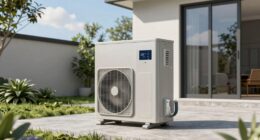
Geothermal heat pumps provide an efficient and eco-friendly way to heat your home and water by utilizing the earth’s stable underground temperature. They work by circulating a fluid through underground loops to transfer heat in winter or cool your space in summer, reducing energy costs and carbon footprint. These systems are durable, low maintenance, and can last for decades. If you want to discover how this innovative technology can benefit you, keep exploring the details.
Key Takeaways
- Geothermal heat pumps efficiently provide both space heating and water heating by leveraging stable underground temperatures.
- They circulate a fluid through underground loops to transfer heat for hot water production year-round.
- These systems reduce reliance on conventional water heaters, lowering energy consumption and utility costs.
- Installation involves underground loop installation, offering long-term durability and minimal maintenance.
- Using geothermal water heating solutions supports eco-friendly living by reducing carbon emissions and promoting sustainability.

Geothermal heat pumps offer an efficient and sustainable way to heat your home and water by tapping into the stable underground temperature. This technology relies on a ground source system, where pipes are buried underground to access the consistent thermal energy stored beneath the surface. Because the earth maintains a relatively constant temperature throughout the year, your system can operate more effectively than traditional heating methods, reducing energy consumption and lowering utility bills. When you choose a ground source heat pump, you’re investing in a solution that maximizes energy efficiency, making it an eco-friendly option that minimizes your carbon footprint.
Geothermal heat pumps provide sustainable, efficient heating by utilizing stable underground temperatures year-round.
The core of a ground source geothermal system consists of a series of pipes—also called loops—installed underground. These loops circulate a fluid that absorbs heat from the earth during winter and dissipates heat back into the ground during summer. This process allows the system to transfer heat efficiently, eliminating the need for burning fossil fuels or relying on electric resistance heating. Because of this, your heating and cooling demands are met with markedly less energy, translating into lower costs and a smaller environmental impact. The high energy efficiency of ground source systems means you’ll see a quicker return on your investment, especially in areas where traditional heating systems struggle with high energy demands.
Installing a ground source heat pump requires some upfront planning, but the long-term benefits are worth it. Once in place, the system operates quietly and with minimal maintenance, providing consistent indoor comfort year-round. The system’s ability to leverage the earth’s natural thermal properties makes it an ideal choice for water heating as well. You can connect the geothermal system directly to your hot water supply, ensuring a reliable, energy-efficient source of hot water for daily use. This integration not only cuts down on energy costs but also reduces your reliance on conventional water heaters, which often waste energy.
In addition to its efficiency, a ground source heat pump offers durability and longevity. The underground loops typically last for decades, and the system as a whole can operate effectively for 25 years or more with proper maintenance. Over time, the savings on energy bills and the positive environmental impact make this investment highly worthwhile. By choosing a geothermal solution, you’re harnessing the earth’s natural energy, making your home more sustainable and energy-efficient. It’s a smart, forward-thinking way to meet your heating and water needs while doing your part to protect the environment. Recognizing the importance of reliable, stable energy sources can help you make an informed decision about implementing geothermal technology in your home.

PelPro PP150 Pellet Stove for Home Heating - 150 lb Hopper, 49,200 BTU Heats up to 2,500 Sq. Ft., Easy-Dial Temp Control, Built-in Thermostat with Auto-Ignition, Powerful & Quiet 265CFM Blower
PP150 pellet stoves for fireplaces are efficient for home heating up to 2,500 sq. ft. at almost 50,000...
As an affiliate, we earn on qualifying purchases.
Frequently Asked Questions
What Is the Typical Lifespan of a Geothermal Water Heating System?
A geothermal water heating system typically lasts around 25 to 30 years, thanks to its high system durability and component longevity. You can expect the underground loops to endure even longer, often 50 years or more with proper maintenance. Regular upkeep guarantees your system remains efficient and reliable, helping you maximize its lifespan. Overall, investing in quality components and routine servicing extends the life of your geothermal water heating system.
How Much Space Is Needed for Installing Geothermal Water Heaters?
Think of your installation space as the canvas for a geothermal masterpiece. You’ll need enough room for the equipment footprint, typically about 4 to 6 feet wide and 10 to 20 feet long, depending on system size. This space allows for easy installation and maintenance. Usually, you’ll require a dedicated outdoor area or a well-ventilated indoor spot, ensuring the system fits seamlessly into your property’s landscape.
Are There Any Government Incentives for Geothermal Water Heating Upgrades?
Yes, there are government programs offering financial incentives for geothermal water heating upgrades. You might qualify for tax credits, rebates, or grants designed to reduce your initial costs. These incentives aim to promote renewable energy use and can considerably lower your investment. Check with local or federal agencies to find current programs, as eligibility criteria and amounts vary. Taking advantage of these incentives makes upgrading to geothermal water heating more affordable.
Can Geothermal Systems Be Integrated With Existing Heating Infrastructure?
Integrating geothermal systems with your existing setup is like fitting a new piece into a puzzle. You can often create hybrid systems, blending geothermal with traditional heating, thanks to retrofit compatibility. This approach allows you to upgrade without tearing out your current infrastructure. Many geothermal systems are designed to work seamlessly with existing equipment, making the shift smoother and more cost-effective while maximizing energy efficiency.
What Maintenance Is Required for Geothermal Water Heating Systems?
You need to regularly check your geothermal water heating system for corrosion prevention, which can extend its lifespan. Periodic system flushing helps remove mineral buildup and debris, ensuring efficient operation. Keep an eye on filters and replace them as needed, and schedule professional inspections annually. Proper maintenance minimizes issues, improves energy efficiency, and keeps your system running smoothly for years to come.

Canyon Lodge Large Pellet Stove
Heats up to 2,000-3,000 sq. ft.
As an affiliate, we earn on qualifying purchases.
Conclusion
By choosing geothermal heat pumps and water heating solutions, you can substantially cut your energy costs—up to 70% according to recent studies. Not only do you reduce your carbon footprint, but you also benefit from reliable, efficient heating year-round. With such impressive savings and environmental benefits, it’s clear that investing in geothermal technology is a smart move for your home and the planet. Make the switch today and enjoy the long-term rewards.

CADPXS Crawl Space Dehumidifier with Pump and Drain Hose, 80 Pint Crawlspace Dehumidifier for Commercial, Basement, Water Damage Use, Auto Defrost, Memory Start, cETL Certified, Up to 1000 Sq Ft
80 PINTS COMMERCIAL DEHUMIDIFIER: Control excess moisture efficiently with the CADPXS 80-pint crawl space dehumidifier with pump. Designed...
As an affiliate, we earn on qualifying purchases.

ALORAIR Whole House Dehumidifier, 90 PPD Commercial Grade Whole Home Dehumidifiers for Garages, Water Damage Restoration, 2300 Sq.Ft dehumidifiers for Crawl Space
Energy Efficient Whole House Dehumidifier: 90 pints per day at AHAM condition, 70 Pint at DOE, up to...
As an affiliate, we earn on qualifying purchases.