
When designing a geothermal heat pump system, you should carefully choose the right loop configuration—horizontal, vertical, or pond/lake—based on your site’s land size, space, and water availability. Properly sizing the ground loops is essential to maximize efficiency and longevity, considering factors like soil thermal properties and geology. Getting these details right prevents higher costs and reduces system issues. Continue to explore more insights to optimize your geothermal design effectively.
Key Takeaways
- Assess site conditions, land availability, and budget to select the appropriate loop configuration type.
- Properly size the ground loops based on the building’s heating and cooling loads to ensure efficiency.
- Consider soil and rock thermal properties, moisture content, and geological factors influencing heat transfer.
- Balance initial installation costs with long-term operational efficiency when choosing loop design.
- Avoid undersizing or oversizing loops to prevent system inefficiencies, increased costs, and equipment failure.
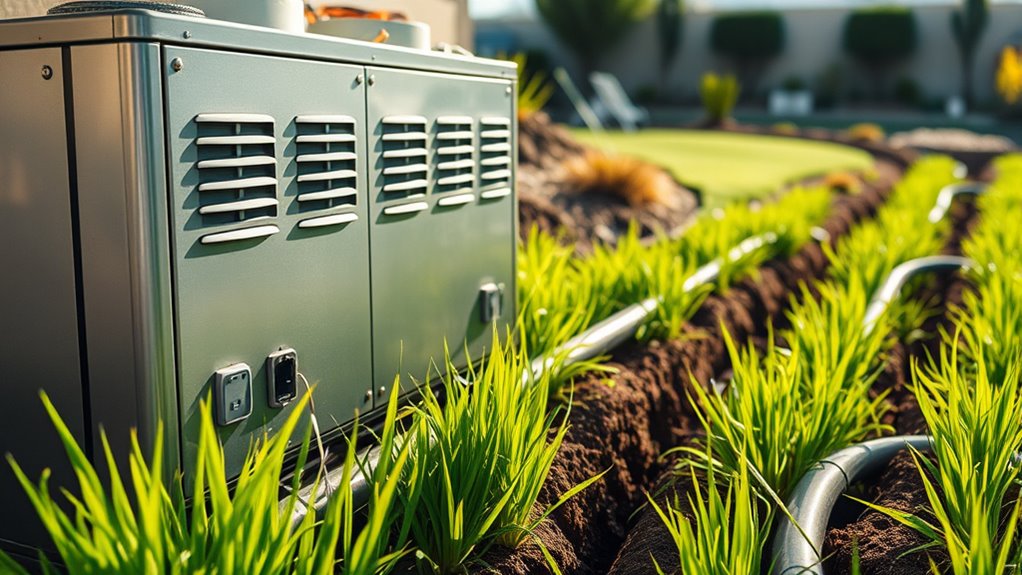
Have you ever wondered what factors influence the efficiency and longevity of a geothermal heat pump system? One of the most critical aspects is choosing the right loop configuration and guaranteeing proper ground loop sizing. The loop configuration refers to how the ground loops are arranged—whether in a horizontal, vertical, pond/lake, or spiral design. Each setup has its advantages and limitations, depending on your site conditions, available land, and budget. Horizontal loops are often cost-effective and easier to install but require more land area, making them suitable for large properties. Vertical loops, on the other hand, are ideal for smaller sites with limited space but tend to have higher drilling costs. Pond or lake loops can be an excellent option if you have access to a suitable body of water, providing a less invasive installation method, but their feasibility depends on water availability and thermal properties. Proper ground loop sizing is equally crucial because it directly impacts system efficiency and durability. Proper sizing involves calculating your building’s heating and cooling loads and matching them with an appropriately sized ground loop. If the loop is too small, it won’t transfer enough heat, causing the system to work harder, increase energy consumption, and potentially shorten its lifespan. Conversely, oversizing the loop can lead to unnecessary costs and excessive installation efforts without significant performance benefits. Therefore, accurate ground loop sizing involves evaluating soil and rock thermal conductivity, moisture content, and local geological conditions. These factors influence how well the ground can absorb or release heat, which in turn affects the system’s capacity and efficiency. Additionally, understanding the nutritional advantages of green juice can offer insight into optimizing health and wellness, much like selecting the right ground loop enhances system performance. When designing your geothermal system, don’t underestimate the importance of these considerations. Your choice of loop configuration should align with your property’s physical characteristics and your budget, while ground loop sizing must be based on precise calculations and site-specific data. An improperly configured or undersized ground loop can cause frequent system cycling, increased energy bills, and premature equipment failure. Conversely, a well-designed loop configuration and correctly sized ground loop will maximize heat transfer efficiency, reduce operating costs, and guarantee system longevity. Investing time and resources into these foundational decisions pays off over the system’s lifespan, providing reliable, energy-efficient climate control that keeps your home comfortable year-round.

Jackery Explorer 300 Portable Power Station,292Wh
- Lightweight and Portable: Only 7.5 lbs with integrated handle
- Multiple Device Charging: 2 AC outlets, USB-C, USB-A, car port
- High Power Output: 300W rated, 600W surge capacity
As an affiliate, we earn on qualifying purchases.
Frequently Asked Questions
How Does Local Geology Affect Geothermal Heat Pump Installation?
Your local geology impacts geothermal heat pump installation because soil composition and geothermal gradient determine the system’s efficiency and feasibility. You need to evaluate soil types—rocky, sandy, or clayey—to guarantee proper ground loop installation. A higher geothermal gradient means more accessible heat exchange. By understanding these factors, you can optimize system design, ensuring reliable performance and energy savings tailored to your specific site conditions.
What Maintenance Is Required for Long-Term System Efficiency?
You need to regularly replace the system filter to keep your geothermal heat pump running efficiently. Check and clean or replace filters every 3-6 months. Additionally, monitor refrigerant levels and schedule a professional refrigerant recharge if you notice reduced performance or unusual noises. Routine maintenance like inspecting the pumps, cleaning the indoor and outdoor units, and checking for leaks will help maintain long-term system efficiency and extend its lifespan.
Can Geothermal Systems Be Expanded for Future Energy Needs?
Did you know geothermal systems can be scaled for future energy needs? Yes, they’re highly adaptable, offering excellent scalability potential. You can expand your system by adding more loops or units as your energy demands grow, making future expansion seamless. This flexibility guarantees your investment remains valuable over time, accommodating changes without needing a complete overhaul. So, with proper planning, your geothermal system can evolve alongside your increasing energy requirements.
Are There Environmental Impacts Associated With Geothermal Heat Pumps?
You’ll find that geothermal heat pumps have a relatively small environmental footprint compared to other energy sources. However, they can cause ecological effects like land disturbance during installation and potential impacts on groundwater flow. It’s important to carefully assess site-specific conditions to minimize these effects, ensuring the system’s sustainability and reducing its ecological impact. Proper planning and responsible installation help keep geothermal’s environmental footprint low.
What Is the Typical Lifespan of a Geothermal Heat Pump System?
You can expect a geothermal heat pump system to last around 20 to 25 years, thanks to its strong system durability and component longevity. Proper maintenance helps extend its lifespan, ensuring reliable performance over time. Regularly check and service the system, especially the underground loops and internal components, to keep it functioning efficiently. With good care, your geothermal system can serve you effectively for many years.

Portable Solar Generator 300W Portable Power Station with 60W Solar Panel
- Powerful 300W Portable Generator: Charges smartphones, tablets, laptops, and small devices
- Includes 60W Foldable Solar Panel: Recharges via solar, AC, or carport
- Multiple Charging Outlets: AC, DC, USB, and quick charge ports
As an affiliate, we earn on qualifying purchases.
Conclusion
As you finalize your geothermal heat pump design, remember that the best systems often align with unexpected factors—like local geology or seasonal weather patterns—that you might not have initially considered. These coincidences can influence performance and cost savings more than you expect. Stay flexible and observant, and you’ll find that the perfect design naturally emerges from paying attention to these subtle, often overlooked details. Sometimes, the smallest coincidence can make the biggest difference.

Jackery Solar Generator 1000 v2 and 200W Solar Panel,1070Wh,1500W AC
- Powerful AC Output: 1500W continuous, 3000W surge
- Lightweight & Portable: 23.8 lbs with foldable handle
- Fast Charging: 0-100% in 1 hour via app
As an affiliate, we earn on qualifying purchases.

YELOMIN 38800mAh Solar Power Bank, Portable Charger USB-C Fast Charging Compatible with iPhone Samsung, Dual LED Flashlight Battery Pack, 3 Output Backup Charger for Camping Hiking Outdoor Emergency
- High Capacity: 38800mAh portable solar power bank
- Weatherproof Design: Waterproof and dustproof for outdoor use
- Fast Charging: USB-C fast charging with 3 outputs
As an affiliate, we earn on qualifying purchases.