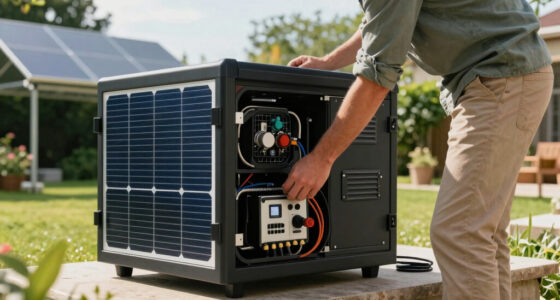
For most buyers, I’d start with the Jackery Solar Generator 1000 v2 with 200W Solar Panel: its matched panel and larger power station make a practical choice for longer trips and broader backup needs. The GRECELL 100W Foldable Panel is a simpler panel-only option, while the EcoFlow DELTA 3 Max with 220W panel suits buyers who need much more storage and output. The main tradeoffs are panel wattage, portability, connector compatibility, and whether a bundled power station is worth choosing over a panel alone. A larger panel can collect more energy in good sun, but it also takes up more space and may still be limited by your station’s solar-input specifications. Read on for my full comparison and guidance on matching a panel to your power station.

Get backup power and energy gear delivered free with Prime
- Fast, free delivery on millions of items
- Prime Video, Amazon Music and more included
- Member-only deals all year
Complete the kit


Key Takeaways
- Matched bundles reduce setup guesswork: Jackery’s Explorer 300 and Solar Generator 1000 v2 packages pair a named station with a panel, while standalone panels require buyers to check connectors and input limits themselves.
- Panel wattage separates light-duty charging from faster replenishment: the 40W and 60W bundles prioritize portability, while the 200W and 400W panels target higher collection potential at the cost of more space to carry and position.
- A higher panel rating is not a guarantee of faster charging: the power station’s maximum solar input, connector, and charging behavior can cap what it accepts.
- Panel-only picks offer more freedom but require more compatibility work: options such as the GRECELL, Renogy, and EBL panels need to match the buyer’s station and cabling.
- The roundup covers two different buying decisions: some entries are panels for an existing station, while others bundle a panel with a power station, so buyers should compare the complete setup rather than panel wattage alone.
| MARBERO M823 237Wh Portable Power Station with 60W Foldable Solar Panel |  | Best Entry-Level Solar Kit | Battery capacity: 237Wh / 64,000mAh | Included solar panel: 60W | Solar conversion rate: 21.5–23.5% | VIEW LATEST PRICE | See Our Full Breakdown |
| Anker SOLIX C300 DC Portable Power Station with 60W Solar Panel |  | Best for Fast-Charging Device Loads | Battery capacity: 288Wh | Battery chemistry: LiFePO4 | Output power: 300W | VIEW LATEST PRICE | See Our Full Breakdown |
| GRECELL 100W Foldable Portable Solar Panel |  | Best for Broad Power-Station Compatibility | Maximum power: 100W | Output voltage: 20V DC | Maximum amperage: 5A | VIEW LATEST PRICE | See Our Full Breakdown |
| SOKIOVOLA 100W Portable Foldable Solar Panel Charger with MC4 Connectors |  | Best Lightweight 100W Panel | Power output: 100W | Voltage: 18V DC | Amperage: 5.56A | VIEW LATEST PRICE | See Our Full Breakdown |
| Jackery Explorer 300 Portable Power Station with 40W Solar Panel |  | Best for Long-Life Battery Use | Battery capacity: 292Wh | Peak surge: 600W | Battery chemistry: LiFePO4 | VIEW LATEST PRICE | See Our Full Breakdown |
| EBL 200W Portable Foldable Solar Panel with MC-4 to 4-in-1 Cable |  | Best 200W Standalone Panel | Cell type: Monocrystalline silicon | Conversion efficiency: 23.5% | Maximum voltage: 35V DC | VIEW LATEST PRICE | See Our Full Breakdown |
| 100W Portable Foldable Solar Panel with USB-C/A & 20V DC XT60 Port |  | Best Lightweight Standalone Panel | Cell type: Grade A+ monocrystalline silicon | Conversion efficiency: 23.5% | Weight: 6 lb (2.75 kg) | VIEW LATEST PRICE | See Our Full Breakdown |
| Jackery Solar Generator 1000 v2 with 200W Solar Panel |  | Best Bundled Higher-Capacity System | Battery capacity: 1,070Wh | Battery type: LFP | AC output: 1,500W | VIEW LATEST PRICE | See Our Full Breakdown |
| Jackery Solar Generator 1000 v2 with 100W Solar Panel |  | Best UPS-Ready Solar Bundle | Battery capacity: 1,024Wh | Battery type: LiFePO4 (LFP) | AC output: 1,500W | VIEW LATEST PRICE | See Our Full Breakdown |
| ZeroKor 300W Portable Power Station with 60W Solar Panel |  | Best Entry-Level Complete Kit | Station AC output: 300W maximum | Included solar panel: 60W monocrystalline | AC outlets: 2 | VIEW LATEST PRICE | See Our Full Breakdown |
| LVYUAN 100W Portable Foldable Solar Panel with ETFE Mono Cells |  | Best Compact 100W Panel | Maximum power: 100W | Cell type: Monocrystalline with ETFE | Conversion efficiency: 23.5% | VIEW LATEST PRICE | See Our Full Breakdown |
| Renogy 200W Portable Solar Panel for Power Stations |  | Best for Direct Device Charging | Maximum power: 200W | Cell type: 16BB N-Type monocrystalline silicon | Efficiency: 25% | VIEW LATEST PRICE | See Our Full Breakdown |
| CTOLITY 400W Portable Foldable Solar Panel for Power Stations |  | Best High-Output Standalone Panel | Maximum power: 400W | Output voltage: 40V DC | Conversion efficiency: 23.4% | VIEW LATEST PRICE | See Our Full Breakdown |
| EcoFlow DELTA 3 Max Portable Power Station with 220W Solar Panel (2048Wh) |  | Best Complete Solar-Power System | Power-station capacity: 2048Wh | Battery type: LiFePO4 (LFP) | Included solar panel: 220W bifacial | VIEW LATEST PRICE | See Our Full Breakdown |
| portable solar panels for power station | Included solar panel |
|---|---|
| MARBERO M823 237Wh Portable Po | 60W |
| Anker SOLIX C300 DC Portable P | 60W |
| GRECELL 100W Foldable Portable | — |
| SOKIOVOLA 100W Portable Foldab | — |
| Jackery Explorer 300 Portable | 40W |
| EBL 200W Portable Foldable Sol | — |
| 100W Portable Foldable Solar P | — |
| Jackery Solar Generator 1000 v | 200W |
| Jackery Solar Generator 1000 v | 100W |
| ZeroKor 300W Portable Power St | 60W monocrystalline |
| LVYUAN 100W Portable Foldable | — |
| Renogy 200W Portable Solar Pan | — |
| CTOLITY 400W Portable Foldable | — |
| EcoFlow DELTA 3 Max Portable P | 220W bifacial |
More Details on Our Top Picks
MARBERO M823 237Wh Portable Power Station with 60W Foldable Solar Panel
The MARBERO M823 is a straightforward starter kit for powering phones, laptops and other modest loads away from an outlet. Its included 60W foldable panel gives it an advantage over the standalone GRECELL 100W panel for buyers who need a complete station-and-panel setup, while its 237Wh battery is smaller than the Anker SOLIX C300 DC’s 288Wh capacity. Two pure-sine-wave AC outlets and USB-C PD cover common small-device needs, but the 300W limit rules out high-draw appliances. The solar panel is also relatively modest, so replenishing the battery depends on good sun and patience. I’d choose this for occasional, light-duty trips rather than extended off-grid use or demanding gear.
Pros:- Includes a foldable 60W panel, so the kit is ready for solar charging
- Pure sine wave AC output suits sensitive electronics such as laptops
- USB-C PD, several USB-A ports and DC output offer varied charging options
- Built-in flashlight includes SOS and strobe modes
Cons:- 237Wh capacity and 300W rated output limit runtime and appliance choice
- The 60W panel is a modest source for replenishing the battery
- Product data does not list the unit’s weight, making portability harder to compare
Best for: First-time campers or emergency-kit buyers who want a bundled panel and station for phones, laptops and other small electronics.
Not ideal for: Buyers running high-wattage appliances or needing a larger battery and faster solar replenishment.
- Battery capacity:237Wh / 64,000mAh
- Included solar panel:60W
- Solar conversion rate:21.5–23.5%
- AC outlets:2 pure sine wave outlets
- USB ports:2 USB-A QC3.0, 2 USB-A, 1 USB-C PD
- DC output:12–16.8V / 10A (14A maximum)
- AC voltage:110V
Our verdict“Choose the MARBERO M823 for an affordable-in-complexity starter setup for small devices, but skip it if you need substantial capacity or appliance power.”
Anker SOLIX C300 DC Portable Power Station with 60W Solar Panel
The Anker SOLIX C300 DC pairs a 288Wh LiFePO4 battery with a 60W solar panel, making it a strong fit for trips centered on phones, tablets and USB-C laptops. Its standout advantage over the MARBERO M823 is the port selection: multiple high-output USB-C connections support fast charging without relying on AC outlets. The included panel gives it a complete solar setup, though the listed solar recharge time is about four hours, so a single 60W panel is not a quick refill solution. Wall charging is much faster, but that matters less when you are away from the grid. At 300W, it remains a small-device station, not an appliance powerhouse. I’d favor it over the MARBERO for USB-C-heavy kits, but not for buyers who need AC output.
Pros:- 288Wh LiFePO4 battery provides more capacity than the MARBERO M823
- Several USB-C ports support high-output device charging
- Includes a 60W solar panel, XT-60 cable and extension cable
- Wall charging is specified to reach 80% in 50 minutes
Cons:- Listed solar recharge time with the included panel is approximately four hours
- 300W output limits use to lower-power devices
- Shoulder strap is sold separately and some Anker panels are listed as incompatible
Best for: Travelers and campers who mainly charge USB-C devices and want a compact station with an included solar panel.
Not ideal for: Buyers who need AC outlets, faster solar replenishment, or a station for high-wattage appliances.
- Battery capacity:288Wh
- Battery chemistry:LiFePO4
- Output power:300W
- Included solar panel:60W
- USB-C ports:2 × 140W, 1 × 100W, 1 × 15W
- Other ports:1 × 120W car socket, 2 × 12W USB-A
- Wall recharge time:50 minutes to 80%
- Solar recharge time:Approximately 4 hours with the included 60W panel
- Warranty:3 years
Our verdict“Pick the C300 DC if USB-C charging and compact travel matter more than AC outlets or rapid solar recharging.”
GRECELL 100W Foldable Portable Solar Panel
The GRECELL 100W is a panel-only choice for buyers who already own a compatible power station and want more solar input than the bundled 40W Jackery panel provides. Its adapter assortment covers several common connection formats, while the MC4 output and included cables give owners options for pairing panels or connecting to different stations. That flexibility is useful, but compatibility still depends on the station’s input limits and connector requirements. At 10.3 pounds, it is considerably less appealing for hikers than the 4.6-pound SOKIOVOLA panel. The kickstands and reinforced grommets help with positioning and tie-downs at a campsite, but the advertised 100W maximum depends on sunlight. I’d choose it for adaptable camp or RV setups, not for the lightest possible pack.
Pros:- 100W maximum output is higher than the bundled 40W Jackery panel
- Includes several DC adapters plus MC4-to-Anderson and MC4 Y cables
- Two kickstands and reinforced grommets offer flexible positioning and mounting
- ETFE lamination and Oxford cloth are suited to outdoor use
Cons:- At 10.3 pounds, it is heavier than the SOKIOVOLA 100W panel
- Actual output varies with sunlight and positioning
- Compatibility and usable input depend on the connected power station
Best for: Power-station owners who want a 100W panel with multiple adapter types for campsite or RV charging.
Not ideal for: Hikers and ultralight travelers who prioritize minimum carried weight, or owners whose station has a low solar-input limit.
- Maximum power:100W
- Output voltage:20V DC
- Maximum amperage:5A
- Cell efficiency:Up to 23.5%
- Connector type:MC4
- Included connections:8mm, 5.5 × 2.5mm, 3.5 × 1.35mm, 5.5 × 2.1mm adapters; MC4-to-Anderson and MC4 Y cables
- Unfolded dimensions:50.5 × 21.1 × 0.2 inches
- Folded dimensions:Approximately 25.25 × 10.55 × 3 inches
- Weight:10.3 pounds
Our verdict“Choose the GRECELL for flexible connections and campsite setup options, but favor the lighter SOKIOVOLA for carrying on foot.”
SOKIOVOLA 100W Portable Foldable Solar Panel Charger with MC4 Connectors
For a portable panel that is easier to carry, the SOKIOVOLA 100W has a clear advantage over the heavier GRECELL 100W: it weighs 4.6 pounds and folds to a compact 14.69 × 8.67 × 1.78 inches. Its MC4 cable with XT60, DC5521, DC8MM and Anderson adapters can suit a range of power stations, though buyers should still check their station’s solar input limits before connecting. The IP68 rating and ETFE construction make it an appealing option for outdoor trips where exposure to dust or water is a concern. It is a panel, not a station, and its 100W rating is a peak figure rather than a promise of steady output. Compared with the GRECELL, it favors portability and weather protection over a broader accessory setup.
Pros:- 4.6-pound weight is easier to carry than the GRECELL 100W panel
- Compact folded dimensions suit vehicle storage and smaller packs
- IP68 rating offers strong dust and water protection
- Adapter cable includes XT60, DC5521, DC8MM and Anderson connections
Cons:- Does not include a power station
- Actual output depends on sunlight and the connected station’s input limit
- Warranty is listed as 12 months
Best for: Campers and RV travelers who already own a compatible power station and want a light, compact 100W panel.
Not ideal for: Buyers needing a complete station-and-panel kit, or those whose power station cannot accept the panel’s output.
- Power output:100W
- Voltage:18V DC
- Amperage:5.56A
- Folded dimensions:14.69 × 8.67 × 1.78 inches
- Weight:4.6 pounds
- Connector type:MC4
- Included adapters:XT60, DC5521, DC8MM and Anderson
- Materials:ETFE and high-efficiency solar cells
Our verdict“Choose the SOKIOVOLA if a lighter, weather-protected 100W panel matters more than the GRECELL’s extra positioning and mounting features.”
Jackery Explorer 300 Portable Power Station with 40W Solar Panel
The Jackery Explorer 300 pairs a 292Wh LiFePO4 station with a compact 40W solar panel, making it a sensible kit for buyers who value battery longevity and a simple set of everyday ports. Its stated life of over 4,000 cycles to 70% capacity sets it apart from the MARBERO M823, while the 300W rated output keeps both models in the small-device category. The tradeoff is the included panel: the listed time to reach 80% is about 7.5 hours, slower than the Anker C300 DC’s stated four-hour solar recharge with a 60W panel. The Jackery adds two AC outlets and a 100W USB-C port, but its product data gives conflicting weights, so I would verify the shipped configuration before planning around carry weight.
Pros:- 292Wh capacity is slightly larger than the MARBERO M823’s 237Wh
- LiFePO4 battery is rated for over 4,000 cycles to 70% capacity
- Two AC outlets, USB-C PD, USB-A and car output cover varied device needs
- Includes a 40W solar panel for off-grid charging
Cons:- The included 40W panel is listed to take approximately 7.5 hours to reach 80%
- Product data lists conflicting weights: 12.9 pounds and 7.5 pounds
- The station and panel may ship separately
Best for: Campers and emergency-preparedness buyers who want a bundled station and panel with a long-cycle LiFePO4 battery.
Not ideal for: Buyers who need quick solar replenishment, precise weight information, or enough output for high-draw appliances.
- Battery capacity:292Wh
- Peak surge:600W
- Battery chemistry:LiFePO4
- Charge cycle life:Over 4,000 cycles to 70% capacity
- Included solar panel:40W
- Solar charging time:Approximately 7.5 hours to 80% with included panel
- Ports:2 AC, 1 USB-C PD (100W), 2 USB-A, 1 car port (120W)
- Listed weight:12.9 pounds; also stated as 7.5 pounds for the Explorer 300
Our verdict“Pick the Explorer 300 for its long-cycle LiFePO4 battery and bundled solar kit, but look elsewhere if faster solar charging is a priority.”
EBL 200W Portable Foldable Solar Panel with MC-4 to 4-in-1 Cable
The EBL ESP-200 is a strong fit for buyers who already own a compatible power station and want a 200W standalone panel rather than another bundled system. Its MC-4 to 4-in-1 cable covers XT60, Anderson, DC7909, and aviation inputs, reducing the chance that a new panel requires a separate adapter. The 23.5% conversion efficiency and IP65-rated construction add useful flexibility for outdoor charging. Compared with the 100W foldable panel in this roundup, the EBL can deliver more rated solar input, but its nearly 18-pound weight and long unfolded footprint make it a less convenient choice for frequent carrying. The broad setup is best suited to a campsite or vehicle-based trip, not a small backpacking kit.
Pros:- 200W rated output offers more panel capacity than the 100W standalone option in this batch.
- MC-4 to 4-in-1 cable supports XT60, Anderson, DC7909, and aviation connections.
- 23.5% stated conversion efficiency from monocrystalline cells.
- IP65 protection and Oxford cloth construction suit outdoor use.
Cons:- At 17.95 pounds, it is cumbersome for backpacking or long carries.
- The 94.17-inch unfolded length needs substantial clear space and good sun exposure.
Best for: Power-station owners seeking a foldable 200W panel with several common connector options for campsite or vehicle-based charging.
Not ideal for: Backpackers and buyers with little setup space; it weighs nearly 18 pounds and stretches over 94 inches unfolded.
- Cell type:Monocrystalline silicon
- Conversion efficiency:23.5%
- Maximum voltage:35V DC
- Connectors:MC-4 to 4-in-1: XT60, Anderson, DC7909, aviation
- Folded dimensions:25.31 × 20.87 × 2.17 in
- Unfolded dimensions:94.17 × 20.83 × 0.25 in
- Weight:17.95 lb
- Certifications:FCC, RoHS, EMC
Our verdict“Choose the EBL if you want a connector-flexible 200W panel for a power station at camp, and skip it if low carry weight matters most.”
100W Portable Foldable Solar Panel with USB-C/A & 20V DC XT60 Port
For buyers who carry their charging gear rather than leave it beside a vehicle, this panel’s 6-pound weight and laptop-bag-sized folded form are its defining advantages. It can feed compatible power stations through its 20V DC output and several supplied connector options, while 45W USB-C and 24W USB-A outputs let it charge smaller devices directly. That flexibility makes it more useful on a mixed-device trip than the EBL ESP-200, though its 100W rating means less solar input for a power station than the EBL’s 200W panel. The fixed 20V DC output also calls for checking the power station’s input requirements before buying. Its IP65 rating and adjustable kickstands add outdoor convenience, but cloud and shade still limit solar generation.
Pros:- Six-pound weight and compact folded dimensions are convenient for carrying.
- PD3.0 USB-C, QC3.0 USB-A, and 20V DC outputs support several device types.
- Multiple connector options cover common power-station input formats.
- Adjustable kickstands help angle the panel toward the sun.
Cons:- 100W rated output provides less solar input than the EBL 200W panel.
- Fixed 20V DC output may not suit power stations with different input requirements.
- Solar performance drops in shade and cloudy conditions.
Best for: Campers, road-trippers, and light-gear users who want a low-weight panel that can charge both a compatible power station and USB devices.
Not ideal for: Owners of power stations that require a different solar input voltage, or buyers prioritizing faster solar replenishment over portability.
- Cell type:Grade A+ monocrystalline silicon
- Conversion efficiency:23.5%
- Weight:6 lb (2.75 kg)
- Folded dimensions:15.68 × 10.44 × 2.96 in
- Outputs:PD3.0 USB-C (45W), QC3.0 USB-A (24W), 20V DC
- Maximum DC output:20V, 5A
- Connectors:XT60, Anderson, DC7909, DC5521, DC5525, DC35135
- Warranty:12 months
Our verdict“Pick this panel when low carry weight and direct USB charging matter more than the higher solar capacity of a 200W option.”
Jackery Solar Generator 1000 v2 with 200W Solar Panel
This bundle suits buyers who want a power station and 200W solar panel together, rather than matching a standalone panel to gear they already own. The 1,070Wh LFP station provides 1,500W AC output and three AC outlets, so it can serve a wider range of appliances than the 300W ZeroKor package. Its included panel has twice the rated wattage of the 100W panel bundled with the other Jackery 1000 v2 listing, which gives this package more solar input potential when conditions and compatibility allow. The tradeoff is that the panel and station ship separately, and this is not a panel-only purchase for someone with an existing station. App-controlled emergency charging is a separate feature; the listed fast AC charge time requires enabling that mode.
Pros:- Includes a 200W solar panel, twice the listed wattage of the other Jackery 1000 v2 bundle here.
- 1,070Wh LFP battery and 1,500W AC output support substantial power needs.
- Three AC outlets plus USB and DC ports accommodate several devices.
- App offers emergency, quiet overnight, and energy-efficiency charging modes.
Cons:- Station and panel ship separately, so the bundle may not arrive together.
- The 23.8-pound station is less convenient to carry than the standalone panels.
- One-hour AC charging requires emergency mode in the app.
Best for: Campers and emergency-preparedness buyers who want a high-capacity power station paired with a 200W solar panel in one system.
Not ideal for: Shoppers who only need a portable solar panel, or buyers who want the lightest bundle; the station alone weighs 23.8 pounds and the panel ships separately.
- Battery capacity:1,070Wh
- Battery type:LFP
- AC output:1,500W
- Surge peak:3,000W
- Included solar panel:200W
- Ports:3 AC outlets, 2 USB-C, 1 USB-A, 1 DC car port
- USB-C output:100W
- Station weight:23.8 lb
- Warranty coverage:5 years
Our verdict“Choose this bundle for a higher-capacity Jackery system with a 200W panel, not if you already own a power station and need only solar.”
Jackery Solar Generator 1000 v2 with 100W Solar Panel
This Jackery bundle is distinguished by its 10ms UPS switchover, making it the more relevant choice for buyers who want backup power for sensitive electronics as well as a solar-charging option. Its 1,024Wh LFP station has 1,500W AC output, but the included panel is rated at 100W—half the wattage in the other Jackery 1000 v2 bundle in this roundup. That makes this package less compelling when solar replenishment is the main priority, though it retains the same broad role as a portable backup system. The station weighs 23.4 pounds, and the panel ships separately. Emergency AC charging can reach a full charge in 50 minutes according to the supplied data, but requires manual activation through the app; solar charge time is not specified.
Pros:- 10ms UPS switchover supports backup use for sensitive electronics.
- 1,024Wh LFP battery and 1,500W AC output provide substantial station capacity.
- Included 100W panel offers a solar charging option in the package.
- Foldable handle and 23.4-pound station weight support portable use.
Cons:- The included 100W panel has half the rated wattage of the other Jackery bundle here.
- Station and panel ship separately.
- 50-minute emergency charging requires manual activation in the app.
Best for: Home-backup buyers and road-trippers who value UPS switchover and want an included 100W panel for supplemental solar charging.
Not ideal for: Buyers whose main goal is faster solar charging; the other Jackery 1000 v2 bundle includes a 200W panel, and this listing does not provide a solar charge time.
- Battery capacity:1,024Wh
- Battery type:LiFePO4 (LFP)
- AC output:1,500W
- Surge peak:3,000W
- Included solar panel:100W
- Ports:2 AC outlets, 2 USB-C, 1 USB-A, 1 DC car port
- UPS switchover:10ms
- Station weight:23.4 lb
- Warranty:5 years
Our verdict“Choose this bundle if UPS backup matters more than panel wattage; choose the 200W Jackery bundle for greater rated solar input.”
ZeroKor 300W Portable Power Station with 60W Solar Panel
The ZeroKor is the most modest complete kit here: it pairs a 60W monocrystalline panel with a 300W power station, giving first-time buyers a solar-ready setup without requiring them to choose a separate panel and station. The panel offers USB-A, USB-C, and 18V DC outputs, while the station can recharge from solar, a wall outlet, or a 12V car port. Compared with either Jackery bundle, this package has a lower stated AC output and a much smaller panel, so it is better suited to smaller electronics than appliance-heavy backup. One notable outdoor caveat is that the panel junction box is not waterproof. The listed data also does not give battery capacity or station weight, so buyers should check those details before planning longer off-grid use.
Pros:- Includes both a 60W monocrystalline panel and a 300W power station.
- Panel provides USB-A, USB-C, and 18V DC output options.
- Station supports AC, solar, and 12V car-port recharging.
- Built-in BMS protection covers several electrical and temperature risks.
Cons:- 300W maximum AC output rules out devices that draw more than that.
- The panel junction box is not waterproof and needs protection in wet conditions.
- The supplied specs do not state battery capacity, limiting runtime comparisons.
Best for: First-time solar-kit buyers who need a small station for phones, lights, and other modest loads at a campsite or during short outages.
Not ideal for: Buyers planning to run appliances above 300W, seeking a higher-capacity system, or expecting to leave the panel exposed to rain.
- Station AC output:300W maximum
- Included solar panel:60W monocrystalline
- AC outlets:2
- USB ports:3 × 5V/3A, 1 × Quick Charge
- DC output:9–12.6V, 10A maximum
- Panel outputs:USB-A, USB-C, 18V DC at 3.3A
- Recharging methods:AC wall outlet, solar panel, 12V car port
- Safety protections:Short circuit, over-current, over-voltage, overload, overheating
Our verdict“Pick the ZeroKor as a basic all-in-one solar kit for modest loads, but choose a larger Jackery system for more demanding backup needs.”
LVYUAN 100W Portable Foldable Solar Panel with ETFE Mono Cells
The LVYUAN 100W is a practical match for buyers who want a standalone panel that packs smaller than higher-output options. At 7.7 pounds, it is easier to move between a car, campsite, and power station than the 13.9-pound Renogy 200W panel, though its lower wattage means slower replenishment when the station has a large battery. Its 4-in-1 DC connector set covers several common inputs, which can save adapter hunting, but compatibility still depends on your station’s voltage and connector requirements. The ETFE-covered monocrystalline surface and IP65 rating suit outdoor use, while the two-year warranty is a more limited protection window than the product’s stated long cell lifespan might suggest. I’d choose it for compact transport, not for fast charging or universal appliance use.
Pros:- 7.7-pound weight is manageable for car camping and moving between locations
- Folded profile is just 1.18 inches thick
- Includes XT60, DC5525, DC7909, and DC35135 output options
- IP65-rated ETFE monocrystalline construction is suited to outdoor conditions
Cons:- 100W output replenishes larger power stations more slowly than the Renogy 200W or CTOLITY 400W panels
- Voltage and connector compatibility must be checked carefully
- Not compatible with 24V appliances or some proprietary power-station charging systems
Best for: Campers and RV travelers with a compatible 12V power station who prioritize a lighter, compact panel over rapid charging.
Not ideal for: Owners of 24V appliances, power stations with proprietary solar inputs, or anyone needing high daily energy production from a large battery.
- Maximum power:100W
- Cell type:Monocrystalline with ETFE
- Conversion efficiency:23.5%
- Operating voltage:18.50V
- Folded dimensions:24.17 x 21.02 x 1.18 inches
- Weight:7.7 lbs
- Water resistance:IP65
- Output connectors:XT60, DC5525, DC7909, DC35135
- Warranty:2 years
Our verdict“Choose the LVYUAN if a light, compact 100W panel matters more than fast charging or broad voltage compatibility.”
Renogy 200W Portable Solar Panel for Power Stations
The Renogy 200W earns its place for pairing meaningful panel output with charging ports that can bypass a power station for smaller devices. Its 45W USB-C PD and dual USB-A outputs can charge phones or compatible laptops directly, while the MC4 connection serves a power station separately. That setup is more flexible for a mixed-device campsite than the LVYUAN 100W, which is focused on DC connections, and its 200W rating gives it more potential for replenishing a station. The tradeoff is a 13.9-pound weight: compact when folded, but not a comfortable backpacking choice. MC4-only solar output also means some stations need a separate adapter, unlike the CTOLITY 400W panel’s multiple connector options. Adjustable kickstands help aim it, but output still depends on sunlight and positioning.
Pros:- 200W maximum output offers more charging capacity than the LVYUAN 100W
- USB-C PD output supports direct charging up to 45W
- Dual USB-A ports allow charging smaller devices without routing through a power station
- Adjustable kickstands help position the panel toward the sun
Cons:- At 13.9 pounds, it is heavy for hiking or backpacking
- MC4 is the only listed solar output, so some power stations need an additional adapter
- Folded dimensions are compact but still take up substantial luggage space
Best for: Car campers and RV owners who want a 200W panel for a compatible power station plus convenient USB charging for personal electronics.
Not ideal for: Backpackers seeking minimal carry weight, or owners of power stations that need a non-MC4 connection and lack an adapter.
- Maximum power:200W
- Cell type:16BB N-Type monocrystalline silicon
- Efficiency:25%
- Maximum voltage:21.6V
- Amperage capacity:11.3A
- Weight:13.9 lbs
- Folded dimensions:23.72 x 22.99 x 1.97 inches
- Connectors:MC4, USB-C PD (45W), dual USB-A
- Warranty:2 years
Our verdict“Pick the Renogy if you want a mid-output panel that can charge a station and USB devices, and you can manage its weight and MC4 connection.”
CTOLITY 400W Portable Foldable Solar Panel for Power Stations
For a buyer whose power station accepts a higher-voltage, high-wattage solar input, the CTOLITY 400W offers the most panel capacity in this group. Its 400W rating is double the Renogy 200W’s, making it the more suitable option for shortening recharge time or gathering more energy for a large station when conditions allow. The MC4, XT60, and Anderson connectors also give it broader connection options than the Renogy’s MC4-only output. That advantage comes with a substantial practical caveat: its listed 40V DC output must fall within the power station’s solar input range, and the supplied data does not give dimensions or weight for judging transport burden. ETFE lamination and IP65 protection support outdoor use, but this is a larger-format choice than the LVYUAN 100W, not a compact panel for casual carrying.
Pros:- 400W maximum power provides substantially more potential input than the Renogy 200W
- MC4, XT60, and Anderson connectors cover several common power-station connections
- ETFE-laminated monocrystalline cells have a stated 23.4% conversion efficiency
- IP65 protection and adjustable kickstands suit outdoor positioning
Cons:- 40V output requires a power station with a compatible solar-input range
- The 400W format is less suited to compact transport than the 100W LVYUAN
- Product data does not specify weight or dimensions, making portability harder to assess
Best for: RV owners and emergency-preparedness buyers with a power station rated for 40V solar input who want high panel capacity and several connector choices.
Not ideal for: Backpackers, owners of stations with lower solar-input voltage limits, or buyers who need confirmed panel dimensions and weight before choosing.
- Maximum power:400W
- Output voltage:40V DC
- Conversion efficiency:23.4%
- Cell type:Monocrystalline
- Surface material:ETFE laminated
- Connector types:MC4, XT60, Anderson
- Water resistance:IP65
- Model number:HYX-SP400WNEW-US-FBM
Our verdict“Choose the CTOLITY for higher solar input when your power station supports 40V and you can accommodate a larger panel.”
EcoFlow DELTA 3 Max Portable Power Station with 220W Solar Panel (2048Wh)
Unlike the LVYUAN, Renogy, and CTOLITY entries, the EcoFlow DELTA 3 Max bundle is not a standalone panel recommendation: it pairs a 220W bifacial panel with a 2048Wh power station. That makes it the most complete route for someone who needs both storage and solar charging, rather than an add-on for a power station they already own. Its 2400W continuous output and 3400W X-Boost rating target heavier loads, while the LiFePO4 battery and sub-10ms transfer time suit home backup as well as camping. The included panel’s 220W rating sits between the Renogy 200W and CTOLITY 400W, but the bundle’s main distinction is system-level capacity, not maximum panel output. The larger station is less convenient to carry, and buyers with an existing compatible station may be paying for equipment they do not need.
Pros:- Includes both a 2048Wh LiFePO4 power station and a 220W bifacial solar panel
- 2400W continuous output is suited to higher-demand appliances
- X-Boost output is listed at up to 3400W
- Sub-10ms transfer time supports backup use for sensitive electronics
Cons:- The station is larger and less portable than a standalone foldable panel
- The included panel’s 220W rating is lower than the CTOLITY 400W panel
- Less suitable for shoppers who already own a compatible power station and only need a panel
Best for: Households or RV users who need a high-capacity power station and included solar panel for backup power, rather than a panel-only upgrade.
Not ideal for: Buyers who already own a suitable power station, need a lightweight backpacking setup, or are choosing solely for the highest solar-panel wattage.
- Power-station capacity:2048Wh
- Battery type:LiFePO4 (LFP)
- Included solar panel:220W bifacial
- Continuous output:2400W
- X-Boost output:Up to 3400W
- AC charging time:0–80% in 1.13 hours
- Transfer time:Less than 10ms
- Power-station dimensions:19.5 x 9.4 x 12 inches
Our verdict“Choose the EcoFlow bundle if you need storage and a solar panel together for backup or RV use, not if you only want to add a panel to an existing station.”
How We Picked
I judged these options as solar charging solutions for power stations, not simply as panels with the largest wattage label. The main criteria were stated panel output, portability and setup practicality, connector options, whether a power station is included, and how clearly the product fits a particular type of buyer. I also considered the tradeoff between a compact panel that is easier to carry and a larger panel that may collect more energy when conditions and station limits allow.
The order gives priority to useful, coherent setups and clear buyer fit, not to wattage alone. Bundles rank well when they reduce compatibility uncertainty, while standalone panels can be stronger choices for owners who already have a compatible station. I treat wattage as a rated specification rather than a promise of real-world charging speed; sunlight, angle, shade, temperature, and the station’s solar-input limits all affect results. Since the list includes both panels and power-station bundles, I distinguish those roles instead of treating them as interchangeable.
Factors to Consider When Choosing Portable Solar Panels For Power Stations
Before choosing by wattage or brand, I’d check whether the panel fits the power station you already own and the way you plan to use it. These broader checks can prevent a panel that looks capable on paper from becoming an awkward or underused part of your setup.
Check the Power Station’s Solar Input Limits
A panel’s rated output and a station’s accepted solar input are separate limits. If the panel can supply more than the station accepts, the station may cap incoming power rather than charging at the panel’s full rating. Check the station manual for its maximum solar wattage and the supported voltage and current range before buying. A larger panel can still make sense if you expect variable light, but it will not override the station’s input ceiling. Avoid choosing on wattage alone; match the panel to the station’s specifications and your expected charging window.
Treat Connector Compatibility as a Must-Check
Portable panels can use different connectors, and a cable that fits physically may still be unsuitable electrically. Confirm the exact connector type, polarity, and voltage range required by the power station, then check what cables or adapters come with the panel. Multi-connector bundles can simplify setup, but they do not guarantee compatibility with every station. If you need an adapter, confirm that it supports the panel and station specifications rather than relying on a connector shape alone. This check matters most when buying a standalone panel for a station from another brand.
Choose Panel Size for Your Real Charging Routine
Think about where the panel will sit during use and how often you will move it. A smaller foldable panel is easier to pack and reposition, while a larger panel needs more room and can be less convenient at a crowded campsite or in a small vehicle. Higher rated wattage can help collect more energy during a limited sunny window, but only when the panel has good exposure and the station can accept the input. If you can leave a panel set up at a base camp, size may matter less than it would on a hiking or frequent-move trip. Match the panel’s footprint to your available storage and the time you can devote to positioning it.
Compare Bundles with Panel-Only Options Fairly
A bundle can make setup easier because the station and panel are sold as a planned combination, but it may duplicate equipment you already own. If you have a power station, a panel-only option may be the more direct purchase, provided its electrical specifications and connectors match. If you are starting from scratch, compare the complete bundle’s storage, output ports, panel rating, and charging limits rather than judging it by the panel alone. Bundles also make it easier to identify what is included, though buyers should still verify cables and compatible charging methods. The right choice depends on whether you need a panel, a station, or both.
Plan Around Sunlight, Shade, and Panel Position
Rated output assumes favorable conditions, and a panel’s actual collection changes with cloud cover, shade, angle, and time of day. Even partial shade can reduce a panel’s contribution, so a clear position may matter more than moving up one wattage tier. Consider whether you can reposition the panel as the sun moves and whether your use site has unobstructed exposure. For backup planning, do not assume a panel will refill a station within a fixed number of hours without accounting for weather and the station’s input limits. A realistic charging plan leaves room for weaker conditions and power use while charging.
Balance Portability Against Durability and Handling
Foldable panels make transport easier, but frequent packing and setup put stress on hinges, fabric, handles, and cable connections. Look for construction details that fit how often you will carry the panel and where you will use it, rather than assuming a high wattage rating says anything about durability. A larger panel may be suitable for a vehicle or fixed campsite setup but cumbersome for repeated moves. Keep panels dry and handle cables carefully, following the maker’s instructions for storage and cleaning. If your setup will see regular outdoor use, practical handling and care matter alongside output.
Frequently Asked Questions
Can I use a portable solar panel from one brand with a power station from another?
Often, but brand names alone do not establish compatibility. Check the station’s accepted solar voltage, current, and maximum input, then compare them with the panel’s output specifications. Confirm the connector and polarity as well, and use only a suitable cable or adapter. A panel can have a compatible plug and still exceed the station’s electrical limits. If the specifications are unclear, ask the manufacturers before connecting the equipment.
Should I choose a 100W panel or a 200W panel for my power station?
Start with the station’s solar-input limit and how much time you have to charge. A 200W-rated panel may offer more collection potential in favorable sunlight, but the station can cap the input and actual output varies with conditions. A 100W panel is generally easier to carry and position, making it a reasonable fit for smaller setups or occasional use. If you have room to set up a larger panel and the station accepts its output, the higher rating may better suit longer charging windows. Compare size and compatibility alongside the wattage figure.
Is a solar generator bundle a better choice than buying a panel by itself?
A bundle makes more sense when you need both a power station and a panel and want a clearly paired setup. It can reduce the work of finding compatible parts, but check the station’s capacity, output ports, panel rating, and included cables before deciding. If you already own a compatible station, a standalone panel avoids buying a second one. The products in this roundup include both kinds of purchase, so compare the full system rather than treating every listing as a panel-only option. Your existing equipment should guide the choice.
Will a solar panel charge my power station while I’m using it?
Some power stations support charging while powering devices, but the behavior depends on the model and its input and output limits. Check the station manual for pass-through or simultaneous charging guidance before relying on it. Even when supported, the panel may not supply enough energy to offset what connected devices are using, especially in weak sunlight. For a steadier recharge, reduce unnecessary loads and give the panel clear exposure. Do not assume a bundle’s inclusion of a panel means every charging mode is supported.
How should I estimate whether a panel can recharge my station during a trip?
Use the station’s capacity and the panel’s rated output as starting points, not as a guaranteed schedule. Real charging is affected by sunlight, panel angle, shade, weather, and the station’s maximum accepted input. Check the manufacturer’s stated charging figures and leave extra time for less-than-ideal conditions. Also account for power used by devices while the station is charging, since that energy will not be stored for later use. If your schedule is tight, a larger compatible panel and reduced device use can provide more margin, but neither removes weather uncertainty.
Conclusion
For the best overall balance of a matched panel and a larger station, I’d choose the Jackery Solar Generator 1000 v2 with 200W Solar Panel. Buyers who want to start with a smaller, bundled setup should compare the Jackery Explorer 300 with 40W Solar Panel or MARBERO M823 with 60W panel; their lower panel ratings favor portability over faster collection. For a best value-style panel-only pick, the GRECELL 100W Foldable Panel is a sensible starting point for owners who have verified compatibility. If you want a premium, higher-capacity system, consider the EcoFlow DELTA 3 Max with 220W Solar Panel, while buyers seeking a larger standalone panel can compare the Renogy 200W and CTOLITY 400W options against their station’s input limit and storage space. My final advice: choose a bundle if you need the station too, a compact panel for frequent packing, and a higher-output panel only when your station and charging conditions can make use of it.