
Geothermal heat pumps use Earth’s stable underground temperatures to efficiently heat and cool your home, reducing energy costs. When combined with renewable energy sources like solar or wind, they become even more sustainable and effective. This integration allows you to store excess renewable energy, cut reliance on fossil fuels, and lower your carbon footprint. Exploring how these systems work together can reveal valuable ways to maximize your home’s green energy potential and cost savings.
Key Takeaways
- Geothermal heat pumps efficiently utilize Earth’s stable underground temperatures for heating and cooling, reducing reliance on fossil fuels.
- Integrating solar or wind energy with geothermal systems enhances renewable energy use and maximizes overall system efficiency.
- Excess renewable energy can be stored within the geothermal loops, providing consistent thermal support during low renewable generation periods.
- Combining geothermal heat pumps with renewable sources lowers carbon emissions and promotes sustainable, eco-friendly home energy solutions.
- Renewable energy integration extends system lifespan and reduces operational costs by leveraging natural thermal reservoirs and clean energy inputs.

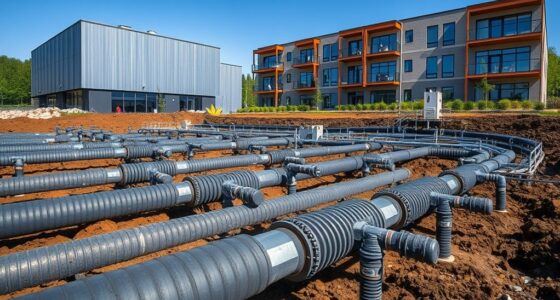
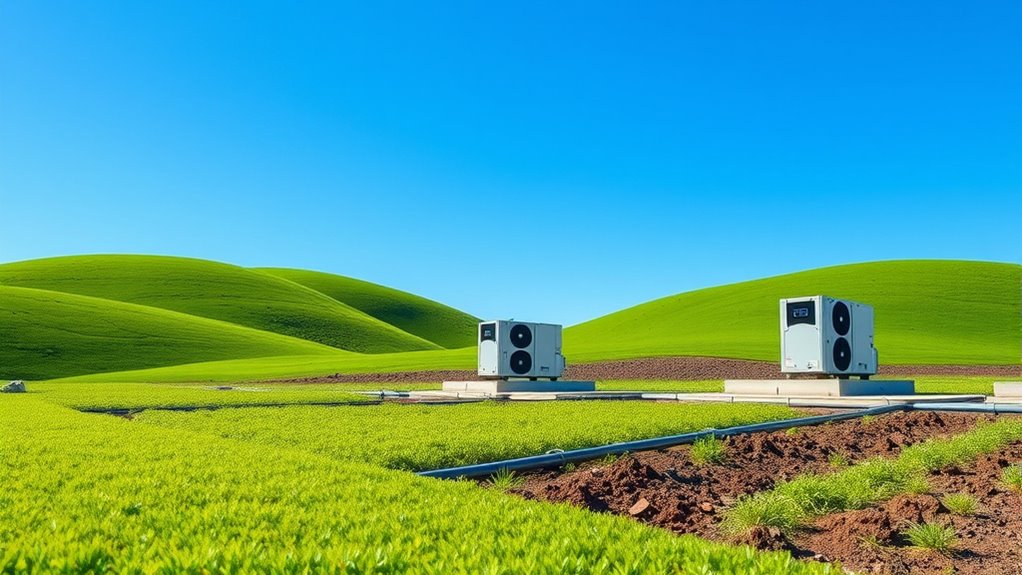
Geothermal heat pumps are transforming the way we harness renewable energy for heating and cooling, offering an efficient and sustainable alternative to traditional systems. At the heart of this innovation is ground source technology, which taps into the stable temperatures beneath the Earth’s surface to regulate indoor environments. Unlike conventional HVAC systems that rely heavily on fossil fuels or electricity, geothermal heat pumps use the natural thermal energy stored underground, making them highly energy-efficient. This technology involves a series of underground pipes, called loops, through which a fluid circulates, absorbing or dissipating heat depending on the season. During winter, the system extracts heat from the ground to warm your home, while in summer, it transfers heat from your home back into the earth, providing cooling. The consistent temperature of the ground ensures reliable performance, reducing energy consumption and lowering utility bills.
One of the key advantages of ground source technology is its ability to serve as an effective form of energy storage. The underground loops act as a thermal reservoir, storing excess heat in summer and holding onto warmth during winter. This natural energy storage capability means your system can operate with minimal additional energy input, enhancing overall efficiency. Because the ground maintains a relatively constant temperature year-round, your geothermal system doesn’t need to work as hard as air-source heat pumps that rely on ambient air temperatures, which can fluctuate widely. This stability results in fewer maintenance issues and longer system lifespan, making it a smart investment for long-term sustainability. Additionally, integrating renewable energy sources like solar or wind power with geothermal systems can further optimize energy storage. Excess renewable energy generated during peak times can be used to supplement the system, storing clean energy for later use, which maximizes the use of renewable resources and minimizes reliance on grid electricity.
Furthermore, ground source technology’s ability to store energy effectively means it can be paired with other renewable systems to create a comprehensive, resilient energy solution. For example, you could use solar panels to generate electricity during the day, storing excess energy in your geothermal system for nighttime use or periods of low sunlight. This synergy not only enhances energy independence but also reduces your carbon footprint considerably. As you adopt geothermal heat pumps, you’re not just upgrading your home’s heating and cooling; you’re embracing a sustainable approach that leverages the Earth’s natural thermal energy and its capacity for energy storage. This combination of ground source technology and energy storage offers a practical, eco-friendly way to meet your energy needs while contributing to a healthier planet.
Geothermal Heat Pump Systems (Green Energy and Technology)
As an affiliate, we earn on qualifying purchases.
As an affiliate, we earn on qualifying purchases.
Frequently Asked Questions
What Are the Initial Costs of Installing Geothermal Heat Pumps?
The initial costs of installing geothermal heat pumps typically range from $10,000 to $30,000, depending on your home’s size and system complexity. You might consider financing options to make this investment more manageable. While upfront expenses can seem high, many find that energy savings over time offset the costs. Be sure to explore incentives and grants that could reduce your initial costs and improve your return on investment.
How Do Geothermal Heat Pumps Compare to Traditional HVAC Systems?
You’ll find geothermal heat pumps more efficient than traditional HVAC systems, thanks to their ability to leverage stable underground temperatures. This efficiency comparison shows they use less energy, which reduces your utility bills. Additionally, geothermal systems offer significant environmental benefits by lowering your carbon footprint. While the initial installation costs are higher, the long-term savings and eco-friendly advantages make geothermal heat pumps a smart choice for sustainable heating and cooling.
Are There Specific Geographic Areas Best Suited for Geothermal Energy?
Think geothermal energy is only for volcanic regions? Think again. While geothermal hotspots like the Pacific Ring of Fire are ideal, regional suitability varies widely. You might find your area’s underground heat just waiting to be tapped, even if it’s not a famous hotspot. So, don’t dismiss your locale—many regions have the potential for sustainable geothermal energy, making it a versatile, eco-friendly choice everywhere.
What Maintenance Is Required for Geothermal Heat Pump Systems?
You need to perform regular inspections and keep the system clean to guarantee its longevity. Check for any signs of corrosion and address issues promptly to prevent damage. The system lifespan depends on proper maintenance, typically 25-30 years for the heat pump itself and longer for the ground loop if well-maintained. Preventing corrosion through proper materials and treatments helps extend the system’s efficiency and lifespan.
How Can Policies Influence Renewable Energy Integration With Geothermal Systems?
You can be influenced by policy incentives that encourage renewable energy integration, making it more affordable and accessible. These incentives, like tax credits or grants, motivate you to adopt geothermal systems. However, regulatory barriers might slow your progress, adding complex approval processes or restrictions. Advocacy for supportive policies can help reduce these barriers, making it easier for you to incorporate geothermal energy into your renewable energy plans effectively.

Snap Circuits Green Energy Electronics Exploration Kit | Over 125 Exciting STEM Projects | Full Color Project Manual | 45+ Snap Circuits Parts | STEM Educational Toys for Kids 8+
SO MANY TOYS IN A SNAP: Make dozens of cool electronic gadgets – all from one box! A…
As an affiliate, we earn on qualifying purchases.
As an affiliate, we earn on qualifying purchases.
Conclusion
So, next time you’re marveling at how your geothermal heat pump keeps things cozy, just remember—you’re actually riding the wave of renewable energy’s quiet revolution. Who knew that digging into the Earth could be so glamorous? With these systems, you’re not just heating and cooling; you’re making a statement—perhaps even a tiny one—that fossil fuels are so last century. Embrace the future, and let Mother Earth thank you with her warmest, greenest hug.

Closed-Loop/Ground-Source Heat Pump Systems – Installation Guide
As an affiliate, we earn on qualifying purchases.
As an affiliate, we earn on qualifying purchases.

The BESS Book: A Cell to Grid Guide to Utility-Scale Battery Energy Storage Systems
As an affiliate, we earn on qualifying purchases.
As an affiliate, we earn on qualifying purchases.