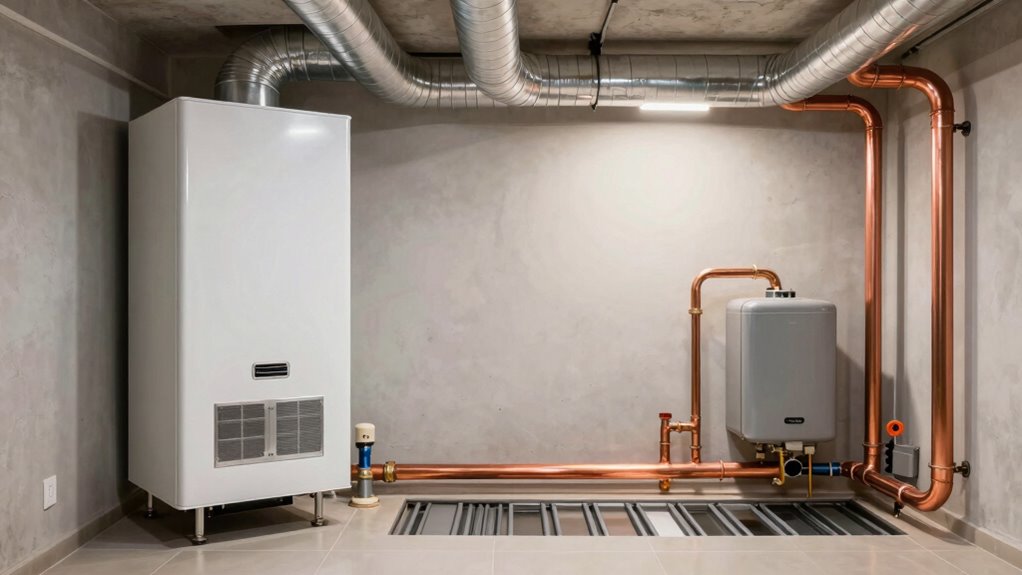

Choosing between forced air and hydronic heating depends on your retrofit project’s complexity and your budget. Forced air systems are easier and quicker to install if your home already has ductwork, while hydronic systems require significant modifications like installing pipes under floors or walls. Hydronic offers greater efficiency and comfort but can be more disruptive initially. Understanding these differences can help you make the best decision for your home’s needs. Keep exploring to learn which option suits your situation best.
Key Takeaways
- Retrofit hydronic systems are more invasive and costly due to floor and wall modifications compared to easier forced air upgrades.
- Forced air systems are quicker and less disruptive to install, especially if existing ductwork is present.
- Hydronic systems offer better energy efficiency and consistent comfort, making them a smarter long-term investment.
- Forced air can circulate dust and allergens, while hydronic systems improve indoor air quality.
- Initial costs and installation complexity are major factors influencing the retrofit choice between forced air and hydronic systems.
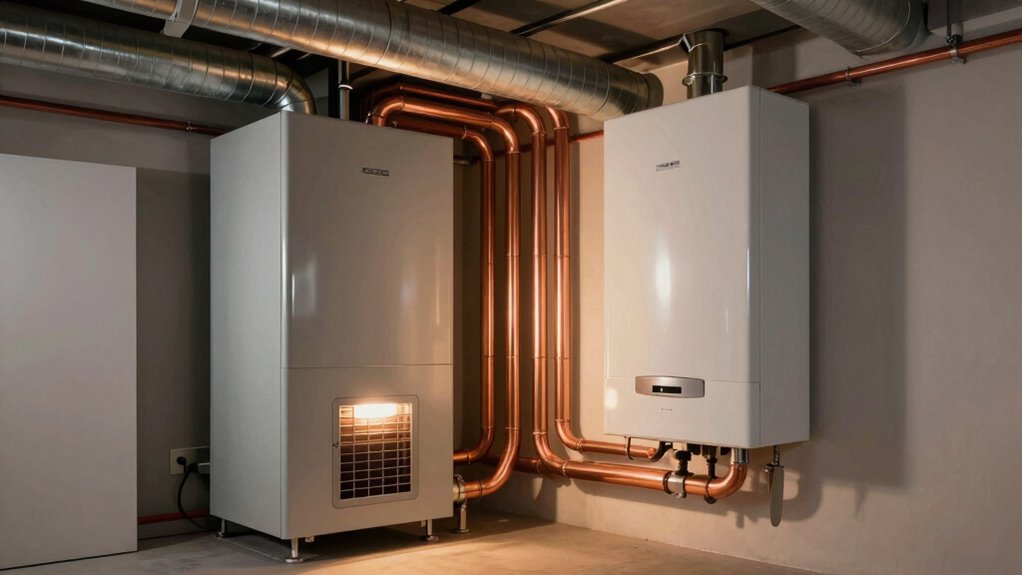
Forced air systems, which use ducts to circulate heated air, are often quicker to install and familiar to many homeowners. They tend to be less invasive initially, especially if your home already has ductwork in place. However, when it comes to energy efficiency, forced air systems can sometimes fall short. They often lose heat through duct leaks or poorly insulated ducts, which means you might end up paying more on your energy bills over time. Additionally, these systems can stir up dust and allergens, which might be a concern if anyone in your household has allergies or respiratory issues.
Hydronic systems, on the other hand, rely on water heated by a boiler and circulated through radiators or underfloor pipes. They generally deliver more consistent and comfortable heat and tend to be more energy efficient because they minimize heat loss. Since hydronic heating doesn’t involve air movement, it also reduces dust and allergens in your home. But keep in mind, the installation complexity of hydronic systems is often higher. They require significant modifications, such as installing pipes beneath floors or along walls, which can be invasive and more costly upfront. Retrofitting a hydronic system into an existing home may involve tearing up floors or walls, making the process more disruptive and time-consuming compared to installing a forced air system.
Furthermore, understanding home energy efficiency and how different systems impact your utility bills can help you make a more informed decision. Your choice should factor in both your current home setup and your long-term goals. If your house already has ductwork, upgrading to a high-efficiency forced air system might be simpler and quicker, with less initial disruption. However, if you’re seeking better energy efficiency and a more comfortable, even heat distribution, hydronic systems could be worth the extra effort and cost. It’s also useful to consider the long-term operational savings, as more efficient systems may cost more initially but save money over time. A comprehensive assessment of your home’s insulation and existing infrastructure can help determine which system will ultimately provide the most benefits. Considering initial installation costs alongside ongoing savings can help you choose a system that fits your budget and lifestyle. The path you choose will also depend on your budget for installation and your willingness to undertake more extensive renovations. In either case, understanding the pros and cons related to energy efficiency and installation complexity helps you make an informed decision. Remember, a well-chosen system tailored to your home’s needs can save you money in the long run and improve your overall comfort.
As an affiliate, we earn on qualifying purchases.
Frequently Asked Questions
Which System Is More Energy-Efficient for Retrofits?
Hydronic systems generally offer better energy savings for retrofits because they provide consistent, targeted heat with less energy waste. Plus, they tend to be more compatible with modern, energy-efficient upgrades. Forced air systems can be effective but often lose heat through ductwork, reducing efficiency. You should consider your home’s system compatibility and your energy-saving goals when choosing between them for a retrofit project.
How Long Does a Typical Retrofit Installation Take?
Coincidentally, the installation timeline for a retrofit varies based on system type and retrofit challenges. Typically, forced air systems take about 1 to 3 days, while hydronic systems might need 3 to 7 days due to their complexity. Your specific retrofit challenges, like existing ductwork or piping, greatly influence how long the process lasts. Planning ahead and working closely with installers can help guarantee a smoother, more efficient retrofit experience.
What Are the Long-Term Maintenance Costs?
Long-term maintenance costs depend on your system’s durability and how well it’s maintained. Hydronic systems often have lower maintenance costs because they’re durable and less prone to breakdowns, while forced air systems may incur higher expenses due to filter replacements and duct inspections. Keep in mind, cost escalation can happen if parts wear out or if your system isn’t properly serviced, so regular upkeep helps control long-term expenses.
Can Existing Ductwork Be Reused in Hydronic Systems?
You can often reuse existing ductwork in hydronic systems, but duct compatibility and system integration are essential. Hydronic systems typically don’t rely on ducts like forced air systems do, so you may need to modify or replace ducts for proper airflow and efficiency. Consulting with an HVAC professional guarantees that your existing ductwork aligns with the new system, preventing issues and maximizing the retrofit’s success.
How Does Climate Influence System Choice?
Climate greatly influences your system choice because it affects climate adaptability and seasonal performance. If you face harsh winters, a hydronic system offers better warmth retention and efficiency. For milder climates, forced air systems provide quick heating and cooling. Consider your region’s seasonal fluctuations, and select a system that guarantees reliable comfort year-round. Your decision should prioritize how well the system adapts to your climate’s demands for consistent performance.
hydronic radiant floor heating kit
As an affiliate, we earn on qualifying purchases.
As an affiliate, we earn on qualifying purchases.
Conclusion
Choosing between forced air and hydronic heating isn’t just a small decision—it’s the key to transforming your entire home comfort experience. Your retrofit path can make the difference between a cozy, efficient haven and a never-ending struggle with outdated systems. Don’t underestimate the power of making the right choice; it’s like turbocharging your home’s comfort. Make the right decision now, and watch your home become an oasis of warmth that outshines the competition!
As an affiliate, we earn on qualifying purchases.
As an affiliate, we earn on qualifying purchases.