Home energy is no longer just a monthly utility bill. It is a connected system that includes heating and cooling, hot water, solar generation, battery storage, backup power, smart controls, weather preparation, and everyday household habits. Understanding how these pieces work together can help you create a home that is more comfortable, efficient, and resilient.
This hub is an orientation guide for homeowners exploring heat pumps, solar power, generators, portable batteries, and energy-saving upgrades. It explains what to prioritize, where different technologies fit, and how to avoid common planning mistakes. Whether you want to lower routine energy use or keep essential equipment running during an outage, the best place to begin is with your household’s actual needs.
Start With a Home Energy Plan
It is tempting to begin by shopping for solar panels, a generator, or a new heating system. A better first step is to map how your home currently uses energy. Review utility bills across several seasons, identify major electrical and fuel-powered appliances, and note when your highest demand occurs.
Heating, air conditioning, water heating, cooking, clothes drying, refrigeration, and electric-vehicle charging can all be significant loads. Their importance varies by climate, house size, equipment efficiency, and household routine. A winter-peaking home with electric heat has different priorities from a summer-peaking home with heavy air-conditioning demand.
Build a practical energy inventory
- List the equipment used for space heating, cooling, and water heating.
- Record the age, capacity, fuel type, and condition of major appliances.
- Separate essential outage loads from equipment that can remain off.
- Check the electrical panel’s service rating and available breaker space.
- Identify drafts, weak insulation, excessive humidity, and uneven temperatures.
- Review local utility programs, electrical rules, permits, and contractor requirements.
This inventory creates a baseline for comparing upgrades. It can also reveal that air sealing, insulation, maintenance, or better controls should come before a larger and more expensive energy system.
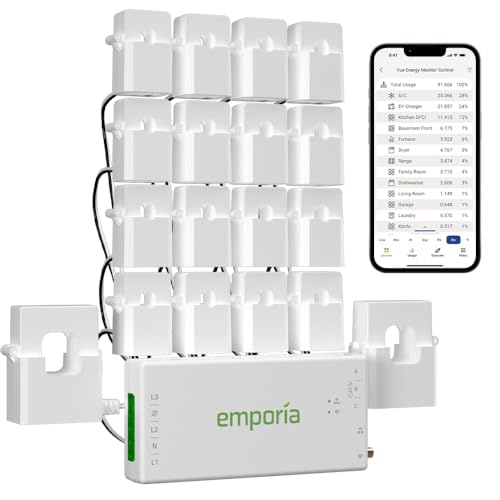
Emporia Vue 3 Home Energy Monitor – Smart Home Automation Module and Real Time Electricity Usage Monitor, Power Consumption Meter, Solar and Net Metering for UL Certified Safe Energy Monitoring
- UL Certified Safe Energy Monitoring: Certified for safety and reliability
- Easy Installation in Circuit Panel: Supports various home electrical systems
- Real-Time Energy Monitoring: 24/7 management and control of energy use
As an affiliate, we earn on qualifying purchases.
As an affiliate, we earn on qualifying purchases.
Reduce Demand Before Adding Supply
Efficiency and energy generation solve different problems. Solar panels and generators provide electricity, but they do not correct unnecessary consumption. Reducing demand first can make later equipment easier to size and may improve comfort even when the grid is operating normally.
Begin with the building envelope. Air leaks around doors, windows, attic penetrations, and utility openings can force heating and cooling systems to run longer. Insulation helps slow heat transfer, while appropriate shading and window coverings can reduce unwanted summer heat. Duct inspection may also be worthwhile in homes with forced-air systems, especially where ducts pass through garages, attics, or crawl spaces.
Small operational changes matter too. Sensible thermostat schedules, clean filters, unobstructed vents, maintained outdoor equipment, and reasonable water-heater settings can support efficient operation. During unusually hot weather, targeted products can complement these measures; the guide to heat-wave cooling products offers ideas for managing personal and household comfort without treating every situation as a whole-home equipment problem.

Portable Solar Generator, 300W Portable Power Station with Foldable 60W Solar Panel,110V Pure Sine Wave 280Wh Battery Power Pack with USB DC AC Outlet for Camping Smart Devices RV Van Outdoor-Orange
- Powerful 300W Portable Generator: Charges smartphones, tablets, laptops, and small devices
- Includes 60W Foldable Solar Panel: Recharges via solar, AC, or carport
- Multiple Charging Outlets: AC, DC, USB, and quick charge ports
As an affiliate, we earn on qualifying purchases.
As an affiliate, we earn on qualifying purchases.
Heat Pumps for Heating and Cooling
A heat pump transfers heat rather than creating it through combustion. In cooling mode, it moves heat out of the home. In heating mode, it extracts available heat from outdoor air, the ground, or another source and moves it indoors. Common residential configurations include ducted air-source systems, ductless mini-splits, and geothermal systems.
Choosing a heat pump requires more than matching a unit to the home’s square footage. Climate, insulation, window area, air leakage, duct condition, occupancy, and design temperatures all influence the required capacity. Oversizing can contribute to short cycling and poor humidity control, while undersizing may leave the system relying heavily on supplemental heat during demanding weather.
Questions to address before installation
- Has a room-by-room heating and cooling load calculation been completed?
- Can existing ducts deliver the required airflow?
- How will the system perform during local temperature extremes?
- What supplemental or emergency heat source will be used?
- Does the electrical panel have enough capacity?
- Where can indoor and outdoor components be installed and serviced?
Controls are an important part of the system. Heat pumps may behave differently from conventional furnaces, so aggressive temperature setbacks are not always the best strategy. Connected controls can make scheduling and monitoring easier, provided they are compatible with the equipment. Explore the guide to WiFi heat pump thermostats when comparing control options for a connected home.

Westinghouse 12500 Watt Dual Fuel Home Backup Portable Generator, Remote Electric Start, Transfer Switch Ready, Gas and Propane Powered
- Power Output: 9500W running, 12500W peak (Gas)
- Fuel Options: Gasoline and propane powered
- Start Type: Remote electric and recoil start
As an affiliate, we earn on qualifying purchases.
As an affiliate, we earn on qualifying purchases.
Heat Pump Water Heating
Water heating is another opportunity to use heat-pump technology. A heat pump water heater draws heat from surrounding air and transfers it into the tank. Installation conditions matter because the appliance needs suitable space, airflow, drainage, and temperature conditions. It may also cool and dehumidify the room around it, which can be helpful in some locations and undesirable in others.
Household hot-water demand should guide tank sizing and operating mode. A home with frequent overlapping showers may need a different setup from a smaller household with flexible usage. Placement also affects noise, service access, condensate management, and recovery performance.
Maintenance and repair components deserve attention throughout the unit’s life. If airflow performance becomes a concern, the overview of heat pump water heater blower motors can help orient research before confirming compatibility with the appliance manufacturer or a qualified technician.
Emporia Vue 3 Home Energy Monitor – Smart Home Automation Module and Real Time Electricity Usage Monitor, Power Consumption Meter, Solar and Net Metering for UL Certified Safe Energy Monitoring
- UL Certified Safe Energy Monitoring: Certified for safety and reliability
- Easy Installation in Circuit Panel: Supports various home electrical systems
- Real-Time Energy Monitoring: 24/7 management and control of energy use
As an affiliate, we earn on qualifying purchases.
As an affiliate, we earn on qualifying purchases.
Planning a Residential Solar System
Solar power works best when it is sized around a clear objective. Some households want to offset annual grid consumption, while others want to support selected loads or prepare for future electrification. Roof condition, shading, orientation, available area, electrical infrastructure, local rules, and utility interconnection policies can all shape the design.
Historical electricity use is a useful starting point, but future changes also matter. Replacing fuel-fired appliances with electric alternatives, adding air conditioning, installing a heat pump water heater, or charging an electric vehicle can raise consumption. Efficiency improvements may lower it. A thoughtful plan accounts for both directions instead of treating last year’s bill as a permanent forecast.
Solar questions worth answering
- How much usable sunlight reaches the proposed array?
- Does the roof need repair or replacement first?
- How much electricity does the household use by season?
- Will major new electrical loads be added later?
- How does the utility credit exported electricity?
- Is battery backup part of the goal?
Grid-tied solar normally shuts down during an outage unless the system includes equipment specifically designed to operate safely in backup mode. Solar panels alone therefore should not be assumed to provide emergency electricity.
Battery Storage and Portable Solar Power
Battery storage can shift solar energy to different times of day and may keep selected circuits operating when the grid fails. The central planning question is not simply how large a battery is, but what it must power and for how long. Refrigeration, communications, lighting, medical devices, a well pump, and limited heating or cooling can produce very different capacity and power requirements.
Whole-home batteries are only one category. Portable power stations and compact power banks serve smaller loads and are easier to move. They can be useful for phones, tablets, lights, radios, and other compatible electronics during travel or short interruptions. The guide to portable solar power banks is a starting point for comparing this smaller-scale layer of preparedness.
Review both energy capacity and output capability. A battery may store enough energy for several hours yet still be unable to start equipment with a high surge requirement. Charging speed, supported inputs, operating temperature limits, battery chemistry, warranty terms, and replacement options also belong in the comparison.
Generators for Longer Outages
Generators remain a common solution where outages are frequent, prolonged, or likely to occur during conditions that limit solar production. Options range from portable units feeding selected loads to permanently installed standby systems. Fuel availability, safe placement, noise, maintenance, transfer equipment, and starting reliability are as important as rated output.
Create an essential-load list before choosing a generator. Add the running demand of the equipment that may operate together, then account for motor-starting surges. Load management can reduce the required generator size by preventing several large appliances from starting simultaneously.
Diesel equipment may suit certain backup strategies, particularly where fuel storage and maintenance practices are already established. Consult the guide to diesel generators for home backup for a focused comparison, then verify installation requirements with local authorities and qualified professionals.
Combustion generators must never be operated inside a home, garage, basement, shed, or other enclosed area. They require appropriate outdoor clearance and must be connected in a way that prevents dangerous backfeeding into utility lines. A transfer switch or other approved interconnection equipment should be selected and installed for the specific system.
Create Layers of Household Resilience
A resilient home does not depend on a single device. It uses layers: an efficient envelope reduces demand, heat pumps handle routine comfort, solar supplies renewable electricity, batteries bridge shorter interruptions, and generators may cover extended outages. Portable chargers, flashlights, food plans, and non-electric alternatives support the system when conditions become difficult.
Outage planning should include food as well as electricity. Keep a modest supply of shelf-stable meals and understand how long refrigerated food can remain safe under applicable public-health guidance. When normal shopping or cooking becomes inconvenient, a review of meal delivery services can also help households think through convenient food options before disruptive weather arrives.
Outdoor living equipment sometimes forms another optional layer, but it requires careful distinction between convenience and emergency infrastructure. A fire pit is not an indoor heating system, and outdoor combustion appliances must remain outdoors. For planned exterior spaces, the guide to fire pits can help frame the available category while local fire rules and manufacturer instructions govern safe use.
Coordinate Upgrades Instead of Treating Them Separately
The strongest home energy plans consider interactions between projects. Solar sizing may change when a heat pump or electric vehicle is added. A battery’s usefulness depends on the circuits it serves. A generator may need load management if the home has electric resistance backup heat. New equipment may require panel upgrades, while envelope improvements may allow smaller heating and cooling systems.
A sensible sequence is to assess the building, reduce avoidable demand, define essential loads, and then size supply and backup systems. Obtain written proposals that clearly identify equipment, assumptions, included electrical work, permits, warranties, and exclusions. Compare designs on the same scope rather than relying on headline capacity alone.
Home energy decisions are ultimately about balancing comfort, cost, resilience, safety, and environmental priorities. By treating the house as one connected energy system, you can make upgrades that complement each other, adapt to future needs, and deliver useful benefits during both ordinary days and unexpected outages.