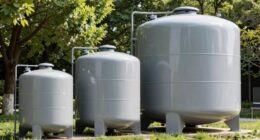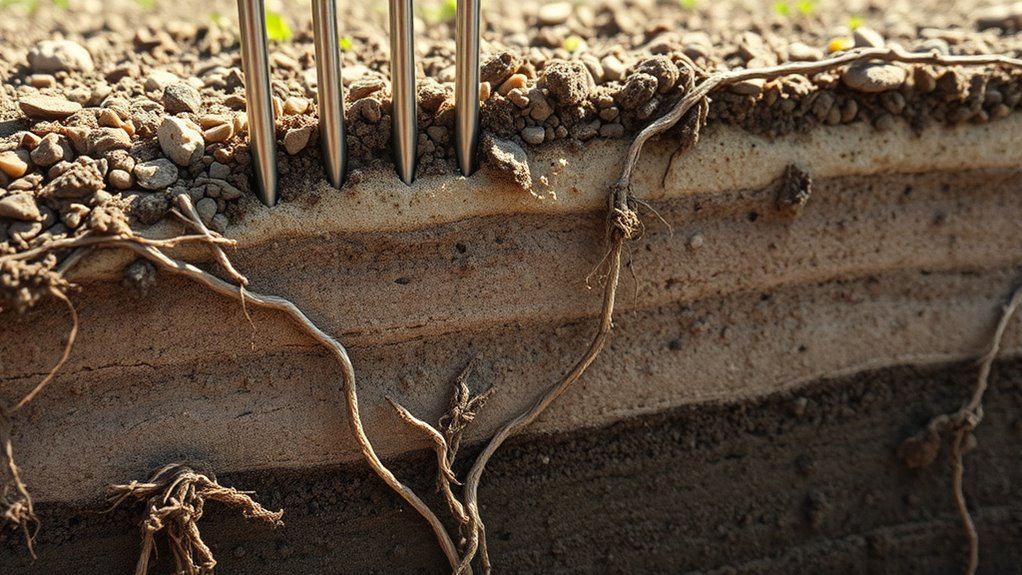

Your soil properties play a vital role in the efficiency of your geothermal heat pump system. Soils with high thermal conductivity, like sand and gravel, transfer heat effectively, improving system performance. Moist soils also boost heat transfer, while dry or clay-rich soils can hinder it, possibly requiring deeper or adjusted installations. Understanding your soil’s characteristics helps optimize energy transfer and system design. Keep exploring to discover how specific soil features influence long-term efficiency and installation choices.
Key Takeaways
- Soil thermal conductivity directly affects the rate of heat transfer between the ground and the heat pump.
- Moist soils enhance thermal conductivity, improving heat exchange efficiency in geothermal systems.
- Low-conductivity soils like clay or silt may require deeper or larger ground loops for optimal performance.
- Seasonal moisture fluctuations influence soil thermal properties, impacting consistent heat transfer.
- Proper soil testing informs system design, ensuring efficient operation and potential modifications for improved energy transfer.
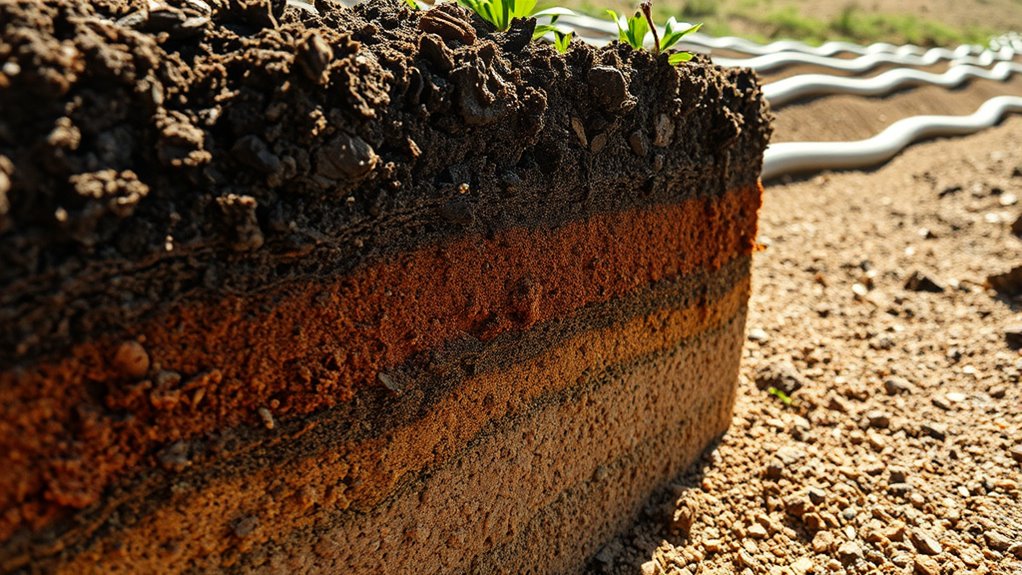
Understanding soil properties is essential when considering geothermal heat pumps for heating and cooling your home. One of the key factors influencing their efficiency is the soil’s thermal conductivity. This property determines how well heat moves through the ground. High thermal conductivity soils, like sandy or gravelly soils, transfer heat more effectively, allowing your geothermal system to operate more efficiently. Conversely, soils with low thermal conductivity, such as clay or silt, slow down heat transfer, which can reduce the system’s performance. When planning your geothermal installation, knowing the thermal conductivity of your soil helps you estimate how well your system will perform and whether any modifications might be necessary to optimize energy transfer. Soil testing can provide valuable insights into these properties before installation.
Moisture content is another critical soil property affecting geothermal heat pump efficiency. Soil moisture acts as a conductor of heat, so wetter soils typically have higher thermal conductivity than dry soils. If your soil is moist, it can substantially enhance heat transfer, making your geothermal system more effective and energy-efficient. On the other hand, dry soils can impede heat flow, forcing your system to work harder to extract or dissipate heat, which increases energy consumption and operational costs. Understanding your soil’s moisture content before installation allows you to anticipate these effects and plan accordingly. You might need to adjust the depth of your ground loops or implement moisture management strategies to improve heat transfer.
The interplay of thermal conductivity and moisture content guides decisions about the depth and design of your geothermal system. For instance, in areas with low thermal conductivity and dry soil, installing deeper ground loops can help reach more conductive, moisture-rich layers. Alternatively, in moist soils with high thermal conductivity, shallower loops might suffice, reducing installation costs and complexity. Additionally, soil properties can fluctuate seasonally, so considering how moisture levels change throughout the year helps ensure your system remains efficient year-round.
geothermal heat pump soil testing kit
As an affiliate, we earn on qualifying purchases.
As an affiliate, we earn on qualifying purchases.
Frequently Asked Questions
How Does Soil Moisture Content Impact Geothermal Heat Pump Efficiency?
Soil moisture content directly affects your geothermal heat pump’s efficiency by influencing soil temperature stability. Higher moisture levels improve soil aeration and help maintain consistent pH balance, which enhances heat transfer. When soil is too dry, it reduces heat conductivity, making your system work harder. Conversely, ideal moisture ensures better heat exchange, saving energy and increasing efficiency. Keep soil moisture balanced to maximize your geothermal system’s performance and longevity.
Can Soil Mineral Composition Affect Heat Transfer Rates in Geothermal Systems?
Yes, soil mineral composition can influence heat transfer rates in geothermal systems. Minerals with high conductivity, like calcite, enhance heat transfer, while others with lower conductivity slow it down. Additionally, soil porosity influences how well heat moves through the ground; higher porosity allows better heat flow, improving efficiency. Understanding these factors helps optimize system design and ensures better performance in geothermal heat pump applications.
What Is the Optimal Soil Depth for Installing Geothermal Heat Exchangers?
You should install geothermal heat exchangers at a depth of about 4 to 6 feet, where soil conditions are more stable. Beware—soil compaction and organic matter at this level can influence heat transfer efficiency. If the soil is too compacted, it hampers thermal conductivity, reducing system performance. Digging deeper might seem tempting, but then you risk encountering less predictable soil properties that could undermine your geothermal system’s efficiency.
How Do Seasonal Soil Temperature Fluctuations Influence System Performance?
Seasonal soil temperature fluctuations can impact your geothermal system’s performance by affecting heat transfer efficiency. Good soil insulation minimizes these fluctuations, maintaining stable temperatures year-round. Additionally, soils with high thermal conductivity transfer heat more effectively, improving system efficiency during seasonal changes. By understanding and optimizing these soil properties, you can guarantee your geothermal heat pump operates efficiently, saving energy and reducing costs throughout the year.
Are There Specific Soil Treatments to Improve Geothermal Heat Pump Efficiency?
You can improve geothermal heat pump efficiency by enhancing soil conditions through treatments like soil aeration and adding organic matter. Aeration increases oxygen levels, boosting microbial activity that benefits soil health, while organic matter improves thermal conductivity and moisture retention. These treatments promote better heat transfer between the ground and the system, making your geothermal heat pump more efficient and reliable over time.

Shallow Geothermal Energy: Theory and Application
As an affiliate, we earn on qualifying purchases.
As an affiliate, we earn on qualifying purchases.
Conclusion
Understanding soil properties is key to optimizing your geothermal heat pump system. While a rocky, dense soil might seem like a challenge, it can actually improve efficiency if properly managed. Conversely, loose or sandy soils may offer easy installation but reduce heat transfer. So, don’t just see soil as a background; see it as a partner. Your system’s performance depends on it—embrace the contrast, and you’ll unseal the full potential of geothermal heating.

YAMRON 4-in-1 Soil Moisture Meter, Digital Plant Temperature/Soil Moisture Test & PH Meter/Sunlight Intensity, Backlight LCD Display for Gardening, Farming and Outdoor Plants
【4 in 1 function】This is a 4-in-1 multifunctional soil tester.Our soil tester fastly to measure soil moisture, pH,…
As an affiliate, we earn on qualifying purchases.
As an affiliate, we earn on qualifying purchases.

Groline Soil Test Direct Soil Conductivity Tester HI98331
No need for soil slurries with the steel penetration electrode.
As an affiliate, we earn on qualifying purchases.
As an affiliate, we earn on qualifying purchases.