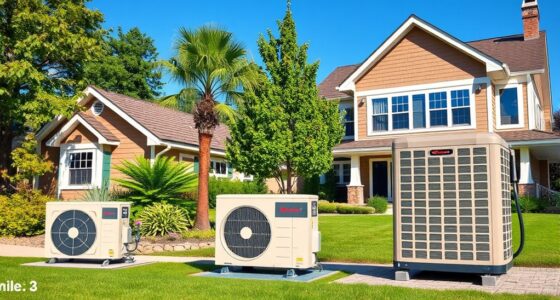
Air-to-water heat pumps are an efficient and eco-friendly way to power your hydronic heating system by transferring outdoor air heat into your home’s water-based system. They reduce energy bills and reliance on fossil fuels, especially when combined with geothermal integration. Modern systems feature advanced refrigerants that boost efficiency, lower operating costs, and support sustainability goals. If you want to discover how these systems can optimize your heating and save money, there’s more to explore below.
Key Takeaways
- Air-to-water heat pumps transfer outdoor air warmth into hydronic heating systems, providing efficient and renewable space heating and hot water.
- Integration with geothermal systems enhances performance, especially in cold climates, ensuring consistent heating and reducing outdoor air load.
- Modern refrigerants improve heat transfer efficiency, lowering energy consumption and increasing system reliability for hydronic heating.
- Hybrid systems combining air-source and geothermal technology optimize renewable energy use and reduce reliance on fossil fuels.
- Smart controls modulate refrigerant flow and integrate renewable sources, ensuring efficient, stable, and environmentally friendly hydronic heating.

Air-to-water heat pumps are an efficient way to heat your home or hot water using the outdoor air as a renewable energy source. These systems harness ambient warmth and transfer it into your hydronic heating setup, reducing reliance on traditional fossil fuels. One of the key advantages is their ability to integrate seamlessly with geothermal systems through geothermal integration strategies, which can further optimize energy use and overall efficiency. By combining air-source heat pumps with geothermal technology, you can achieve a hybrid system that maximizes renewable energy utilization, especially in colder climates where air-source performance might dip.
Air-to-water heat pumps optimize renewable energy use through seamless integration with geothermal systems, especially effective in cold climates.
A major factor in the effectiveness of these heat pumps is refrigerant efficiency. The refrigerant plays a critical role in absorbing heat from the outside air and leveraging it for indoor heating or hot water supply. Modern refrigerants are designed to operate at lower temperatures while maintaining high heat transfer capabilities, which enhances the system’s overall efficiency. When refrigerant efficiency is optimized, it reduces power consumption and improves the coefficient of performance (COP), making your heating system more cost-effective over time. This means you’ll get more heat output for less energy input, lowering your utility bills and carbon footprint.
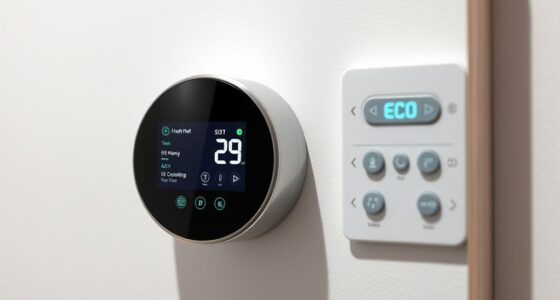
Advances in refrigerant technology have also improved system reliability and environmental safety. Newer refrigerants are less harmful to the ozone layer and have lower global warming potential, aligning with eco-conscious goals. As refrigerant efficiency improves, the compressor doesn’t have to work as hard, which extends the lifespan of your heat pump and decreases maintenance needs. Additionally, integrating refrigerant management with smart controls allows for precise modulation of heat transfer, ensuring your system adapts efficiently to changing heating demands.
Furthermore, utilizing renewable energy sources like solar or wind power to operate these heat pumps can significantly enhance their sustainability and reduce overall carbon emissions. When considering geothermal integration, you can enhance the heat pump’s performance even further. Geothermal systems utilize the stable underground temperature to pre-condition the refrigerant, reducing the workload on the outdoor air heat exchange process. This hybrid approach can provide consistent heating regardless of outdoor conditions, especially during extreme cold snaps. It also allows you to leverage the thermal stability of the earth, which can markedly improve refrigerant efficiency by reducing the energy needed to transfer heat.
Frequently Asked Questions
What Are the Long-Term Maintenance Costs of Air-To-Water Heat Pumps?
The long-term maintenance costs of air-to-water heat pumps are generally moderate, but they depend on your maintenance schedule and proper care. You should budget for routine inspections, filter replacements, and occasional refrigerant checks. Cost estimation suggests that annual maintenance might range from $200 to $400. Staying consistent with maintenance schedules helps prevent costly repairs, ensuring your system runs efficiently and keeps long-term costs predictable and manageable.
How Do Climate Variations Affect Heat Pump Efficiency?
Think of your heat pump as a weather vane, sensitive to climate shifts. Climate variations directly impact its efficiency fluctuations; colder temperatures reduce performance, while milder weather boosts it. Climate adaptation is key—insulating pipes and choosing the right system helps maintain efficiency. By understanding these fluctuations, you can optimize your heat pump’s operation year-round, ensuring it works effectively regardless of weather changes.
Are Air-To-Water Heat Pumps Suitable for All Building Sizes?
You can use air-to-water heat pumps for most building sizes, but system capacity is key. For small to medium buildings, these heat pumps are often suitable, providing efficient heating and cooling. However, for larger buildings, you might need a larger system or multiple units to guarantee adequate heating. Always assess your building’s size and heating load to choose the right system capacity for ideal performance.
What Are the Common Troubleshooting Issues With These Systems?
You might notice some system noise or refrigerant leaks if your heat pump isn’t operating smoothly. These are common issues that can signal minor problems before more serious concerns develop. Regularly check for unusual sounds or leaks, and verify your system is properly maintained. Addressing these early helps keep your heat pump running efficiently, saving you energy and extending its lifespan. If problems persist, consult a professional for a thorough inspection.
How Do Rebates and Incentives Impact Installation Costs?
Rebate programs and incentives considerably lower your installation costs by providing financial rewards for choosing energy-efficient systems. When you qualify for incentive eligibility, you can receive discounts or rebates that offset equipment and labor expenses. These programs often have specific requirements, so it’s crucial to check eligibility criteria beforehand. By taking advantage of rebates and incentives, you make your upgrade more affordable while promoting sustainable, cost-effective heating solutions.
Conclusion
Imagine stepping into a cozy home on a chilly day, feeling the gentle warmth spread through your radiators, powered quietly by an air-to-water heat pump. With this eco-friendly technology, you harness the sun’s energy stored in the air, turning cold into comfort effortlessly. Embrace the future of heating—efficient, sustainable, and whisper-quiet—transforming your living space into a haven of warmth and peace. Let the air do the work, and enjoy the cozy comfort you deserve.