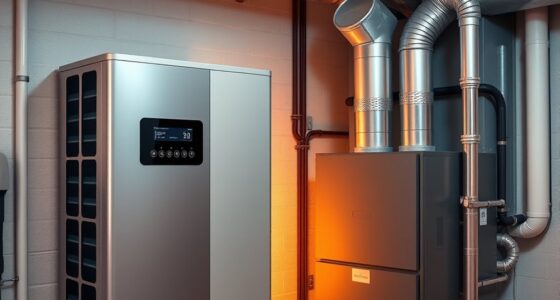
Heat pump water heaters can be integrated into your home’s heating system, helping to provide hot water efficiently while reducing energy use. They extract ambient heat from surrounding air and transfer it to water, making them more energy-efficient than traditional systems. When properly installed, they can work alongside your home’s overall heating plan, lowering your utility bills and carbon footprint. Curious to see how they can fit into your home? Keep exploring for more details.
Key Takeaways
- Heat pump water heaters can supplement home heating by providing warmth through their ambient air heat extraction.
- They integrate with existing HVAC systems to improve overall energy efficiency and reduce heating costs.
- Proper placement in well-ventilated, warm spaces enhances their effectiveness for both water heating and space heating.
- Combining heat pump water heaters with home renewable energy systems can maximize sustainability and reduce carbon footprint.
- Professional installation ensures optimal performance, safety, and seamless integration into the home’s heating and hot water systems.
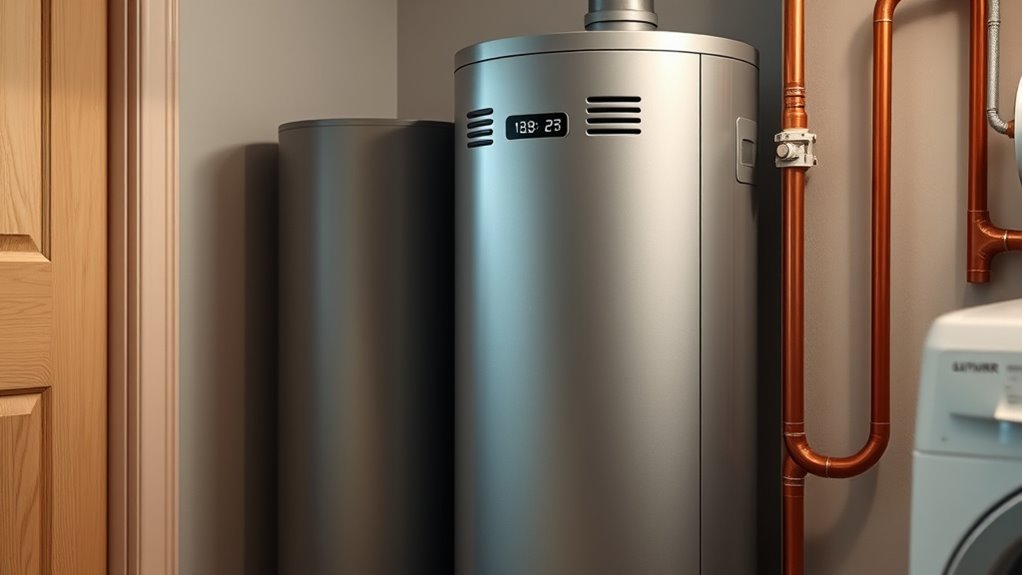
Are you looking for an energy-efficient way to heat your water? Heat pump water heaters could be just what you need. Unlike traditional water heaters that rely on electric resistance or gas, heat pump models use ambient heat from the air to warm your water. This process makes them considerably more energy-efficient, which can lead to lower utility bills over time. While the initial installation costs for heat pump water heaters tend to be higher than conventional units, the savings on energy bills can offset this expense in the long run. Plus, many utility companies offer rebates or incentives that can make upgrading more affordable.
Heat pump water heaters save energy and reduce bills with ambient heat technology and available rebates.
Heat pump water heaters work by extracting heat from the surrounding air and transferring it to water stored in a tank. They function similarly to a refrigerator but in reverse, using a compressor and a refrigerant cycle to move heat rather than generate it directly. Because they rely on existing ambient heat, they consume less electricity, making them an environmentally friendly choice. If you’re considering integrating one into your home heating system, you’ll appreciate how it complements your overall energy strategy. These units are especially effective in warmer climates or well-ventilated spaces where they can operate efficiently without needing additional heating sources.
When it comes to installation, there are some key considerations. The upfront costs can be higher due to the complexity of the system and the need for proper placement—ideally in a space with good airflow and temperature. It’s also important to ensure that your home’s electrical system can support the unit’s requirements. Despite the initial investment, many homeowners find that the long-term savings on energy bills make it a worthwhile upgrade. Additionally, because heat pump water heaters tend to have longer lifespans and require less maintenance than traditional models, you can expect savings to continue well beyond the initial years. Incorporating smart home device integration features can further optimize the efficiency and control of your system.
Another advantage is that these units tend to be quieter and less intrusive than conventional water heaters. They also produce less carbon emissions, aligning with a sustainable lifestyle. If you’re interested in reducing your overall energy footprint, a heat pump water heater can be a smart addition to your home heating setup. It’s important to weigh the installation costs against the benefits of energy efficiency and environmental impact. Proper placement and professional installation can maximize performance and lifespan, ensuring you get the most value from your investment. Over time, you’ll likely notice that this energy-efficient choice not only cuts costs but also helps you contribute to a greener planet.
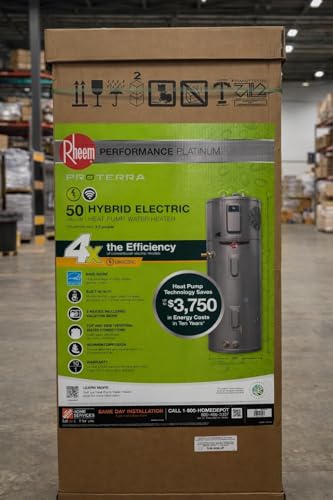
Rheem 50 Gal. Smart High Efficiency Hybrid Heat Pump Water Heater with 10-Year Warranty
It must be wired into your home’s electrical system and will typically require a dedicated electrical circuit (similar…
As an affiliate, we earn on qualifying purchases.
As an affiliate, we earn on qualifying purchases.
Frequently Asked Questions
Can Heat Pump Water Heaters Operate Effectively in Cold Climates?
Yes, heat pump water heaters can operate effectively in cold climates, thanks to their climate adaptability. While efficiency in winter may decrease slightly compared to warmer months, modern units are designed to perform well even in low temperatures. You’ll find that they still provide reliable hot water and maintain energy efficiency, making them a smart choice for cold environments. Just ensure you select models suitable for your climate for ideal performance.
What Is the Average Lifespan of a Heat Pump Water Heater?
You can expect a heat pump water heater to last about 10-15 years, so it’s wise to keep an eye on its performance. It’s worth noting that these units are known for their energy efficiency, which translates into significant cost savings over time. Like a well-oiled machine, proper maintenance guarantees it runs smoothly, helping you maximize its lifespan and enjoy consistent hot water without breaking the bank.
How Much Space Is Required for Installation?
You’ll need about 1.5 to 2 square meters of installation space for a heat pump water heater. Make sure the room has sufficient clearance around the unit for proper airflow and maintenance. Room requirements include good ventilation, easy access to power and water connections, and a stable, level surface. Avoid cramped spaces, as adequate airflow improves efficiency and prolongs the unit’s lifespan.
Are There Any Specific Maintenance Requirements?
You should perform a regular maintenance checklist to keep your heat pump water heater running efficiently. This includes checking the air filters, cleaning the coils, and inspecting for leaks. Regular maintenance helps improve energy efficiency and extends the unit’s lifespan. Additionally, verify the area around the unit remains clear and free of obstructions. Staying on top of these tasks will keep your system operating smoothly and save you money on energy bills.
Do Heat Pump Water Heaters Qualify for Government Incentives?
Yes, your heat pump water heater may qualify for government rebates, but eligibility criteria vary by location. You should check with local or federal programs to see if you meet the requirements, such as energy efficiency standards or installation dates. These incentives can help offset costs, so it’s worth researching and submitting the necessary documentation. Keep in mind that staying updated on current programs maximizes your chances of qualifying.

14kW Tankless Water Heater Electric, ORBEK On Demand Instant Hot Water Heater 240V, Max 3.38 GPM, Supply for 2-3 Fixtures, ETL Certified, Indoor Installation, New Upgraded 2.0
Note: Please ensure the household circuit breaker panel has a total current capacity of at least 150 amps….
As an affiliate, we earn on qualifying purchases.
As an affiliate, we earn on qualifying purchases.
Conclusion
Imagine saving money and reducing your carbon footprint by choosing a heat pump water heater for your home. Some believe they’re just a trendy upgrade, but the truth is, they’re a powerful way to harness renewable energy and cut emissions. By making this switch, you’re not only improving your home’s efficiency but also contributing to a healthier planet. Embrace the future—your choice truly makes a difference.
Rheem 50 Gal. Smart High Efficiency Hybrid Heat Pump Water Heater with 10-Year Warranty
It must be wired into your home’s electrical system and will typically require a dedicated electrical circuit (similar…
As an affiliate, we earn on qualifying purchases.
As an affiliate, we earn on qualifying purchases.

From Zero To Heat Pump Hero: Maximise Comfort and Efficiency: Your Guide to Understanding Your Air Source Heat Pump
As an affiliate, we earn on qualifying purchases.
As an affiliate, we earn on qualifying purchases.