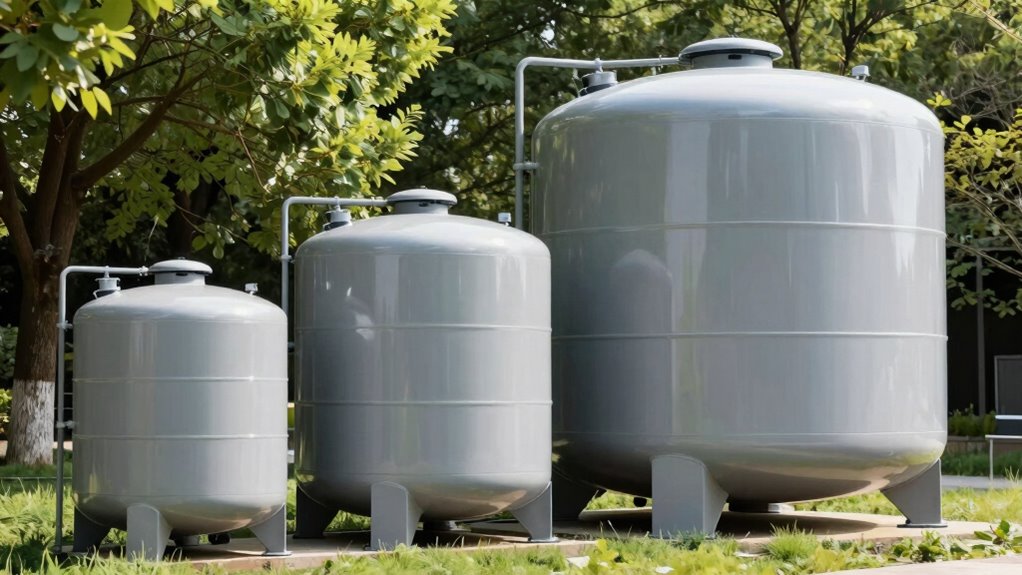
Choosing between a 50, 65, or 80-gallon tank depends on your household size, hot water needs, and space. If you have a small family, a 50-gallon tank might be enough and save energy. Larger families may need 65 or 80 gallons for uninterrupted hot water, but bigger tanks can cost more to run and install. To find the perfect match, consider your water habits, space, and budget—details that can help make a smarter choice.
Key Takeaways
- Match tank size to household hot water demand to avoid energy waste or shortages.
- Larger tanks (65 or 80 gallons) suit bigger families or peak usage times.
- Smaller tanks (50 gallons) are ideal for small households with low hot water needs.
- Consider available space and installation constraints when choosing tank capacity.
- Balance upfront costs and long-term energy savings for optimal tank size selection.
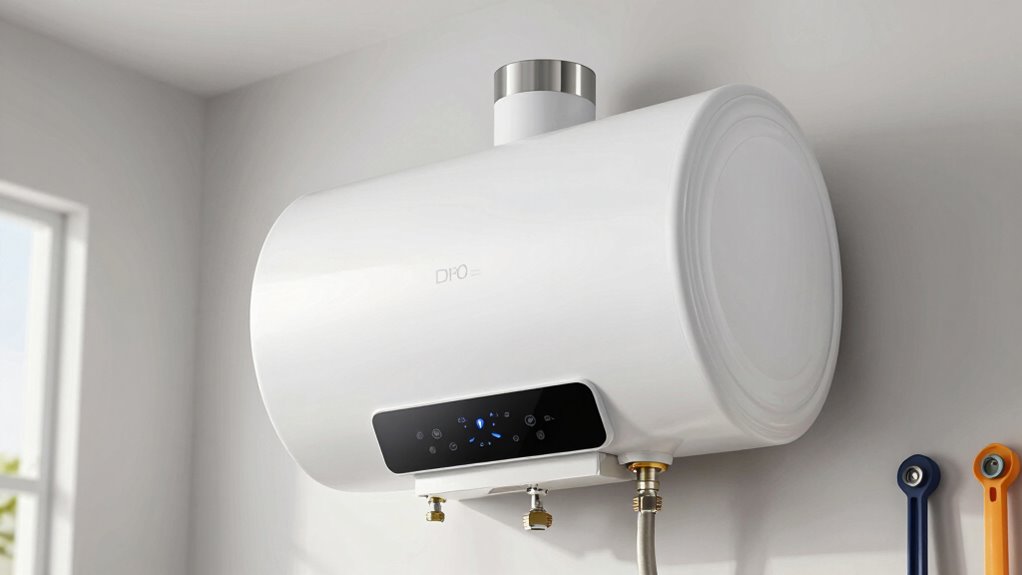
When deciding between a 50, 65, or 80-gallon water heater, it’s essential to take into account your household’s hot water needs. Your decision impacts comfort, efficiency, and utility bills, so understanding how much hot water your household consumes is key. Larger tanks typically provide more hot water, but they also use more energy and space. If you’re conscious of water conservation, choosing the right tank size can help reduce waste. An oversized tank might sit idle most of the time, leading to unnecessary energy use and water heating costs. Conversely, a tank too small could mean running out of hot water during peak usage, causing inconvenience.
Choosing the right water heater size balances hot water needs, energy efficiency, and space considerations.
Water conservation plays a crucial role in this decision. Opting for a tank that matches your household’s typical hot water demand minimizes energy waste and limits water heating. For example, if your family takes quick showers and does laundry during off-peak hours, a smaller tank might suffice. If you often have multiple family members showering simultaneously, a larger tank ensures everyone’s needs are met without running out of hot water. Additionally, implementing water-saving fixtures and habits complements your tank choice, making your overall water use more efficient. Being aware of your tank material considerations can further influence your decision, as durability and longevity impact long-term satisfaction.
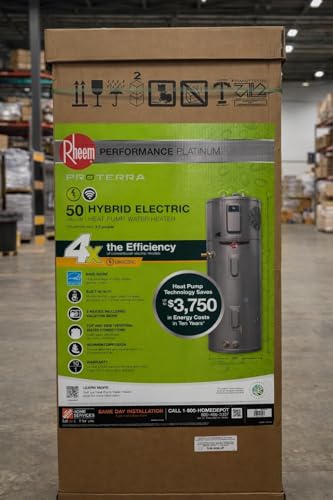
Rheem 50 Gal. Smart High Efficiency Hybrid Heat Pump Water Heater with 10-Year Warranty
It must be wired into your home’s electrical system and will typically require a dedicated electrical circuit (similar…
As an affiliate, we earn on qualifying purchases.
As an affiliate, we earn on qualifying purchases.
Frequently Asked Questions
How Does Tank Size Affect Water Pressure?
Your tank size impacts water pressure because larger tanks store more water, which can maintain consistent water flow and pressure levels even when multiple fixtures are in use. A bigger tank ensures you have sufficient water supply, reducing pressure drops during peak usage. Conversely, smaller tanks may lead to fluctuating water flow and lower pressure, especially when demand is high. Consider your household needs to choose the right size for adequate water pressure.
What Is the Lifespan Difference Between These Tank Sizes?
Like a trusty steed, your tank’s lifespan varies with size. A 50-gallon tank typically endures longer due to less strain, while larger tanks like 80 gallons may wear out quicker because of increased pressure and usage. Tank durability influences maintenance frequency—smaller tanks need fewer repairs, extending their life. Ultimately, choosing the right size balances your water needs with long-term reliability, ensuring your system lasts through many seasons.
Are Larger Tanks More Energy-Efficient?
Larger tanks often offer better energy savings because they maintain hot water longer and reduce the frequency of heating cycles. This efficiency benefits both your utility bills and the environment by lowering energy consumption. Plus, an 80-gallon tank can handle more demand, decreasing the need for additional heating sources. Overall, bigger tanks tend to have a lower environmental impact, making them a smarter, eco-friendlier choice for long-term savings.
Can I Upgrade My Tank Size Later?
Yes, you can upgrade your tank size later, but it involves a new tank installation, which might be costly and time-consuming. Before upgrading, consider your water conservation habits and household needs. Larger tanks store more water, reducing the frequency of tank fills. Planning ahead helps guarantee your system meets your current and future needs without unnecessary upgrades, making water conservation easier and more efficient over time.
How Does Tank Size Impact Water Heating Costs?
Tank size greatly influences water heating costs; larger tanks use more energy, increasing your bills. For example, an 80-gallon heater consumes 50% more energy than a 50-gallon one. Proper tank insulation can reduce heat loss, saving you money over time. Keep in mind, bigger tanks may also have higher installation costs, but investing in good insulation helps offset ongoing expenses, making your choice more energy-efficient.

Rinnai REHP80 Electric Heat Pump Water Heater ‚ 80 Gallon, 240V, 30A, Energy Star Certified, 4.00 UEF, 91 Gallon First Hour Delivery for Residential Use
Energy-efficient performance: Energy Star Certified. Extracts heat from ambient air to deliver consistent hot water with zero emissions…
As an affiliate, we earn on qualifying purchases.
As an affiliate, we earn on qualifying purchases.
Conclusion
Choosing the right gallon size is like planting a garden—you need enough space to grow, but not so much that it becomes overwhelming. Imagine filling a small bucket with water—perfect for a quick rinse, but you’d need a larger one for a full wash. If you’re unsure, start with a medium 65-gallon tank. It’s like a reliable friend—balanced, versatile, and ready to meet your needs without overflowing. Make the right choice, and you’ll keep your household running smoothly.

GE Appliances 18 Gallon Versatile Plug and Play Electric Water Heater with Adjustable Thermostat, Easily Installs Where You Want It, 120 Volt
WHOLE HOME FLEXIBILITY – Can provide hot water to a single hookup, or to a small house, condo,…
As an affiliate, we earn on qualifying purchases.
As an affiliate, we earn on qualifying purchases.

Rinnai REHP65 Electric Heat Pump Water Heater‚ 65 Gallon, 240V, 30A, Energy Star Certified, 3.90 UEF, 80 Gallon First Hour Delivery for Residential Use
Energy-efficient performance: Energy Star Certified. Extracts heat from ambient air to deliver consistent hot water with zero emissions…
As an affiliate, we earn on qualifying purchases.
As an affiliate, we earn on qualifying purchases.