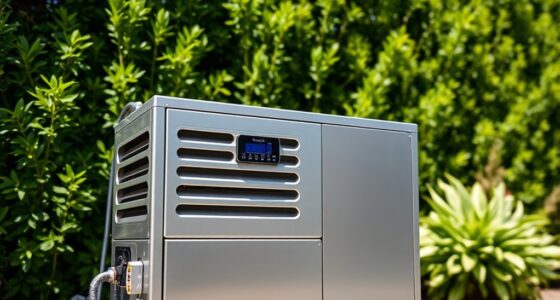
When comparing heating costs across fuel sources, consider efficiency, upfront expenses, and long-term savings. Renewable options like solar and geothermal might cost more initially but reduce fuel dependence and lower utility bills over time. High-efficiency systems, such as condensing furnaces and heat pumps, use less fuel and are more cost-effective in the long run. To understand how each fuel type impacts your wallet and environment, explore the details that follow.
Key Takeaways
- Renewable options like solar and geothermal often have higher upfront costs but lower long-term energy bills.
- Fuel efficiency directly impacts overall costs; higher efficiency systems reduce fuel consumption and expenses.
- Natural resource-based systems decrease dependence on fluctuating fuel prices, enhancing cost stability.
- Long-term savings from efficient and renewable systems can outweigh initial investment over their lifespan.
- Fuel price volatility affects costs; systems with high efficiency and renewable sources mitigate financial risks.

When it comes to choosing a heating system, understanding the costs involved can help you make smarter decisions. One of the most important factors to evaluate is the type of fuel your system uses, as this directly impacts your overall expenses and efficiency. Renewable options like solar, geothermal, and biomass are gaining popularity because they tend to be more sustainable and, in some cases, more cost-effective over the long term. These options often have higher upfront costs but can substantially reduce your energy bills and environmental impact. Solar panels and geothermal systems, for example, harness natural resources, which means you’re less dependent on fluctuating fuel prices, making your heating expenses more predictable. Biomass fuels, such as wood pellets, also offer renewable benefits and can be more affordable depending on your location and access to local resources. Fuel efficiency plays a key role in determining the total cost of heating. Systems with high Fuel efficiency convert more of the energy in their fuel into usable heat, meaning you get more warmth for less money. For instance, modern condensing furnaces and heat pumps often boast efficiency ratings above 90%, which can translate into substantial savings over older, less efficient models. When comparing fuel sources, look beyond just the sticker price and focus on how effectively each system uses fuel. A more efficient system may have a higher initial investment but can save you money in the long run by reducing your fuel consumption. This is especially true if you live in an area where fuel prices are volatile or rising, as efficient systems can buffer you against those increases.

Goodman 80,000 BTU 80% Efficiency Multi-Speed, Single-Stage upflow/Horizontal Furnace Model: (GR9S800803BN) Cabinet is 17.5 inches wide-R32 Ready-Nationwide Installation-NOT Including CA
GR9S800803BN Replaces the following older furnace model numbers: GMES800803BN,GM9S800803BN
As an affiliate, we earn on qualifying purchases.
As an affiliate, we earn on qualifying purchases.
Frequently Asked Questions
How Do Regional Fuel Prices Impact Overall Heating Costs?
Regional fuel prices substantially impact your overall heating costs. When fuel price fluctuations occur, they directly influence how much you spend on heating, especially if your area faces regional supply variability. If fuel prices rise locally, your heating bills go up, but if prices drop or supply improves, you save money. Staying aware of these regional trends helps you anticipate changes and manage your heating expenses more effectively.
What Environmental Factors Influence Fuel Efficiency?
Imagine a cold winter evening where your home feels warm and cozy. Environmental factors like temperature swings, humidity, and wind influence your fuel efficiency by affecting how well your heating system operates. Using renewable energy sources helps reduce emissions and keeps your home eco-friendly. By understanding these factors, you can optimize your heating, save costs, and contribute to emission reduction efforts, making your home both comfortable and sustainable.
Are There Government Incentives for Using Certain Fuel Sources?
Yes, there are government incentives for using certain fuel sources. You can benefit from renewable subsidies and tax incentives when you choose renewable energy options like solar, wind, or biomass. These programs aim to promote cleaner energy and reduce your heating costs over time. By taking advantage of these incentives, you not only save money but also contribute to environmental sustainability. Check local and federal programs for specific details.
How Do Maintenance Costs Compare Across Different Heating Systems?
You’ll find maintenance expenses vary based on your heating system, with some requiring more frequent repairs and servicing. For example, traditional furnaces may need regular filter changes, while heat pumps generally offer higher system reliability and lower upkeep. Overall, systems with better reliability tend to have lower maintenance costs, saving you time and money in the long run. Choosing a reliable system can reduce unexpected breakdowns and ongoing maintenance expenses.
What Are the Long-Term Savings of Switching Fuel Types?
Switching fuel types can lead to long-term savings, especially as technological advancements improve efficiency and reduce operational costs. While fuel cost fluctuations may impact expenses, investing in newer systems often means lower maintenance and better energy use. Over time, these savings add up, making the switch worthwhile. Keep an eye on market trends and innovations to maximize your savings and guarantee your heating system stays cost-effective for years to come.

Solar Water Heating–Revised & Expanded Edition: A Comprehensive Guide to Solar Water and Space Heating Systems (Mother Earth News Wiser Living Series)
New
As an affiliate, we earn on qualifying purchases.
As an affiliate, we earn on qualifying purchases.
Conclusion
So, whether you find yourself flipping a switch or fueling up your furnace, it’s funny how the costs can sneak up on you. Sometimes, a little switch in fuel type or a quick upgrade can save you money—just like finding that missing sock in the laundry. Keeping an eye on prices and efficiency isn’t just smart; it’s like catching a lucky break when you least expect it. After all, your wallet deserves a little coincidence too.

Geo Power: Stay Warm, Keep Cool and Save Money with Geothermal Heating & Cooling
As an affiliate, we earn on qualifying purchases.
As an affiliate, we earn on qualifying purchases.

10kg Premium Heating Fuel Biomass Stove Natural Wood Pellets Chemical, Free and Odourless Wooden Pellets 6mm
Derived from 100% virgin soft wood from the United Kingdom, Heat Fuel pellets are the number one pellets…
As an affiliate, we earn on qualifying purchases.
As an affiliate, we earn on qualifying purchases.