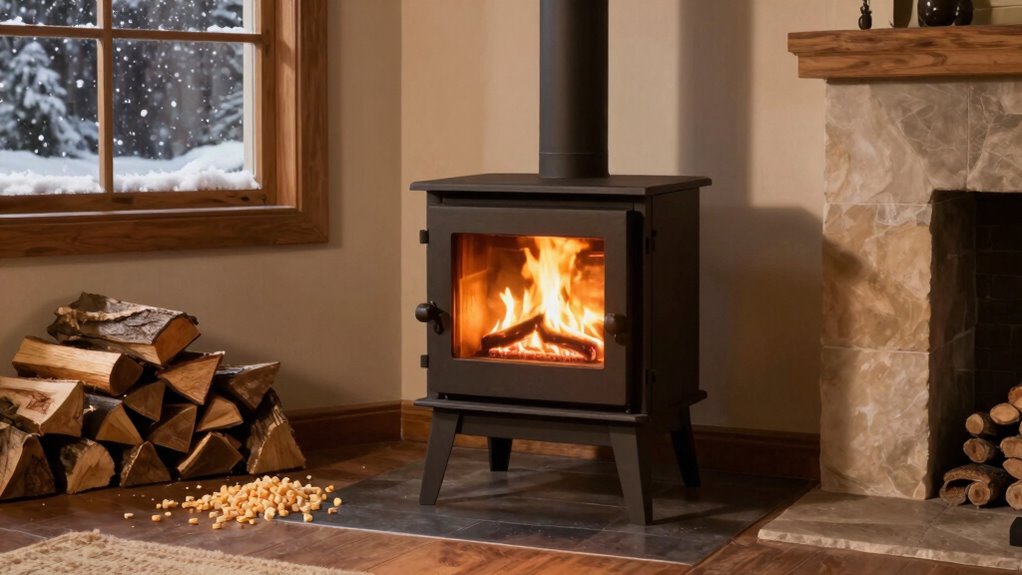

Pellet stoves can serve as reliable backup heat, but their effectiveness depends on your model and backup plans. They work well if you have enough fuel stored and a way to power them, as many need electricity to run fans and feed mechanisms. During outages, non-electric models may still produce some heat, but usually less efficiently. To guarantee consistent warmth when you need it most, consider proper fuel storage and additional preparedness steps—you’ll find helpful details ahead.

Get backup power and energy gear delivered free with Prime
- Fast, free delivery on millions of items
- Prime Video, Amazon Music and more included
- Member-only deals all year
Key Takeaways
- Pellet stoves can provide reliable heat if equipped with a battery backup or during power outages with non-electric models.
- Most require electricity for feed mechanisms and fans, limiting their effectiveness during power outages unless specifically designed for backup.
- Proper fuel storage and supply planning are essential to ensure continuous operation during extended outages.
- Moisture, debris, and maintenance issues can reduce efficiency and heating capacity, especially during prolonged emergencies.
- They are effective for supplemental heating but may not fully replace a primary heating system in power outage situations.
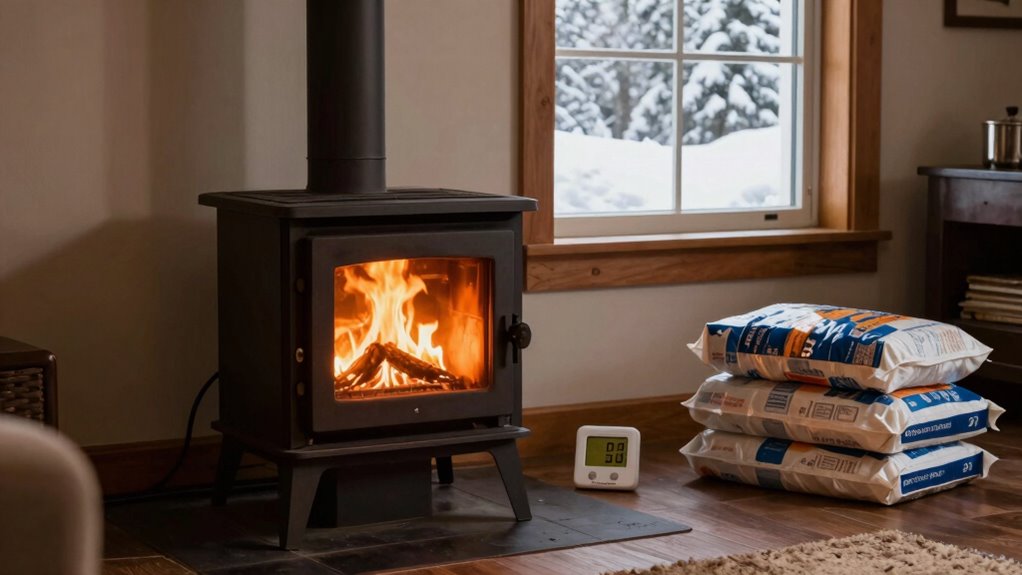
During power outages or extreme cold snaps, having a reliable backup heat source is essential, and pellet stoves offer an effective solution. They can provide consistent warmth without relying on electricity for combustion, making them a popular choice in emergencies. However, it’s important to understand what pellet stoves can and can’t do as a backup heat source. One key aspect to evaluate is their efficiency limitations. Pellet stoves are generally efficient at converting fuel into heat, but their overall performance during a power outage depends on the model. Many modern pellet stoves require electricity to operate feed mechanisms and fans, which means they won’t function during an outage unless they have battery backups. Even models that do run without power may experience reduced efficiency, leading to less heat output than expected. This can be frustrating when you’re counting on the stove to heat your home effectively during a cold snap. Additionally, regular maintenance is necessary to keep them running efficiently and to prevent issues caused by moisture or debris.
Fuel storage considerations are another critical factor. Pellet stoves rely on small, compressed wood pellets stored in bulk. If you want to use a pellet stove as a backup, you need a substantial and secure storage area for your pellets, especially if outages last several days. Unlike gas or oil, pellets are not always readily available at local stores during emergencies, so stocking up ahead of time is wise. You also need to keep the pellets dry, as moisture can reduce their burning efficiency and cause maintenance issues. Proper storage is essential to guarantee you have enough fuel on hand when needed, but it also means planning for space and protecting your supply from humidity and pests. Being aware of fuel availability and storage requirements can help you prepare more effectively for emergency situations. Additionally, understanding air quality benefits can help you choose a backup heating option that maintains a healthy indoor environment during extended outages. It’s also important to stay informed about market trends to anticipate potential shortages or price fluctuations in pellet supplies, especially during high-demand seasons. Planning ahead for fuel storage can prevent shortages when you need heat most.
As an affiliate, we earn on qualifying purchases.
Frequently Asked Questions
Can Pellet Stoves Operate During Power Outages Without Electricity?
Pellet stoves generally can’t operate during power outages because they rely on electricity for ignition, fans, and augers. If you want a reliable backup, consider alternative heating options like a wood stove or propane heater. While pellet stoves are energy-efficient, their dependence on power limits their use during outages. To guarantee continuous warmth, think about integrating a non-electric heat source for emergencies.
How Long Do Pellet Stoves Typically Last With Proper Maintenance?
With proper maintenance, your pellet stove can last a lifetime—literally decades! On average, pellet stove lifespan can stretch to 15-20 years, and sometimes even longer with diligent care. Regular cleaning, timely part replacements, and professional inspections are essential maintenance requirements that keep it running smoothly. If you stick to these, you’ll enjoy reliable warmth for years, making your investment well worth it.
Are Pellet Stoves Safe to Use in Small or Enclosed Spaces?
Pellet stoves can be safe in small or enclosed spaces if you guarantee proper ventilation requirements are met. Adequate airflow prevents dangerous buildup of fumes and carbon monoxide, maintaining a safe environment. However, their space heating efficiency may decrease in tight spaces, and you might need supplemental ventilation or air circulation. Always follow manufacturer guidelines and consult a professional to optimize safety and efficiency when using pellet stoves in confined areas.
What Is the Average Cost to Install a Pellet Stove Backup System?
Getting a pellet stove backup system will set you back around $2,000 to $4,000, depending on your home’s size and setup. You’re really crossing your fingers if you think it’s a cheap fix—cost considerations include the stove, venting, and installation requirements. To keep everything running smoothly, hire a professional to make sure safe and efficient installation. It’s worth the investment to have reliable heat when you need it most.
Do Pellet Stoves Produce Any Harmful Emissions or Odors?
Pellet stoves do produce some emissions, primarily ash and smoke, but modern models are designed to minimize emissions concerns through advanced combustion technology. Odor control is generally good, especially with high-quality pellets and proper maintenance. If you keep the stove clean and use the right pellets, you shouldn’t notice strong odors. However, always guarantee proper ventilation to keep emissions and odors at safe, comfortable levels in your home.
As an affiliate, we earn on qualifying purchases.
Conclusion
Pellet stoves can be a reliable backup heat source, especially during power outages or when your main system fails. However, they aren’t a perfect solution for continuous heating, as they require electricity and regular maintenance. Did you know that in 2020, over 2 million homes in the U.S. relied on pellet stoves for heating? This shows their growing popularity, but also highlights the importance of understanding their limitations to stay warm and safe.
pellet stove fuel storage containers
As an affiliate, we earn on qualifying purchases.
As an affiliate, we earn on qualifying purchases.
As an affiliate, we earn on qualifying purchases.
Fall Picks
fall essentials
As an affiliate, we earn on qualifying purchases.