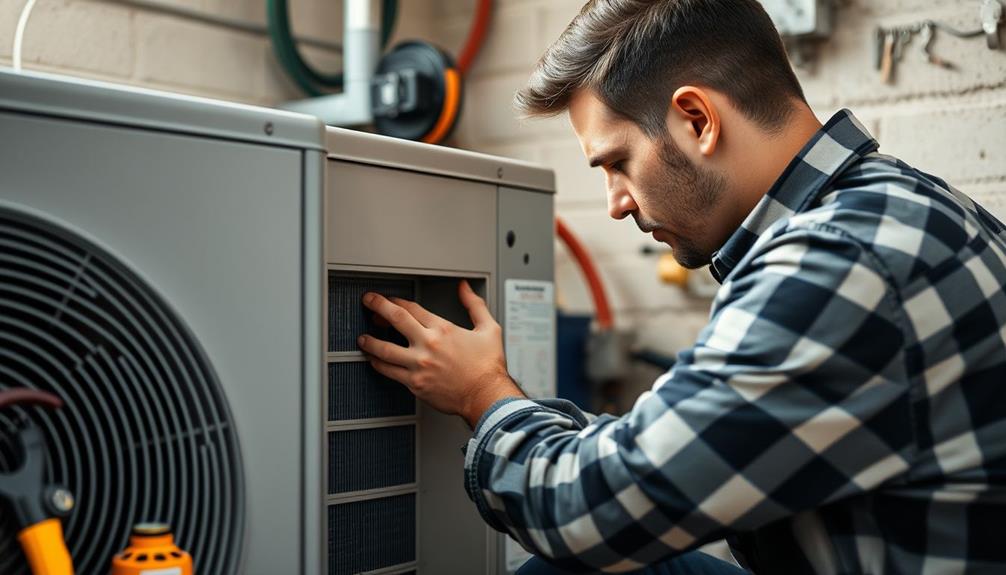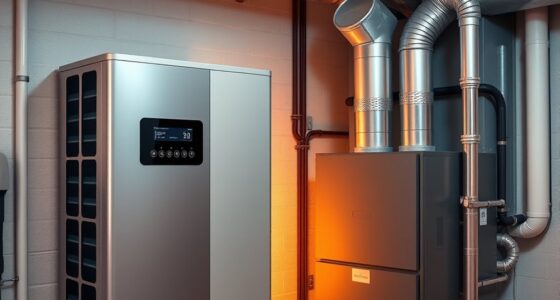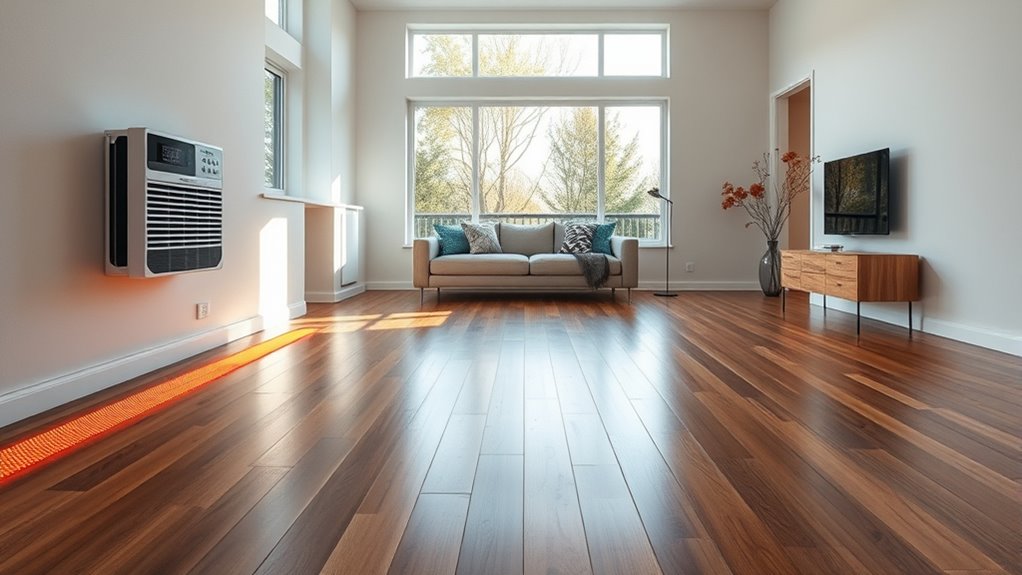

Radiant floor heating and heat pumps are highly compatible systems that work together to create an energy-efficient and comfortable home. Radiant systems operate at lower temperatures, which match well with heat pump capabilities, maximizing efficiency and reducing energy costs. When combined properly, they provide uniform warmth and eco-friendly heating. To get the best results, proper sizing, installation, and system integration are essential—continue exploring to discover how to optimize this powerful pairing.
Key Takeaways
- Radiant floor heating operates efficiently at lower water temperatures, aligning well with heat pump output.
- Heat pumps provide consistent, moderate-temperature heat ideal for radiant systems.
- Proper system sizing and calibration ensure compatibility and optimal performance between both systems.
- Upgrading existing infrastructure may be necessary for seamless integration of radiant heating and heat pumps.
- Professional installation guarantees correct system design, preventing conflicts and maximizing energy efficiency.
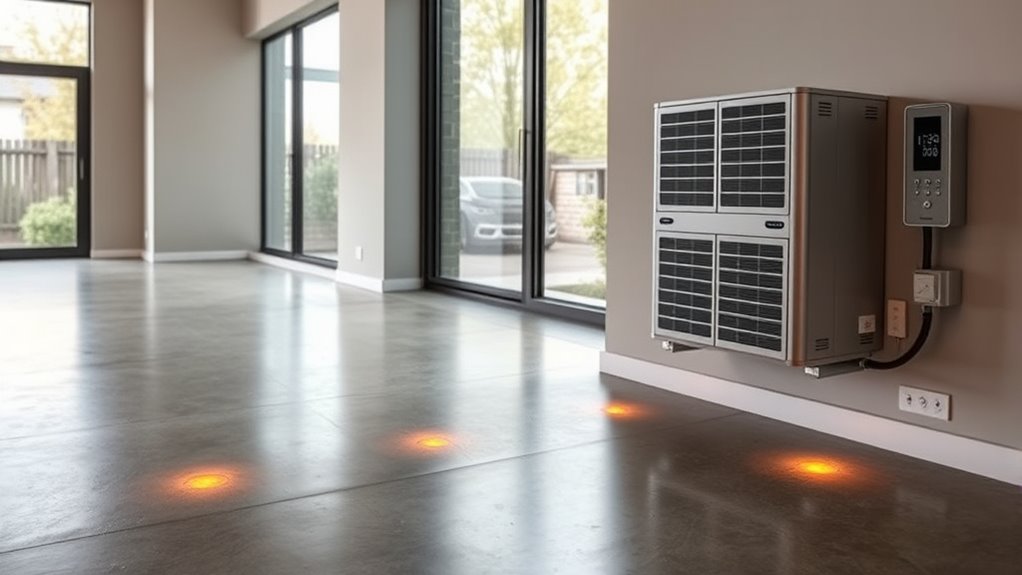
If you’re contemplating upgrading your home’s heating system, understanding how radiant floor heating and heat pumps work together is vital. These systems can create an energy-efficient and comfortable environment, but integrating them requires careful planning. Radiant floor heating provides warmth directly through a network of pipes or electric mats installed beneath your floors, offering uniform heat distribution. Heat pumps, on the other hand, transfer heat from outside to inside, making them a versatile and energy-efficient choice for heating your home. When paired, they can work harmoniously to reduce energy consumption while maintaining comfort.
One of the key benefits of combining radiant floor heating with a heat pump is improved energy efficiency. Radiant systems operate at lower temperatures compared to traditional forced-air systems, which means your heat pump doesn’t have to work as hard to deliver the desired warmth. Since heat pumps are most efficient when they run at moderate temperatures, pairing them with radiant systems maximizes their efficiency, ultimately reducing your energy bills. This synergy makes the combination especially appealing for homeowners aiming to lower their carbon footprint without sacrificing comfort.
However, before installation, you need to think about certain installation considerations to guarantee compatibility and peak performance. First, evaluate your home’s existing infrastructure. Radiant floor heating requires a suitable subfloor and space for the tubing or electric mats, so you may need to upgrade or modify your flooring to accommodate the system. Additionally, the size and insulation of your home influence how well the systems will work together. Well-insulated homes retain heat better, allowing your heat pump to operate efficiently and your radiant heating to provide consistent warmth without excessive energy use.
Another critical aspect is sizing and system design. You’ll want to work with professionals who can calculate your home’s heating load accurately. Proper sizing ensures your heat pump provides enough heat without overworking, while the radiant system is calibrated to deliver the right amount of warmth at lower temperatures. This balance is essential for maximizing energy efficiency and avoiding unnecessary costs or system strain. Consulting with specialists familiar with system compatibility can help optimize your setup.
Finally, consider the installation process itself. Installing radiant floor heating can be more involved and may require access to your subfloor, which could mean some disruption. Combining this with a heat pump, especially if retrofitting an existing home, demands careful planning to avoid conflicts with existing systems or structural elements. By working with experienced installers, you can guarantee that both systems are integrated seamlessly, resulting in a reliable, energy-efficient heating solution that enhances your home’s comfort and sustainability.
Frequently Asked Questions
Can Heat Pumps Be Used for Both Heating and Cooling With Radiant Floors?
Yes, heat pumps can be used for both heating and cooling with radiant floors. This dual functionality allows you to efficiently switch between warmth in winter and cooling in summer, improving energy efficiency year-round. You benefit from a versatile system that maintains comfortable indoor temperatures while reducing energy costs. With proper installation and system design, a heat pump seamlessly integrates with radiant floor heating, making your home more sustainable and comfortable.
What Are the Cost Differences Between Various Heat Pump Models?
You’ll find that cost differences among heat pump models can be quite charming, offering a delightful range for your budget. With a variety of models available, the cost comparison reveals options from affordable to premium, each providing unique features. While high-end models may come with a higher price tag, they often deliver enhanced efficiency and durability. Ultimately, choosing the right model balances your financial comfort with your heating and cooling needs.
How Long Does It Take to Install Radiant Floor Heating With a Heat Pump?
Installation of radiant floor heating with a heat pump typically takes about one to two weeks, depending on your home’s size and existing setup. You should consider the installation timeline within your renovation plans, as it involves flooring removal and system integration. Proper planning minimizes disruptions, and working with experienced professionals guarantees a smoother process, helping you enjoy efficient heating without lengthy delays.
Are There Specific Insulation Requirements for Compatibility?
You should meet specific insulation standards to guarantee compatibility. Proper insulation minimizes heat loss, making your system more efficient and effective. Check local building codes for insulation requirements, especially in floors and walls. Good insulation standards help your heat pump work efficiently with radiant floor heating. Remember, compatibility considerations include ensuring your insulation prevents heat escape, so your system heats your space evenly and saves energy.
What Maintenance Is Required for Combined Radiant Floor and Heat Pump Systems?
You should perform regular system checks and replace filters as needed to keep your combined radiant floor and heat pump system running smoothly. Check for leaks, unusual noises, or temperature inconsistencies, and clean or replace filters to maintain airflow and efficiency. Scheduling annual professional inspections can catch potential issues early, ensuring your system operates best and prolongs its lifespan with proper maintenance.
Conclusion
Now that you know how radiant floor heating and heat pumps can dance in harmony, imagine your home as a cozy sanctuary where warmth flows effortlessly beneath your feet. Like a gentle embrace during winter’s chill, this pairing offers comfort that feels almost magical. Embrace this seamless duet, and turn your living space into a haven of warmth and tranquility, transforming everyday moments into a soothing retreat you’ll cherish all year round.