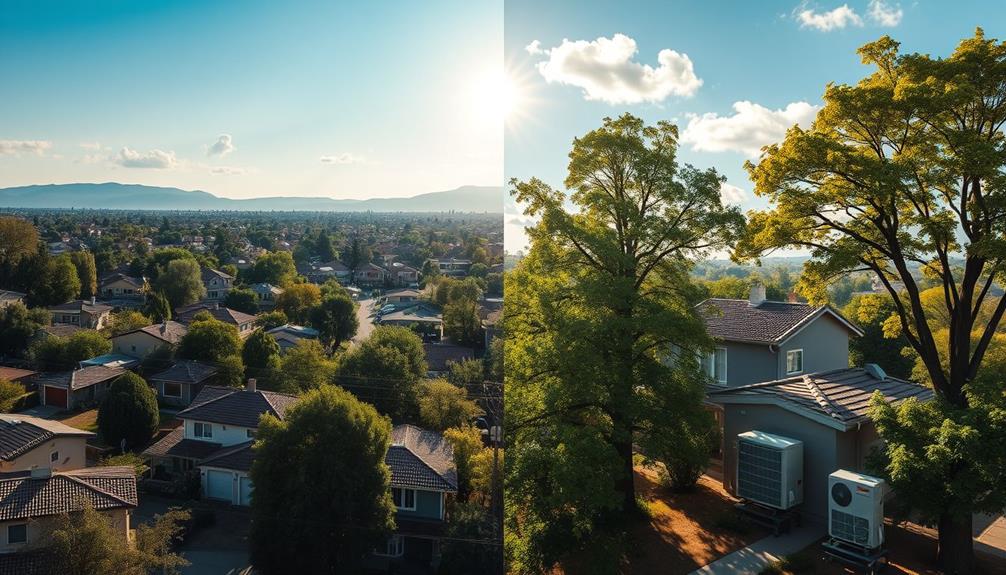
Switching from oil heating to a heat pump can greatly boost your home’s energy efficiency, lower your utility bills, and reduce your environmental footprint. Heat pumps are highly efficient, using electricity to extract heat from the air or ground, which offers stable costs and minimal maintenance. The installation process is straightforward and can be completed in a few days, often with financial incentives. To discover how this upgrade can benefit you, keep exploring the options and process further.
Key Takeaways
- Switching reduces environmental impact and offers long-term cost savings through higher efficiency.
- Heat pumps operate on stable electricity prices and require minimal maintenance.
- The installation involves assessing existing infrastructure and replacing oil systems with air-source or ground-source units.
- The process typically takes a few days, with minor adjustments to electrical systems or ductwork.
- Incentives and rebates can offset initial costs, making heat pump upgrades financially advantageous.
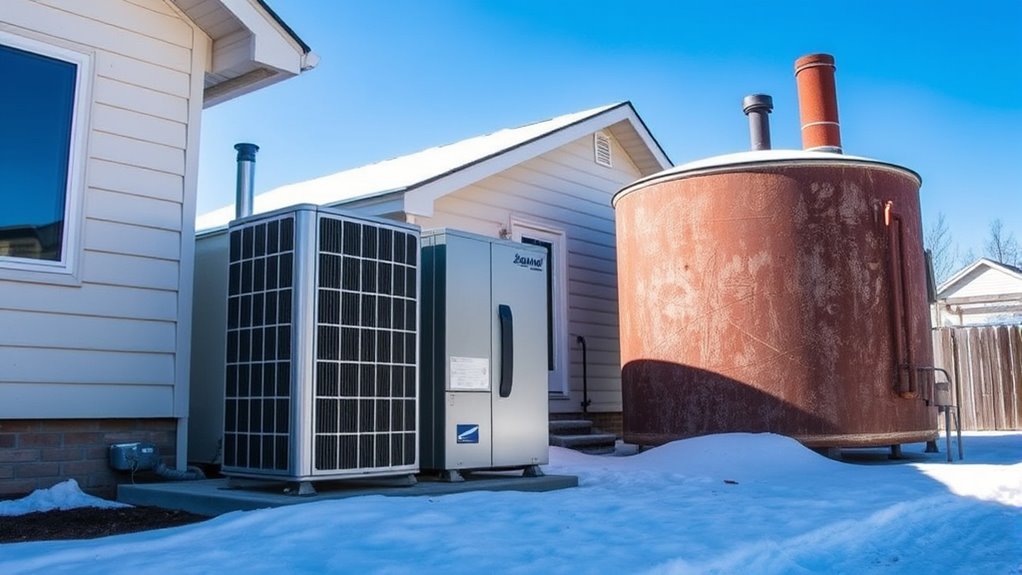
Switching from oil heating to heat pump solutions is a smart move for homeowners looking to save money and reduce their environmental impact. Many people are discovering that upgrading their heating systems not only benefits the planet but also their wallets. One of the main advantages is the potential for significant cost savings over time. Oil prices fluctuate, and maintaining an oil furnace can become expensive due to fuel costs and regular servicing. Heat pumps, on the other hand, run on electricity, which tends to be more stable in price, especially if you switch to renewable energy sources. Plus, heat pumps are highly efficient, extracting heat from the air or ground, meaning they use less energy to produce the same amount of warmth as oil systems.
When considering the installation process, it’s understandable to think it might be complex or disruptive. However, the process is straightforward and often faster than you might expect. Initially, a professional evaluates your home’s heating needs and assesses the existing infrastructure. They’ll check if your home’s electrical system can support a heat pump, especially if you’re switching from oil, which might require some upgrades. The actual installation involves removing your old oil tank and furnace, then setting up the heat pump system, which could be an air-source or ground-source model depending on your location and preferences. The technician will connect the unit to your ductwork or install new ductless systems, and then they’ll fine-tune everything for ideal performance.
The installation process typically takes a few days, during which your contractor ensures everything is correctly configured and safe. While you might need to make some initial adjustments — like clearing space for the outdoor unit or updating your electrical panel — these are minor compared to the long-term benefits. Additionally, choosing an energy-efficient system can maximize your savings and performance. Once installed, heat pumps operate silently and require minimal maintenance, saving you both time and money. The upfront investment might seem substantial, but many manufacturers and local programs offer incentives or rebates that help offset costs and make the switch more affordable. For example, selecting a best airless paint sprayer can demonstrate how advanced technology improves efficiency, similar to modern heat pump systems.
Frequently Asked Questions
What Are the Initial Costs of Switching to a Heat Pump?
The initial costs of switching to a heat pump typically range from $3,000 to $8,000, depending on your home’s size and system type. While the upfront investment is higher than oil heating, a cost comparison shows long-term savings through lower energy bills. Plus, many regions offer financial incentives that can substantially reduce your initial expenses, making the switch more affordable and beneficial over time.
How Long Does It Take to Install a Heat Pump System?
Think of installing a heat pump system like planting a garden; it takes time to settle in. Typically, the installation timeline spans 1 to 3 days, depending on your home’s complexity. However, contractor availability can influence this schedule—busy seasons might extend wait times. You’ll want to coordinate with your contractor early to make certain of a smooth installation process and avoid delays.
Are Heat Pumps Effective in Extremely Cold Climates?
Heat pumps can be effective in cold climates, but they face efficiency challenges when temperatures drop markedly. Modern cold climate heat pumps are designed to operate efficiently even in freezing conditions, providing reliable heating. However, during extreme cold snaps, you might notice reduced efficiency, and supplementary heating could be needed. Overall, with the right system, you can still enjoy energy savings and comfort, even in harsh winter weather.
What Maintenance Is Required for Heat Pump Systems?
Think of your heat pump like a trusty steed—regular care keeps it running smoothly. You’ll need to check filters monthly, clear debris, and schedule annual professional inspections. Proper maintenance extends system longevity and reduces breakdowns. While maintenance frequency varies, staying consistent with these tasks guarantees your heat pump remains efficient, especially during cold months. Remember, a well-maintained system is like a well-oiled machine, ready to serve you reliably.
Can a Heat Pump Provide Both Heating and Cooling?
Yes, a heat pump provides both heating and cooling, offering dual functionality for year-round comfort. During colder months, it efficiently heats your home, while in warmer weather, it switches to cooling mode. This versatility makes heat pumps an excellent all-in-one solution, reducing the need for separate systems. With proper maintenance, you can enjoy consistent comfort throughout the year, saving energy and lowering your utility bills.
Conclusion
Switching from oil heating to heat pump solutions promises a more sustainable, safer, and smarter home. By making this move, you’ll enjoy efficient energy use, reduce environmental impact, and experience easier, eco-friendly heating. Don’t delay your decision—dive into a greener, cleaner future today. Embrace the benefits, beat the burden of traditional heating, and bask in the bliss of better, brighter, and more balanced living. Shift now, and turn your home into a haven of harmony.