To size your hot water storage tank for a heat pump system, consider your household’s hot water needs, size, and usage patterns. A larger tank with good insulation prevents energy waste and supports better temperature stratification, ensuring hot water is available when you need it. Proper sizing balances capacity with efficiency, preventing shortages or excess energy use. Keep in mind features like tank design and insulation quality; exploring these details can help optimize your system further.

Get backup power and energy gear delivered free with Prime
- Fast, free delivery on millions of items
- Prime Video, Amazon Music and more included
- Member-only deals all year
Key Takeaways
- Match tank size to household hot water demand to prevent shortages and reduce energy waste.
- Use well-insulated tanks with high R-values to minimize heat loss and improve efficiency.
- Opt for tanks with features like internal baffles to enhance temperature stratification and maximize hot water availability.
- Consider tank dimensions and design to support effective layering, especially for larger households.
- Select a tank that balances capacity and size to ensure continuous hot water supply without unnecessary energy consumption.
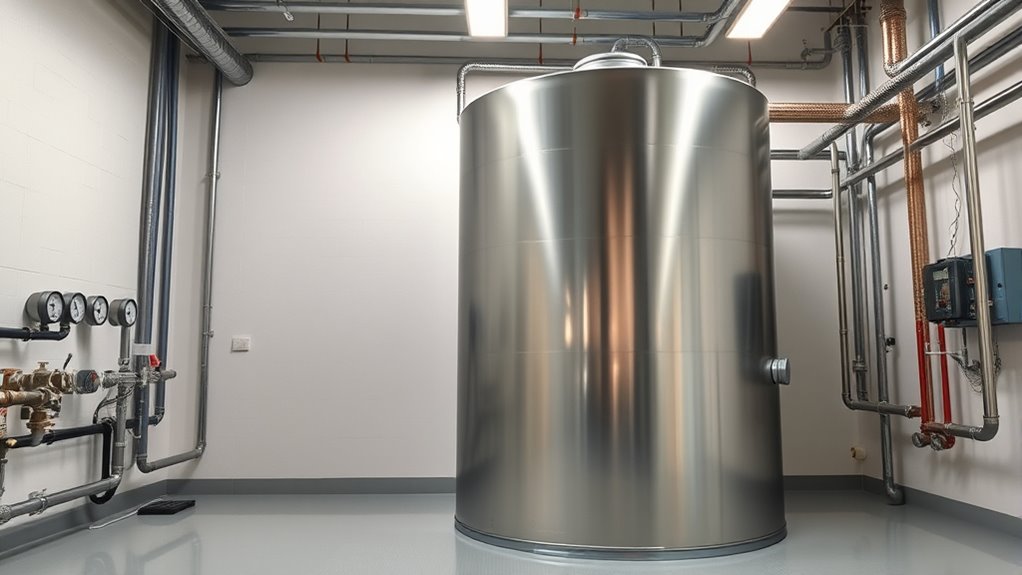
Have you ever wondered how to choose the right size for your hot water storage tank? Picking the correct size is essential to guarantee you have enough hot water without wasting energy or space. One of the key factors to contemplate is tank insulation. A well-insulated tank minimizes heat loss, so your heat pump system doesn’t have to work harder to keep water hot. The better the insulation, the more efficiently your system operates, which can save you money over time. When evaluating tank insulation, look for models with high R-values—this indicates better insulation quality. Proper insulation also helps maintain a stable water temperature, reducing the need for frequent reheating.
Another critical aspect is understanding temperature stratification inside the tank. Instead of a uniform temperature, hot water naturally rises to the top, while cooler water settles at the bottom. This temperature stratification plays a significant role in how much usable hot water you have at any given moment. When sizing your tank, contemplate this layered temperature distribution. A larger tank allows for more stratification layers, providing a greater volume of hot water at the desired temperature. This means you can draw hot water from the top while cooler water remains at the bottom, ready to be reheated efficiently. If your tank is too small, you might find yourself running out of hot water quickly, especially during peak usage times.
It’s also worth noting that the effectiveness of temperature stratification depends on your tank’s design. Some tanks are built specifically to enhance stratification with features like taller, slimmer profiles or internal baffles that promote layering. When selecting a tank, check if it’s designed to optimize stratification, as this can improve your system’s overall efficiency and capacity. Additionally, consider your household’s hot water demands. If you have a large family or high hot water usage, a bigger tank with good insulation and effective stratification will ensure everyone’s needs are met without frequent reheating cycles.
hot water storage tank for heat pump systems
As an affiliate, we earn on qualifying purchases.
As an affiliate, we earn on qualifying purchases.
Frequently Asked Questions
How Does Hot Water Usage Vary Seasonally?
Your hot water usage varies seasonally due to changes in household activities and outdoor temperatures. During colder months, you’ll notice increased seasonal water demand as heating needs rise and usage pattern variations occur with more showers and laundry. Conversely, in warmer months, water demand typically decreases. Understanding these fluctuations helps you better size your hot water storage tank, ensuring you meet seasonal demands efficiently without wasting energy.
What Are the Environmental Impacts of Different Tank Sizes?
Imagine you’re a pioneer in eco-friendly tech—your choice of tank size impacts the planet. Smaller tanks mean fewer manufacturing emissions and less energy use, boosting recycling benefits. Larger tanks, however, may reduce the frequency of heating cycles but require more resources initially. Your decision influences greenhouse gases and resource conservation, so weigh the environmental impacts carefully to support sustainability and minimize your carbon footprint.
Can Tank Size Affect Heat Pump Efficiency?
Yes, tank size can affect heat pump efficiency. A larger tank with good insulation maintains temperature longer, reducing the heat pump’s workload. Properly sized tanks optimize heat exchange, ensuring the system doesn’t cycle excessively. If your tank is too small, it might cause frequent heating cycles, lowering efficiency. Conversely, a well-insulated, appropriately sized tank minimizes energy loss and enhances overall system performance.
How Do Maintenance Costs Relate to Tank Capacity?
Larger tanks often lead to higher maintenance costs because they require more frequent inspections and potential repairs, impacting your maintenance frequency and overall costs. However, a smaller tank may need less upkeep but might not meet your hot water demand. When doing a cost comparison, consider how tank capacity influences maintenance needs, balancing initial investment with ongoing expenses to find the most economical choice for your heat pump system.
Are There Optimal Tank Sizes for Small Households?
Oh, sure, just toss a tiny tank in and hope for the best—because who needs ideal size? For small households, a tank around 30 to 50 gallons usually hits the sweet spot, reducing standby heat loss thanks to good tank insulation and water quality. Keep in mind, a well-insulated tank saves energy, while poor water quality can clog or damage your system, making the right size even more critical.
insulated hot water tank with high R-value
As an affiliate, we earn on qualifying purchases.
As an affiliate, we earn on qualifying purchases.
Conclusion
Now that you’ve learned how to size your hot water storage tank, you can optimize your heat pump system for efficiency, comfort, and cost savings. By understanding your needs, evaluating your options, and making informed decisions, you guarantee your system performs at its best. You’ll enjoy reliable hot water, reduced energy bills, and a more sustainable home. So, measure carefully, choose wisely, and enjoy the benefits of a perfectly sized hot water storage tank.
tank with internal baffles for temperature stratification
As an affiliate, we earn on qualifying purchases.
As an affiliate, we earn on qualifying purchases.
large capacity hot water storage tank
As an affiliate, we earn on qualifying purchases.
As an affiliate, we earn on qualifying purchases.
Halloween Picks
halloween
As an affiliate, we earn on qualifying purchases.