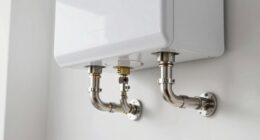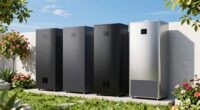
Choosing the wrong tankless water heater size can cause cold showers during peak times. If your unit is too small, it struggles to keep up with the household’s hot water demands, especially when multiple appliances or showers run at once. Oversized units, on the other hand, waste energy and money. Getting the right size balances efficiency and supply, preventing disruptions and saving costs. Keep exploring to learn how to avoid this common mistake and guarantee comfort.
Key Takeaways
- Selecting a tankless heater that’s too small can’t meet simultaneous hot water demands, causing cold showers.
- Oversized units may waste energy and reduce efficiency, but undersized units fail during peak use.
- Not accurately assessing household hot water needs leads to selecting an improperly sized unit.
- Ignoring peak usage patterns results in insufficient hot water during busy times.
- Proper consultation with professionals ensures correct sizing to prevent cold water disruptions.

Choosing the right size for your tankless water heater is essential, yet many people make the mistake of selecting one that’s too small or too large for their needs. This decision directly impacts not only your comfort but also your energy efficiency and installation costs. When your heater isn’t properly sized, you risk running out of hot water during peak usage times or wasting energy on an oversized unit. Neither scenario is ideal, and both can lead to cold showers or unnecessary expenses.
Properly sizing your tankless water heater ensures comfort, efficiency, and cost savings—avoid cold showers and unnecessary expenses.
A tankless water heater that’s too small can’t keep up with your household’s demand. If you and your family often shower back-to-back, wash dishes, and run laundry simultaneously, an undersized unit will struggle to supply enough hot water. This results in sudden cold showers, especially during peak hours, which is frustrating and disruptive. On the other hand, choosing a unit that’s larger than necessary may seem like a safe bet, but it can actually harm your wallet. Larger models typically have higher upfront costs, increased installation expenses, and can consume more energy, reducing your overall energy efficiency. Over-sizing your heater means you’re paying for capacity you don’t need, which isn’t cost-effective in the long run.
Getting the size right involves evaluating your household’s hot water needs carefully. Consider the number of bathrooms, appliances, and simultaneous hot water demands. For example, a single person with a small apartment may need a much smaller unit than a large family with multiple bathrooms and high usage. Proper sizing ensures that your heater operates efficiently, minimizing energy waste by only providing what your household requires at any given time. This focus on energy efficiency not only lowers your utility bills but also reduces your environmental footprint.
Additionally, understanding hot water demand patterns can help you select the most appropriate size, preventing both shortages and waste.
Installation costs are another important factor. Larger units often require more complex installation, which can drive up costs. An oversized heater might need additional modifications to your existing plumbing or electrical systems, making the installation process more expensive and time-consuming. Conversely, a correctly sized unit simplifies installation, keeps costs down, and ensures your system runs smoothly.
In the end, selecting the right size for your tankless water heater is about balancing your household’s hot water needs with your budget and energy goals. Take the time to evaluate your usage patterns, consult with professionals, and choose a unit that fits both your demand and your financial considerations. Doing so will prevent cold showers, save you money, and improve your home’s overall energy efficiency.

Stiebel Eltron 202151 DHX 15-2 Plus Point-of-Use Tankless Electronic Water Heater, 240V, 14400 Watts
Exclusive motor control valve
As an affiliate, we earn on qualifying purchases.
As an affiliate, we earn on qualifying purchases.
Frequently Asked Questions
How Long Does a Tankless Water Heater Typically Last?
A tankless water heater typically lasts around 20 years with proper maintenance tips and adherence to installation requirements. You should regularly flush the unit to prevent mineral buildup and check the filters. Ensuring correct installation, like proper venting and sufficient power supply, helps prolong its lifespan. By maintaining your heater well and following these requirements, you can enjoy hot water for many years and avoid premature replacements.
Can a Tankless Water Heater Be Repaired Easily?
Yes, a tankless water heater can often be repaired easily, especially with proper maintenance tips. Regularly flushing the system and checking for mineral buildup help prevent common issues. However, installation challenges, like incorrect setup or inadequate sizing, can complicate repairs. If you’re comfortable with basic maintenance, you can often troubleshoot minor problems. For complex repairs, it’s best to call a professional to guarantee safe and effective service.
What Is the Cost Difference Between Tankless and Traditional Heaters?
Think of the cost difference as a race—tankless models usually start higher but save you money in the long run. You’ll pay more upfront for installation costs, ranging from $2,000 to $4,500, compared to $1,000 to $1,500 for traditional heaters. Maintenance expenses are lower for tankless systems, saving you money over time, but initial investment is steeper. Balancing these factors helps you choose what fits your budget best.
Are There Any Brands Known for Reliable Tankless Water Heaters?
You’ll find that brands like Rinnai, Navien, and Bradford White are known for reliable tankless water heaters. Their strong brand reputation comes from consistent performance and quality. Additionally, they often offer extensive warranty coverage, giving you peace of mind. When choosing, consider these brands’ customer reviews and warranty terms to guarantee you’re investing in a dependable unit that will deliver hot water reliably for years to come.
How Energy-Efficient Are Tankless Water Heaters Compared to Tank Models?
Tankless water heaters are more energy-efficient than tank models because they provide on-demand hot water, reducing standby heat loss. You’ll enjoy significant energy savings over time, especially if you’re mindful of usage. However, you might face installation challenges, like ensuring your home’s electrical or gas system can support the unit. Proper sizing and professional installation help maximize efficiency and prevent issues like cold showers caused by undersized units.

Tankless Water Heater, Novieex On Demand Water Heater Natural Gas, Up to 4.3 GPM, 100,000 BTU Instant Hot Water Heater with LED Display, Indoor Installation, 2-4 Point Use for Family Bathroom Kitchen
【Reliable Hot Water on Demand】 With 100,000 BTU power, this on demand water heater delivers up to 4.3…
As an affiliate, we earn on qualifying purchases.
As an affiliate, we earn on qualifying purchases.
Conclusion
Choosing the right tankless water heater size is like tuning a delicate instrument—too small, and the cold notes spoil your symphony; too large, and you waste harmony and resources. When you select wisely, you create a steady rhythm of warm water, a melody that flows seamlessly through your daily routine. Don’t let a simple mistake turn your comfort into a discordant silence. Instead, find the perfect fit, and let your home’s warm embrace play on without interruption.

EcoSmart ECO 11 Electric Tankless Water Heater, 13KW at 240 Volts with Patented Self Modulating Technology
Endless On-Demand Hot Water; Consistent hot water when you need it that never runs out; Continuously monitored water…
As an affiliate, we earn on qualifying purchases.
As an affiliate, we earn on qualifying purchases.

HYDRO MASTER Tankless Water Heater Service Valve Kit with Pressure Relief Valve 3/4-Inch IPS Isolator Clean Brass
Durable Construction: Made from thick, forged Lead Free brass for strength and leak prevention. Each valve set is…
As an affiliate, we earn on qualifying purchases.
As an affiliate, we earn on qualifying purchases.