Demand response and smart grid integration let your HVAC systems adapt to grid needs, saving you money and supporting a cleaner energy future. By actively participating, you help balance supply and demand, reduce peak energy costs, and increase renewable energy use. Smart thermostats and automation tools make participating easy without sacrificing comfort. Plus, you gain better control and visibility over your energy use. Continue to explore how you can benefit from these innovative systems and make a real impact.
Key Takeaways
- Demand response enables HVAC systems to adjust operation based on grid needs, improving efficiency and reducing costs.
- Smart grid integration allows real-time communication between utilities and HVAC systems for optimal load management.
- Automated thermostats and home devices facilitate seamless participation in demand response events without sacrificing comfort.
- Consumer engagement through incentives and control enhances grid stability and supports renewable energy utilization.
- Overall, this integration promotes a sustainable, resilient energy system with increased renewable energy adoption.

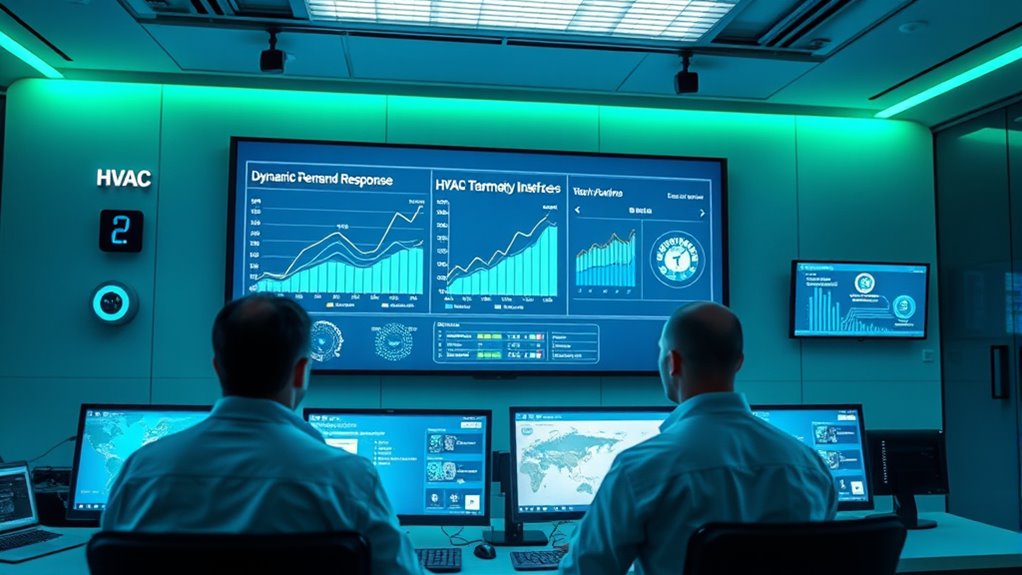
As energy systems become more intelligent, integrating demand response with smart grids offers a powerful way to optimize HVAC system performance. This integration allows you to respond dynamically to grid conditions, reducing energy costs and enhancing overall efficiency. When demand response is effectively combined with smart grid technology, it not only supports grid stability but also promotes renewable integration, making it easier to incorporate wind and solar power into your energy mix. By adjusting HVAC operation during peak renewable generation periods, you help maximize clean energy use, reducing your carbon footprint and supporting sustainability goals.
Consumer engagement plays a crucial role in harnessing the full potential of demand response and smart grid systems. When you participate actively, you become a key player in balancing supply and demand, which benefits everyone. Utility companies often provide real-time data and incentives, encouraging you to adjust your HVAC settings during specific times. You might reduce cooling or heating loads during high-demand periods or when renewable generation is low, and ramp up usage when renewable sources are abundant. This not only saves you money but also contributes to a more resilient and sustainable grid.
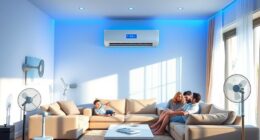
Smart thermostats and home automation systems make it easier for you to participate without sacrificing comfort. These devices can automatically adjust your HVAC settings based on signals from the grid or predefined preferences. For example, during a demand response event, your thermostat might slightly lower your cooling setpoint to help reduce peak load. In return, you receive financial incentives or bill credits, creating a win-win situation. Your engagement helps smooth out fluctuations caused by intermittent renewable sources, ensuring that clean energy is better utilized and less wasted.
Furthermore, integrating demand response with smart grids offers you greater visibility and control over your energy consumption. You can monitor your HVAC energy use through mobile apps, making informed decisions about when to operate or conserve. This empowerment fosters a sense of ownership over your energy footprint, inspiring more sustainable habits. As you become more involved, you’re helping to create a more flexible, resilient grid that can better accommodate the variability of renewable power sources. Your participation directly contributes to a cleaner, more reliable energy future.
Additionally, understanding the preppy dog names can be a fun way to personalize your pet’s identity, much like customizing your energy management system to suit your needs.
Frequently Asked Questions
How Do HVAC Demand Response Programs Impact Energy Bills?
You’ll see energy cost savings and bill reduction when participating in HVAC demand response programs. These programs allow you to shift or reduce energy use during peak times, lowering your electricity rates. By adjusting your HVAC system’s operation when demand is high, you help save money on your bills while supporting grid stability. Overall, demand response makes your energy consumption more efficient and cost-effective.
What Are the Cybersecurity Risks Associated With Smart Grid HVAC Integration?
You face cybersecurity risks like data breaches and cyber vulnerabilities when integrating your HVAC system with the smart grid. Hackers could exploit weak points to access your system, disrupting operations or stealing sensitive information. To protect yourself, make sure your smart devices have strong passwords, regular software updates, and secure network connections. Staying vigilant helps prevent cyber threats and keeps your HVAC system safe from potential cyberattacks.
Can Homeowners Manually Override Automated HVAC Demand Response Controls?
Like a captain steering their ship, you can manually override automated HVAC demand response controls. Your user control allows you to pause or adjust settings whenever needed, giving you flexibility amid the digital flow. Manual override ensures you’re not entirely dependent on automation, providing peace of mind and immediate control. Just remember, using this feature might temporarily disconnect your system from grid optimization efforts.
How Does Demand Response Affect Indoor Comfort Levels During Peak Times?
During peak times, demand response may slightly affect your indoor temperature, but it’s designed to maintain occupant comfort. Your HVAC system adjusts operation to reduce energy use, which might cause minor temperature fluctuations. However, these changes are typically unnoticed and temporary. The goal is to balance energy savings with your comfort, ensuring your indoor environment stays within a comfortable range while supporting the grid during high-demand periods.
What Are the Long-Term Environmental Benefits of Integrating HVAC Systems With Smart Grids?
Imagine a cleaner, greener future where your actions ripple across the planet. By integrating your HVAC systems with smart grids, you actively promote renewable energy integration and emission reduction, leading to long-term environmental benefits. This synergy reduces reliance on fossil fuels, cuts greenhouse gases, and fosters sustainability. Over time, these changes help combat climate change, improve air quality, and preserve natural resources, making your daily choices powerful for the planet’s health.
Conclusion
By integrating HVAC systems with demand response and smart grids, you’ll not only save energy and reduce costs but also contribute to a more stable, sustainable grid. Imagine your home adjusting its temperature seamlessly during peak times, preventing blackouts and lowering emissions—all without sacrificing comfort. Embracing this technology may seem complex at first, but once you experience the effortless efficiency and peace of mind it offers, you’ll wonder how you ever managed without it.