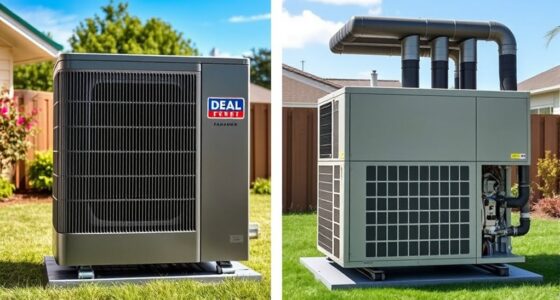

Regular HVAC maintenance helps you keep energy costs in check by ensuring your system runs efficiently. When filters are clean and properly rated, airflow improves, and the system doesn’t have to work harder. Sealing leaks in ducts prevents conditioned air from escaping, reducing workload and energy use. Routine tune-ups catch issues early, prolonging system lifespan and lowering costs over time. Keep up with these practices, and you’ll discover more ways to save on energy bills.
Key Takeaways
- Regular HVAC maintenance ensures filters are clean and functioning, reducing airflow restrictions and energy consumption.
- Sealing duct leaks prevents conditioned air loss, improving system efficiency and lowering energy costs.
- Routine tune-ups identify and fix issues early, maintaining optimal system performance and reducing energy use.
- Properly maintained HVAC systems operate more efficiently, consuming less power and decreasing utility bills.
- Consistent maintenance extends equipment lifespan and minimizes costly repairs, leading to long-term energy savings.
Have you ever wondered how much your HVAC system really costs to run? The answer lies in how well you maintain it. One of the most critical factors influencing energy costs is the quality of your air filter. A poor-quality air filter can restrict airflow, forcing your system to work harder to heat or cool your home. When airflow is limited, your HVAC unit needs to run longer cycles, increasing energy consumption and utility bills. Switching to a high-efficiency, properly rated air filter can help guarantee your system operates smoothly and efficiently. Regularly replacing or cleaning the filter prevents dirt buildup, which can lead to reduced airflow and strain on your system. Remember, a clean filter isn’t just about air quality; it’s about energy efficiency too. Additionally, ensuring your system components are properly maintained can prevent unnecessary energy loss and improve overall performance. Another often overlooked aspect that impacts your HVAC’s energy costs is duct sealing. Leaky ducts allow conditioned air to escape before it reaches your living spaces, forcing your system to work overtime to maintain desired temperatures. You might not see these leaks, but they considerably decrease your system’s efficiency. Duct sealing involves inspecting and sealing any gaps, holes, or loose connections in your ductwork. This simple step can dramatically improve airflow and ensure that the heated or cooled air reaches its destination without unnecessary loss. Consequently, your system doesn’t need to run as long or as hard, saving you money each month on energy bills. Maintenance also plays an essential role in optimizing HVAC performance. Regular tune-ups help identify issues before they become major problems, keeping your system running at peak efficiency. During these checks, technicians often inspect air filters and ductwork, making recommendations for improvements like upgrading filters or sealing leaks. When your HVAC system runs efficiently, it consumes less power, reducing both your environmental footprint and your utility costs. It’s a smart investment that pays off over time, especially as energy prices continue to increase. In essence, paying attention to air filter quality and duct sealing are simple yet powerful ways to reduce your HVAC energy costs. These measures guarantee that your system isn’t working harder than it needs to, which prolongs its lifespan and keeps your home comfortable without breaking the bank. Regular maintenance, including filter changes and duct inspections, is an essential part of this process. When you prioritize these steps, you’re not just improving air quality and comfort—you’re also taking control of your energy expenses and making your home more efficient.

30 Pint Dehumidifier for Basement, 2500 Sq. Ft Dehumidifiers for Home with Drain Hose, 3 Modes, Smart Humidity Control, 24H Timer, 0.52 Gal Water Tank, for Whole House, Bedroom, Bathroom, Garage, Rv
Powerful 30-Pint Moisture Removal for Spaces up to 2500 Sq. Ft: High humidity can make rooms feel damp,...
As an affiliate, we earn on qualifying purchases.
Frequently Asked Questions
How Often Should HVAC Systems Be Professionally Inspected?
You should have your HVAC system professionally inspected at least once a year. During the inspection, guarantee air filter maintenance is up to date and refrigerant levels are checked and topped off if needed. Regular inspections help catch issues early, improve efficiency, and prevent costly repairs. If you use your system heavily or have an older unit, consider more frequent check-ups, like biannually, to keep everything running smoothly.
What Are the Signs of an Inefficient HVAC System?
If your HVAC system isn’t performing well, you might notice uneven temperatures, increased energy bills, or strange noises. Check if your thermostat is properly calibrated and replace filters regularly, as dirty filters can cause inefficiency. You may also see longer running times or inconsistent airflow. Addressing these signs promptly helps improve efficiency, reduces energy costs, and extends your system’s lifespan.
Do Smart Thermostats Reduce Energy Costs Effectively?
Did you know that smart thermostats can save you up to 10-12% on heating and cooling costs? They effectively reduce energy costs by adjusting temperatures based on your schedule and preferences, optimizing energy savings. With smart thermostats, you gain better control over your HVAC system, ensuring you’re not wasting energy when you’re away or asleep. Installing one is a smart move to lower bills and improve energy efficiency in your home.
How Does Duct Cleaning Impact Energy Efficiency?
Duct cleaning can improve your HVAC system’s energy efficiency by removing dust and debris that hinder airflow. Better airflow optimization means your system doesn’t have to work as hard, reducing energy consumption. Regular filter replacement also plays a key role in maintaining efficiency, preventing blockages and keeping air clean. When you combine duct cleaning with consistent filter changes, you’ll notice improved performance and lower energy costs over time.
Are There Government Incentives for HVAC Upgrades?
Surprisingly, yes! You can take advantage of government rebates and tax credits when you upgrade your HVAC system. It’s almost ironic that the government encourages energy-efficient choices by offering financial incentives—saving you money upfront and reducing long-term energy costs. These programs aim to make eco-friendly upgrades more affordable, so don’t miss out on the opportunity to cut costs while improving your system’s performance.

ALORAIR Whole House Dehumidifier, 90 PPD Commercial Grade Whole Home Dehumidifiers for Garages, Water Damage Restoration, 2300 Sq.Ft dehumidifiers for Crawl Space
Energy Efficient Whole House Dehumidifier: 90 pints per day at AHAM condition, 70 Pint at DOE, up to...
As an affiliate, we earn on qualifying purchases.
Conclusion
By maintaining your HVAC system, you’re not just ensuring comfort—you’re revealing energy savings that add up over time. Think of your HVAC as the heart of your home; neglect it, and your energy bills suffer. Regular upkeep acts like a tune-up, keeping everything running smoothly and efficiently. Don’t let hidden inefficiencies drain your wallet—take action now. Remember, a well-maintained system isn’t just an expense; it’s an investment in comfort and savings.

5000 Sq.Ft Energy Star Most Efficient 2024 Dehumidifier,DECIUU Max 100 Pint Dehumidifier for Basement with Drain Hose,Intelligent Humidity Control for Home Bathroom Garage Bedroom
Most Efficient 2024 Energy Star Dehumidifier: Tired of battling stubborn humidity? Our ENERGY STAR certified dehumidifier removes 70...
As an affiliate, we earn on qualifying purchases.

Waykar 158 Pints Crawl Space Dehumidifier with Remote Control and Pump, Dual Duct HVAC Commercial Whole-House Dehumidifier for Basement, Industry Water Damage Unit - 5-Year Quality Coverage
【158 Pint Crawl Space Dehumidifier】The Waykar whole-house dehumidifier extracts up to 158 pints of water per day (under...
As an affiliate, we earn on qualifying purchases.