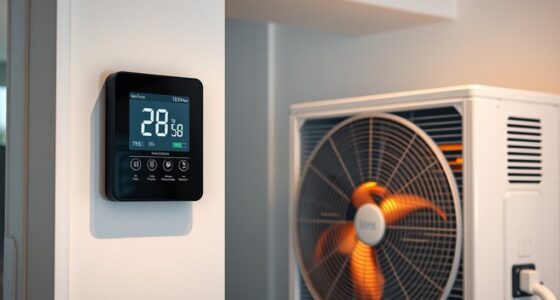
When comparing heat pumps to traditional HVAC systems, you’ll find heat pumps transfer heat instead of generating it, offering higher efficiency and lower energy bills. They provide year-round comfort by cooling in summer and heating in winter, especially with geothermal options. However, traditional systems like furnaces and AC units can be easier to install and work better in extremely cold climates. To discover which system suits your needs best, explore the details behind their operation and benefits.

Get backup power and energy gear delivered free with Prime
- Fast, free delivery on millions of items
- Prime Video, Amazon Music and more included
- Member-only deals all year
Key Takeaways
- Heat pumps transfer heat efficiently for both heating and cooling, unlike traditional systems that generate heat via furnaces.
- Ductless heat pumps offer targeted comfort and reduce energy loss, while traditional systems often rely on ductwork.
- Geothermal heat pumps provide high efficiency and lower operating costs compared to conventional HVAC units.
- Traditional systems may be easier to install initially and better suited for large or complex spaces.
- Heat pumps generally have lower maintenance needs, smaller environmental impact, and long-term energy savings.
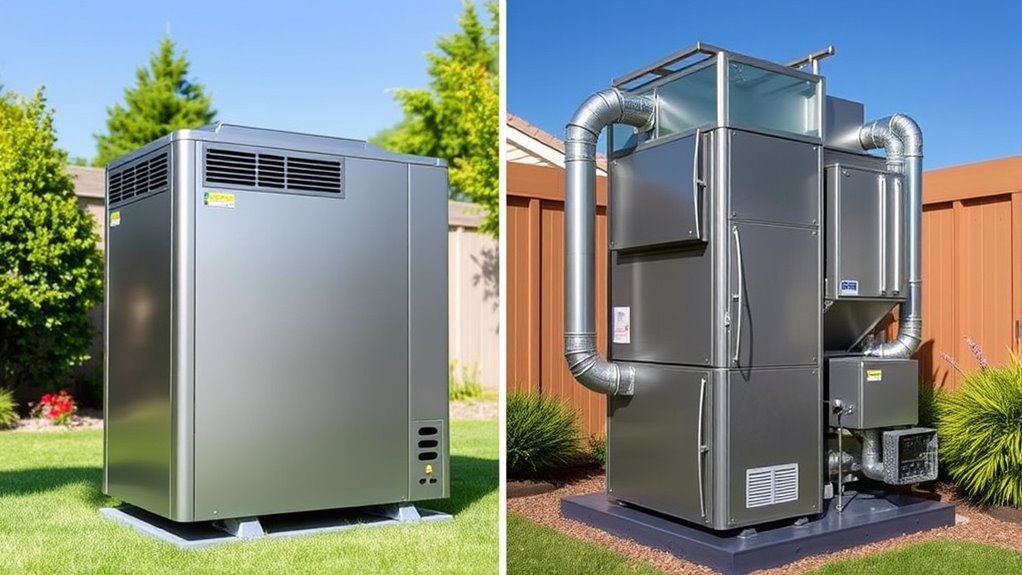
Choosing the right HVAC system is essential for maintaining comfort and efficiency in your home or business. When evaluating options, you’ll want to consider systems like heat pumps and traditional HVAC units to see which best fits your needs. Heat pumps are increasingly popular because they offer impressive geothermal efficiency, which means they transfer heat rather than generate it, leading to lower energy bills and a smaller carbon footprint. They work by extracting heat from the outside air or ground and moving it inside during winter, then reversing the process in summer to cool your space. This adaptability makes them a versatile choice for year-round comfort.
One of the standout advantages of heat pumps is their ductless options. Ductless heat pumps are especially beneficial if you’re dealing with older buildings or spaces where installing ductwork is impractical or costly. With ductless systems, you can target specific zones or rooms, providing personalized comfort without losing energy through duct leaks or inefficiencies. This zoning capability not only enhances comfort but also improves overall ductless advantages by allowing you to control temperature more precisely and reduce energy waste.
Ductless heat pumps offer personalized comfort, reduce energy waste, and are perfect for older buildings or spaces without ductwork.
Traditional HVAC systems, typically based on furnaces and central air conditioning units, have been reliable for decades. They often rely on ductwork to distribute heated or cooled air throughout your space. While these systems are effective, they can be less energy-efficient, especially if your ductwork isn’t well-sealed or maintained. They tend to consume more energy and may cause uneven heating or cooling, which can lead to higher utility bills over time. However, they do have their strengths, such as robust capacity for larger spaces and compatibility with existing infrastructure.
When comparing these system types, reflect on the long-term costs and benefits. Heat pumps, especially when paired with geothermal systems, can deliver superior geothermal efficiency, reducing your energy expenses considerably. They also tend to have lower maintenance needs and fewer moving parts, which means fewer repairs down the line. On the other hand, traditional systems might be easier to install initially and may suit larger or more complex spaces better, depending on your specific requirements. Additionally, the integration of performance upgrades available for Hyundai vehicles demonstrates how technological advancements can improve efficiency—similar innovations in HVAC systems can lead to better performance and savings over time.
Ultimately, your choice hinges on your budget, space layout, and environmental priorities. If you value energy efficiency and flexibility, a ductless heat pump or geothermal heat pump could be the smarter investment. If you need a straightforward solution with high capacity, traditional systems might fit better. Weighing these factors carefully will help you select the HVAC system that keeps you comfortable while maximizing efficiency.
As an affiliate, we earn on qualifying purchases.
Frequently Asked Questions
How Do Heat Pumps Perform in Extremely Cold Climates?
In extremely cold climates, heat pumps may struggle with frost resistance, which can affect their cold weather performance. However, modern models are designed to handle low temperatures better, with features like auxiliary heating to improve efficiency. You’ll find that, with the right system, heat pumps can still provide reliable heating even in freezing conditions, but it’s crucial to select one specifically rated for cold weather to guarantee maximum frost resistance and performance.
What Is the Typical Lifespan of a Heat Pump Compared to Traditional Systems?
A heat pump typically lasts 10 to 15 years, while traditional systems can reach 15 to 20 years. Think of their lifespan as a race—traditional systems often finish a bit further down the track. You might find that heat pumps have slightly higher maintenance costs and installation complexity, which can influence their longevity. Proper upkeep can extend a heat pump’s life, but overall, traditional systems tend to be more durable long-term.
Are There Energy Tax Credits Available for Installing Heat Pumps?
Yes, you can benefit from energy tax credits and installation incentives when you install a heat pump. These financial incentives aim to encourage energy-efficient upgrades, helping you save on upfront costs. To qualify, verify your heat pump meets specific efficiency standards and follow the application process. Check current federal, state, or local programs, as incentives can vary and may be updated annually.
Which System Requires More Ongoing Maintenance and Servicing?
You’ll find that traditional HVAC systems generally require more maintenance frequency and higher servicing costs compared to heat pumps. Heat pumps have fewer moving parts, making them easier and cheaper to service over time. Traditional systems, like furnaces and central AC units, often need regular inspections, filter replacements, and repairs that add up. So, if you want lower ongoing maintenance, a heat pump is a more cost-effective choice for long-term servicing.
Can a Heat Pump Effectively Cool and Heat Large Commercial Spaces?
Yes, a heat pump can effectively cool and heat large commercial spaces, especially with proper system zoning and commercial zoning strategies. You’ll want to guarantee the heat pump is appropriately sized and that your zoning system is well-designed to distribute conditioned air evenly. This approach maximizes efficiency, maintains comfort, and handles the demands of large areas. With the right setup, a heat pump becomes a versatile, energy-efficient solution for your commercial space.
As an affiliate, we earn on qualifying purchases.
Conclusion
Choosing between a heat pump and traditional HVAC systems is like selecting the right brush for a masterpiece—you want precision, efficiency, and harmony. A heat pump offers eco-friendly versatility, while traditional systems provide tried-and-true warmth. Think of your home as a symphony; the right system conducts comfort with a seamless flow. Whichever you pick, remember it’s about tuning your space to resonate perfectly with your lifestyle’s rhythm. Your ideal climate control awaits, ready to turn your home into a haven.
As an affiliate, we earn on qualifying purchases.
As an affiliate, we earn on qualifying purchases.
Halloween Picks
halloween
As an affiliate, we earn on qualifying purchases.