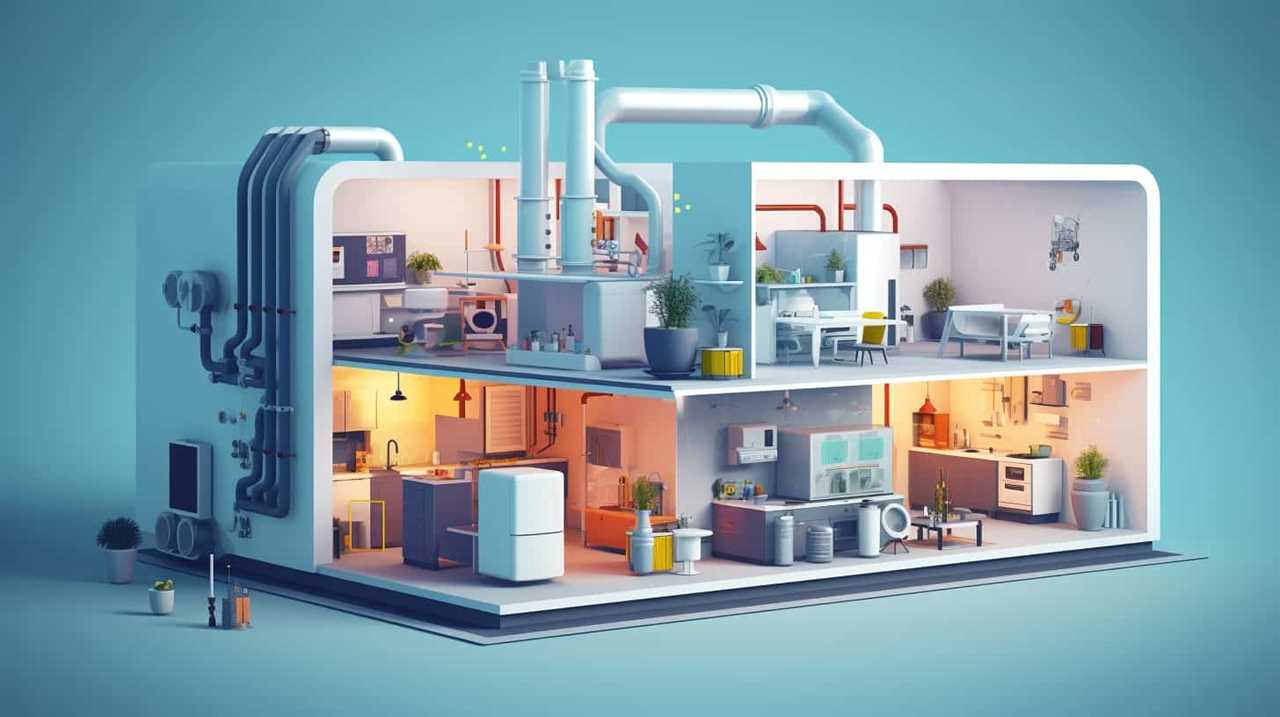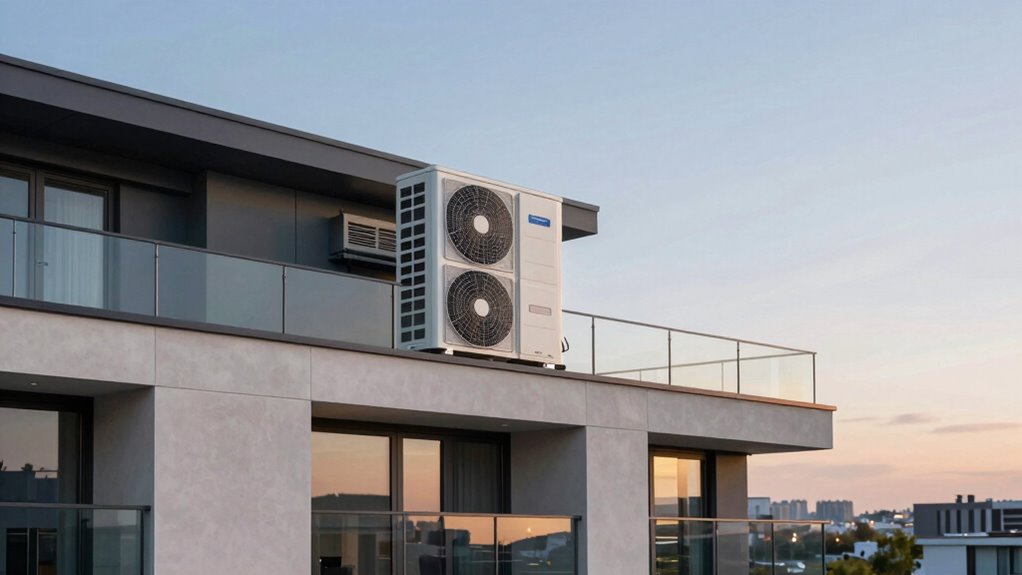

The change you need most in heat pump design for apartments is advanced noise reduction features that balance quiet operation with performance. You want systems that use sound insulation, vibration dampening, and smart air handling to minimize disturbance for residents. Focusing on noise attenuation not only makes your building more comfortable but also improves satisfaction and retention. Keep exploring how innovative engineering can make a real difference in creating a quieter, more efficient living environment.

Get backup power and energy gear delivered free with Prime
- Fast, free delivery on millions of items
- Prime Video, Amazon Music and more included
- Member-only deals all year
Key Takeaways
- Incorporate advanced noise reduction features to minimize disturbance in multi-unit living environments.
- Use vibration dampening and sound insulation materials for near-inaudible operation.
- Optimize air handling systems to further reduce operational noise without sacrificing performance.
- Integrate smart controls for demand-based operation, enhancing energy efficiency and noise management.
- Focus on sustainable design elements that balance noise attenuation with environmental and energy goals.

Have you ever wondered how heat pump designs are evolving to better serve apartment buildings? The answer lies in a single, game-changing change: integrating advanced noise reduction features while boosting energy efficiency. As urban living spaces become more compact and dense, the demand for quiet, efficient heating and cooling solutions grows. Apartment residents want comfort without the constant hum or vibration of traditional systems. For building owners and managers, energy efficiency isn’t just about lowering utility bills; it’s about sustainability and long-term cost savings. The most impactful design change addresses both these needs at once, creating a system that’s quieter, more efficient, and better suited for shared living environments.
Traditional heat pumps, while effective, often produce noise that can disturb residents, especially in multi-unit buildings. This problem isn’t just a minor annoyance—it can influence tenant satisfaction and even lead to complaints or reduced occupancy. Modern design improvements focus on sound insulation materials, vibration dampening components, and air handling modifications. These innovations aim to considerably reduce operational noise, making the systems virtually inaudible from neighboring apartments. When residents don’t have to contend with constant background noise, their overall comfort rises, and the building’s reputation benefits. Additionally, advancements in noise reduction technology allow for quieter operation without sacrificing performance. Integrating these technologies often involves innovative engineering that considers the urban environment to optimize acoustic performance. A focus on sustainable practices also ensures that these improvements align with broader environmental goals. Moreover, the integration of smart controls enables more precise regulation of noise levels based on occupancy patterns, further enhancing resident comfort. Incorporating innovative engineering techniques can also help balance sound attenuation with system durability and ease of maintenance.
Modern heat pump designs reduce noise through advanced insulation and vibration damping, improving resident comfort and building reputation.
At the same time, energy efficiency remains a core focus of these design shifts. Newer heat pumps incorporate variable-speed compressors and smart controls that adapt to demand, reducing energy waste. These systems optimize performance based on real-time conditions, ensuring minimal power consumption during milder weather and maximizing output during peak needs. The combination of noise reduction and energy efficiency doesn’t just enhance comfort; it also substantially cuts utility costs and carbon footprints. For building owners, this means meeting sustainability goals more easily and providing tenants with lower bills, which can be a compelling selling point.
Implementing these design changes requires thoughtful engineering but pays off by creating a more harmonious living environment. When noise is minimized and energy use is optimized, residents experience a noticeable difference in their daily comfort. For property managers, these upgrades translate into fewer maintenance issues and happier tenants. Overall, the most crucial design change for apartment heat pumps is the integration of advanced noise reduction features alongside enhanced energy efficiency. It’s a solution that recognizes the unique challenges of shared living spaces and offers a practical, effective way to improve quality of life while advancing sustainability goals.
As an affiliate, we earn on qualifying purchases.
Frequently Asked Questions
How Do Heat Pumps Impact Overall Apartment Energy Bills?
Heat pumps can substantially lower your apartment’s energy bills through cost savings on heating and cooling. They operate efficiently, reducing energy consumption and monthly expenses. However, installation challenges might arise, especially in older buildings or limited spaces, which could initially increase costs or require modifications. Overall, investing in a well-designed heat pump pays off with long-term savings, making it a smart choice for energy-efficient apartment living.
Are There Specific Regulations for Installing Heat Pumps in Apartments?
You might think installing heat pumps is straightforward, but zoning restrictions and installation permits often complicate things. Ironically, what seems like a simple upgrade can require navigating complex regulations, delaying your plans. Local zoning rules may limit where you can place the units, and securing permits can be a bureaucratic maze. So, before you proceed, check with local authorities to guarantee your installation complies with all zoning restrictions and permit requirements.
What Is the Typical Lifespan of a Heat Pump in Apartment Buildings?
You can expect a heat pump in an apartment building to last around 10 to 15 years with proper maintenance. To maximize its lifespan, focus on efficiency upgrades and stick to regular maintenance schedules, like cleaning filters and inspecting components. Proper care guarantees your heat pump runs efficiently, reduces energy costs, and avoids costly repairs. Keeping up with maintenance also helps catch potential issues early, extending the unit’s overall durability.
Can Heat Pumps Be Integrated With Existing HVAC Systems Easily?
You can generally integrate heat pumps with existing HVAC systems, but compatibility challenges and installation complexities may arise. You’ll need to assess your current system’s setup, ensuring proper sizing and electrical connections. Some older systems might require upgrades or additional components for smooth integration. Working with experienced professionals helps address these challenges, making the installation process more straightforward and ensuring your new heat pump works efficiently alongside your existing infrastructure.
How Do Noise Levels of Heat Pumps Affect Apartment Residents?
Noise levels from heat pumps can greatly impact your apartment living experience. If the units are loud, they disrupt your comfort and sleep. To minimize this, insulation improvements around the heat pump can reduce noise transmission, making your space quieter. When selecting or installing a heat pump, consider models with quieter operation and guarantee proper insulation to keep noise levels low, enhancing overall comfort for residents.
vibration dampening heat pump components
As an affiliate, we earn on qualifying purchases.
As an affiliate, we earn on qualifying purchases.
Conclusion
To truly revolutionize apartment living, adopting this heat pump design change is essential—it’s the game-changer your building needs. Imagine slashing energy bills and boosting comfort so dramatically, it’s like turning your apartment into a futuristic paradise. Don’t wait for the impossible; embrace this innovation now and transform your space into the pinnacle of efficiency and comfort. The future of apartment heating is here, and it’s more powerful than you ever imagined!
sound insulation materials for HVAC
As an affiliate, we earn on qualifying purchases.
As an affiliate, we earn on qualifying purchases.
As an affiliate, we earn on qualifying purchases.
Halloween Picks
halloween
As an affiliate, we earn on qualifying purchases.