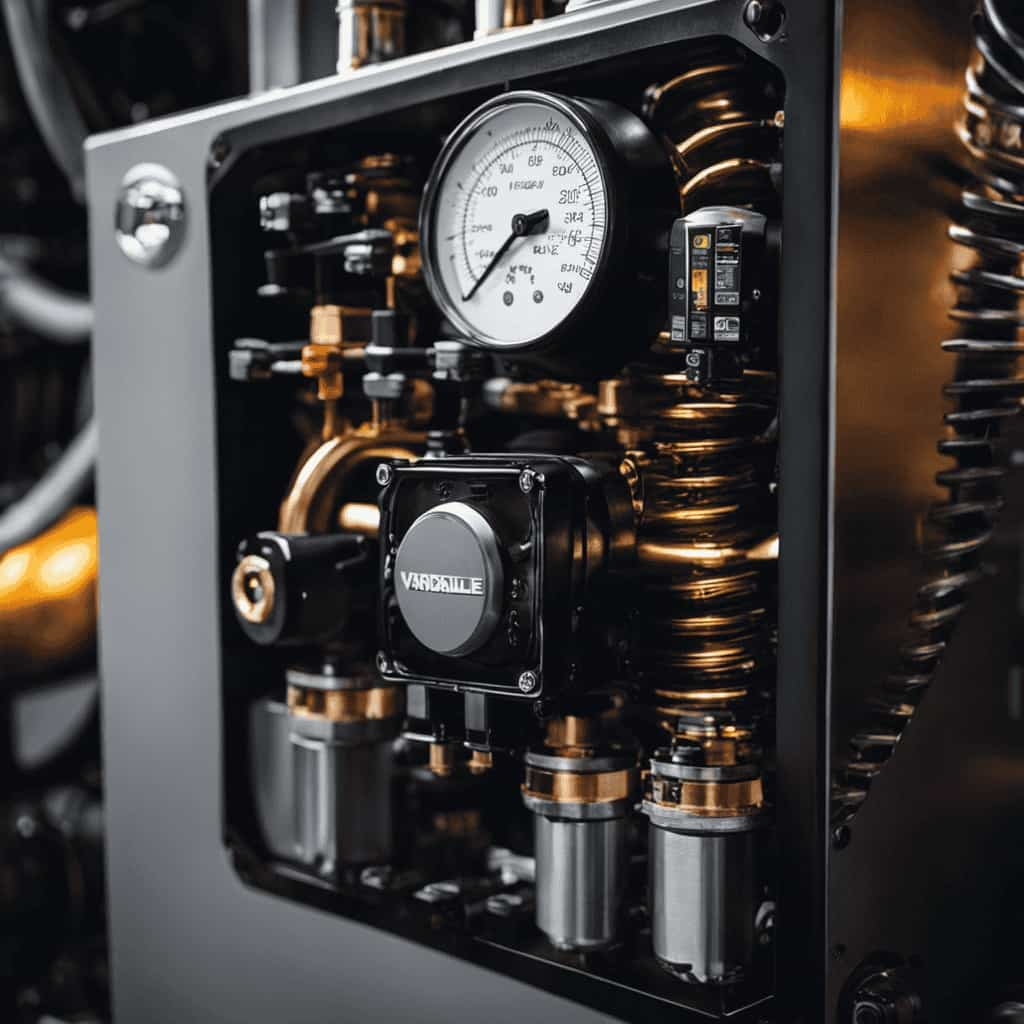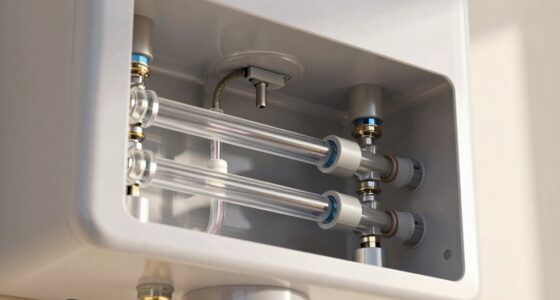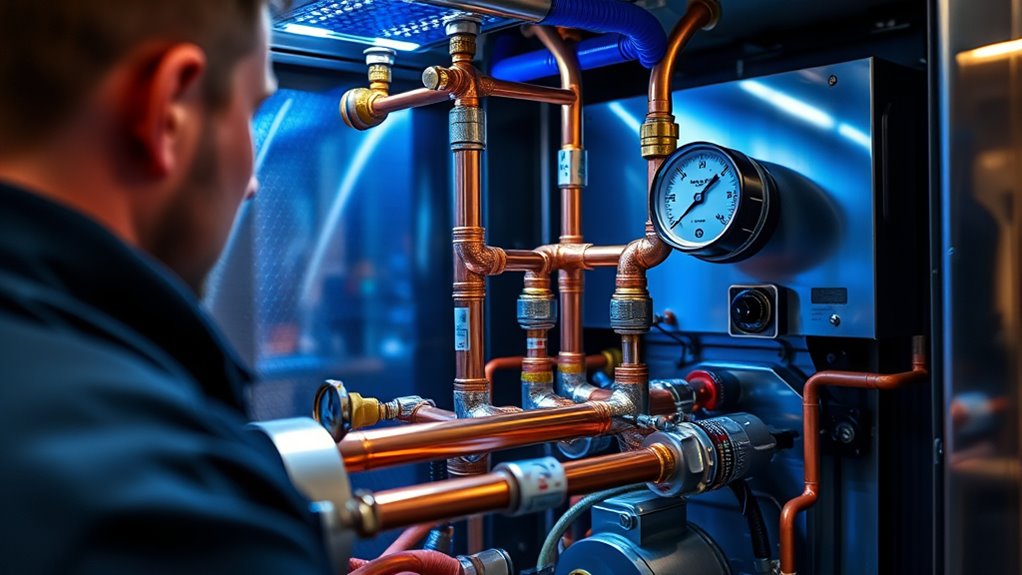

Refrigerant shifts are markedly altering how your HVAC systems operate by phasing out high-GWP refrigerants like R-410A and R-22. You may need to retrofit existing units or replace them altogether to comply with regulations and guarantee efficiency. Moving to eco-friendly refrigerants, such as natural options, helps you avoid penalties and extend system life. Understanding these changes can help you stay ahead. If you proceed, you’ll discover more about managing these changes effectively.
Key Takeaways
- Transitioning refrigerants often requires retrofitting or replacing existing HVAC equipment to ensure compatibility and safety.
- New refrigerants with lower GWP improve environmental sustainability but may demand different installation and maintenance practices.
- Regulatory restrictions accelerate obsolescence of older systems designed for high-GWP refrigerants like R-22.
- HVAC systems benefit from adopting eco-friendly refrigerants through enhanced efficiency and compliance with environmental standards.
- The shift to natural or low-GWP refrigerants supports long-term operational cost savings and future-proofing of HVAC infrastructure.
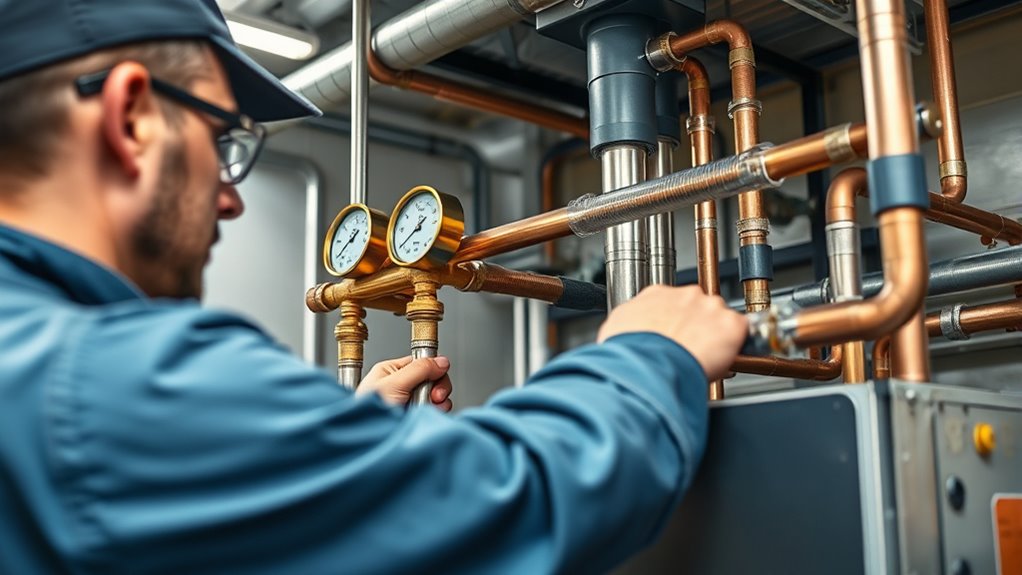
As refrigerant regulations evolve to protect the environment, HVAC systems are undergoing significant shifts. The push to phase out high-global warming potential (GWP) refrigerants has led to widespread refrigerant phaseouts, which directly impact how your systems operate and require updates. These changes mean that older HVAC units designed for refrigerants like R-22 are becoming obsolete, forcing building owners and technicians to consider system retrofitting or replacement. You’ll need to adapt, whether that means upgrading components to compatible refrigerants or installing entirely new systems that meet current standards. This progression isn’t just about compliance; it’s about making certain your equipment is efficient, sustainable, and safe for the environment.
Refrigerant phaseouts are driven by international agreements and national regulations aimed at reducing harmful emissions. As these policies take effect, the use of refrigerants with high GWP, such as R-410A, is increasingly restricted in new installations and repairs. Your options become limited, and you might find yourself in situations where repairing an old system isn’t feasible or cost-effective. Retrofitting—modifying existing systems to accommodate new refrigerants—is a common solution. It involves replacing certain components, like compressors or expansion valves, so your HVAC can operate with environmentally friendly refrigerants while maintaining performance. Retrofitting requires careful planning and expertise, but it can prolong the lifespan of your current systems and avoid the immediate expense of full replacement.
Retrofitting systems with eco-friendly refrigerants extends lifespan and avoids costly full replacements.
However, system retrofitting isn’t always straightforward. Different refrigerants have distinct chemical properties, pressures, and compatibility requirements. You’ll need to work with qualified technicians who understand these nuances to guarantee safety and efficiency. In some cases, retrofitting might be limited by the age or design of your equipment, prompting a switch to entirely new systems. The transition period can be challenging, especially if you’re managing multiple units or large-scale facilities, but staying ahead of refrigerant phaseouts helps you avoid regulatory penalties and potential system failures.
The shift away from high-GWP refrigerants also encourages innovation in HVAC technology. You might see more systems designed with natural refrigerants like hydrocarbons or CO2, which have minimal environmental impact. These new options can offer improved efficiency and sustainability but may require different installation and maintenance practices. As you navigate refrigerant transitions, understanding the evolving landscape is vital. Whether retrofitting existing units or investing in new equipment, staying informed guarantees your systems remain compliant, efficient, and environmentally responsible. Ultimately, these changes are about future-proofing your HVAC infrastructure and contributing to a greener planet.

5000 Sq.Ft Energy Star Most Efficient 2024 Dehumidifier,DECIUU Max 100 Pint Dehumidifier for Basement with Drain Hose,Intelligent Humidity Control for Home Bathroom Garage Bedroom
Most Efficient 2024 Energy Star Dehumidifier: Tired of battling stubborn humidity? Our ENERGY STAR certified dehumidifier removes 70...
As an affiliate, we earn on qualifying purchases.
Frequently Asked Questions
How Do Refrigerant Transitions Affect HVAC System Efficiency?
Refrigerant shifts can initially impact your HVAC system’s efficiency because newer refrigerants often have different properties that may require system adjustments. Over time, these changes can improve refrigerant efficiency, leading to better system performance and lower energy costs. However, during the changeover, you might notice a temporary dip in performance until your system is properly calibrated. Staying informed and working with a professional helps guarantee your system adapts smoothly for peak efficiency.
Are There New Safety Standards With Refrigerant Changes?
Yes, there are new safety standards with refrigerant changes. You need to prioritize refrigerant safety by following updated compliance standards that address potential hazards. These standards often include proper handling, storage, and disposal procedures, as well as leak detection and ventilation requirements. Staying informed about these changes helps guarantee your HVAC systems operate safely and meet legal requirements, protecting both your team and the environment.
What Is the Cost Difference for Retrofitting Existing Systems?
You’ll find that the cost difference for retrofitting existing HVAC systems varies widely, depending on the system’s age and complexity. Conducting a thorough cost analysis helps you understand expenses, including new refrigerants, parts, and labor. Retrofit challenges may include compatibility issues and system modifications, which can increase costs. Overall, retrofitting can be an investment, but proper planning guarantees you minimize expenses while maintaining system efficiency and compliance with safety standards.
How Long Will Current HVAC Systems Remain Compatible?
Your current HVAC systems will likely remain compatible for several more years, depending on their age and refrigerant type. The refrigerant lifespan impacts system compatibility, as older refrigerants like R-22 are phased out, making retrofits necessary. Modern systems designed for newer refrigerants will stay compatible longer, but if your unit uses outdated refrigerants, you’ll need to contemplate upgrades soon to maintain efficiency and compliance with regulations.
What Training Is Needed for Technicians on New Refrigerants?
Think of refrigerant certification as your passport to mastering new refrigerants. You’ll need specialized training to understand the properties, handling, and safety protocols of upcoming refrigerants. This enhances your technician skills, ensuring you’re prepared for system upgrades and repairs. Manufacturers and industry bodies offer courses covering these updates, making sure you stay current. With proper training, you’ll navigate the refrigerant shift seamlessly, like a skilled sailor charting a new course.

ALORAIR Whole House Dehumidifier, 90 PPD Commercial Grade Whole Home Dehumidifiers for Garages, Water Damage Restoration, 2300 Sq.Ft dehumidifiers for Crawl Space
Energy Efficient Whole House Dehumidifier: 90 pints per day at AHAM condition, 70 Pint at DOE, up to...
As an affiliate, we earn on qualifying purchases.
Conclusion
As refrigerant progressions reshape the HVAC landscape, you face change and opportunity side by side. While older systems fade, new technologies emerge, promising efficiency and environmental benefits. Embrace the shift, knowing it’s a chance to upgrade and innovate. The future’s here—challenging yet full of promise. In this balancing act between the past and the future, your adaptability becomes the key to staying ahead. Change is inevitable; growth, optional.

Honeywell 14kW Home Standby Generator
PrecisionPower Technology delivers best-in-class power quality with less than 5 percent total harmonic distortion for clean, smooth operation...
As an affiliate, we earn on qualifying purchases.

30 Pint Dehumidifier for Basement, 2500 Sq. Ft Dehumidifiers for Home with Drain Hose, 3 Modes, Smart Humidity Control, 24H Timer, 0.52 Gal Water Tank, for Whole House, Bedroom, Bathroom, Garage, Rv
Powerful 30-Pint Moisture Removal for Spaces up to 2500 Sq. Ft: High humidity can make rooms feel damp,...
As an affiliate, we earn on qualifying purchases.