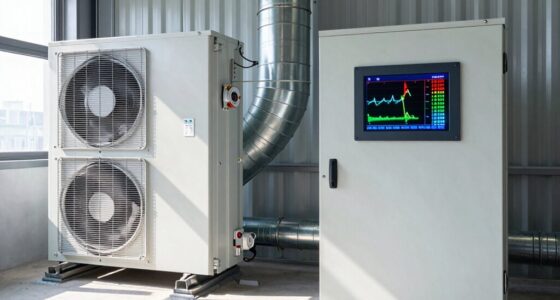
Hybrid HVAC solutions that combine heat pumps with solar energy let you efficiently manage your home’s climate by tapping into renewable resources. These systems use solar panels and geothermal technology to reduce energy costs and carbon footprints while providing reliable heating and cooling. Smart thermostats optimize operation and adapt to your schedule, ensuring comfort regardless of weather changes. Keep exploring to discover how these innovative systems can transform your energy efficiency and sustainability efforts.
Key Takeaways
- Hybrid HVAC systems combine heat pumps with solar energy to enhance energy efficiency and reduce reliance on fossil fuels.
- Integrating geothermal technology allows for stable underground temperatures, improving heating and cooling performance.
- Smart thermostats optimize system operation by learning user preferences and coordinating renewable energy sources.
- These solutions lower energy costs and carbon footprint through the utilization of renewable sun and earth energy.
- Future advancements aim to improve system automation, efficiency, and adoption for sustainable home climate management.
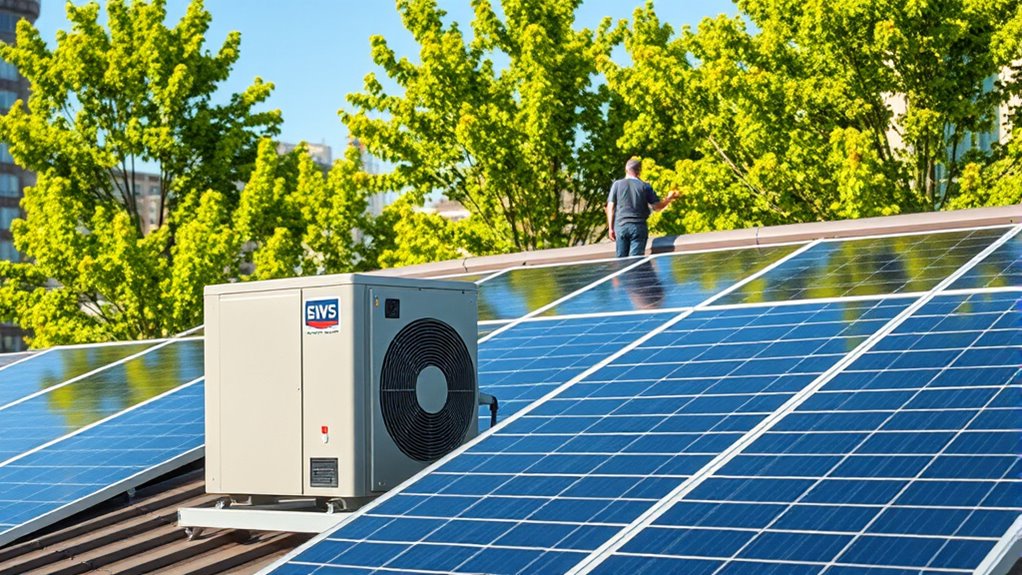
Are you looking for a more efficient way to heat and cool your home? Hybrid HVAC solutions that combine heat pumps and solar energy offer an innovative approach to reducing energy costs and increasing sustainability. By integrating these systems, you can maximize your home’s climate control while minimizing reliance on fossil fuels. One key element of this setup is geothermal integration, which taps into the stable underground temperature to provide reliable heating and cooling. When paired with solar panels, geothermal systems become even more efficient, drawing renewable energy from the sun and earth to power your heat pump. This synergy allows for a significant reduction in electricity bills and a smaller carbon footprint.
Hybrid HVAC with geothermal and solar boosts efficiency, cuts costs, and promotes sustainability.
Smart thermostats play a vital role in maximizing the benefits of hybrid HVAC solutions. These advanced devices learn your schedule and preferences, adjusting temperature settings automatically for ideal comfort and efficiency. With smart thermostats, you can easily monitor and control your system remotely, ensuring that your home is always at the perfect temperature when you arrive. They also provide detailed energy usage data, helping you identify opportunities to further improve efficiency. When integrated with your geothermal and solar systems, smart thermostats can coordinate energy flow, switching between sources based on availability and cost. For example, during sunny days, your system might prioritize solar power, while at night or during cloudy weather, it shifts to geothermal or grid power seamlessly.
The integration of geothermal and solar technologies, guided by smart thermostats, offers a seamless and intelligent approach to home climate control. It’s not just about lowering utility bills; it’s about creating a resilient, eco-friendly system that adapts to your lifestyle and the environment. You’ll find that this hybrid setup reduces your dependence on traditional energy sources and buffers against fluctuating energy prices. Additionally, geothermal integration ensures consistent comfort regardless of outside weather conditions, while solar panels harness free, renewable energy during daylight hours. This combination results in a system that’s both sustainable and cost-effective over the long term.
In essence, hybrid HVAC solutions that combine heat pumps and solar energy, supported by geothermal integration and smart thermostats, empower you to take control of your home’s energy use. They simplify management, boost efficiency, and contribute positively to the environment. As technology continues to improve, adopting these systems becomes an increasingly viable and attractive option for homeowners looking to upgrade their HVAC setup. You get comfort, savings, and sustainability, all wrapped into one smart, integrated solution that adapts to your needs and the planet’s well-being. Recognizing the importance of geothermal integration, many homeowners are seeking ways to incorporate this technology into their existing systems for enhanced performance.
solar heat pump hybrid HVAC system
As an affiliate, we earn on qualifying purchases.
As an affiliate, we earn on qualifying purchases.
Frequently Asked Questions
What Are the Initial Costs of Hybrid HVAC Systems?
The initial costs of hybrid HVAC systems typically range from $5,000 to $15,000, depending on the size and features. When you compare costs, these can be higher than traditional systems but offer long-term savings. You should explore financing options, as many providers offer plans that make installation more affordable. A cost comparison helps you weigh upfront expenses against future energy savings, making it easier to decide if hybrid systems suit your budget.
How Long Do Hybrid HVAC Components Typically Last?
A stitch in time saves nine, so knowing the lifespan of your hybrid HVAC components is key. Typically, heat pumps last about 10-15 years, while solar components can endure 25-30 years with proper maintenance. Considering replacement considerations early helps you plan financially and avoid surprises. Regular upkeep extends component lifespan, ensuring your system runs efficiently for years to come. Stay proactive, and your hybrid system will serve you well longer.
Are Hybrid Systems Suitable for All Climates?
Yes, hybrid systems are suitable for many climates, thanks to their climate adaptability. They work well in moderate to cold regions, but geographic limitations might affect efficiency in extremely harsh or unusual climates. You’ll find that hybrid systems optimize energy use based on outdoor conditions, making them flexible for different environments. However, consulting a local expert helps guarantee your specific climate’s needs are met for maximum performance and savings.
What Maintenance Is Required for Hybrid HVAC Systems?
Did you know that proper maintenance can boost hybrid system efficiency by up to 20%? You’ll need to regularly change filters, inspect the heat pump and solar components, and clean coils to keep everything running smoothly. Keep retrofit considerations in mind, as some upgrades may require specific upkeep. Regular professional check-ups guarantee your hybrid HVAC system stays efficient, prolongs its lifespan, and continues saving you money on energy bills.
Can Hybrid Systems Be Integrated With Smart Home Technology?
Yes, you can integrate hybrid systems with smart home technology to improve energy management. By connecting your heat pumps and solar components to a smart home system, you gain remote control and automation capabilities. This integration allows you to optimize energy use, reduce costs, and enhance comfort. Make certain your system is compatible with your smart home platform and consider professional installation to ensure seamless integration and maximum efficiency.
geothermal solar home heating cooling
As an affiliate, we earn on qualifying purchases.
As an affiliate, we earn on qualifying purchases.
Conclusion
Imagine your home as a symphony of sustainable harmony, where heat pumps and solar work together like a well-conducted orchestra. This hybrid approach seamlessly balances energy efficiency and eco-friendliness, turning your HVAC system into a radiant sunlit garden. As you embrace these solutions, you’re not just cooling or heating—you’re nurturing a greener future. Let this innovative duo be the steady heartbeat of your home’s comfort, shining brightly in a world craving cleaner, smarter choices.
smart thermostat for solar heat pump system
As an affiliate, we earn on qualifying purchases.
As an affiliate, we earn on qualifying purchases.
energy-efficient hybrid HVAC units
As an affiliate, we earn on qualifying purchases.
As an affiliate, we earn on qualifying purchases.