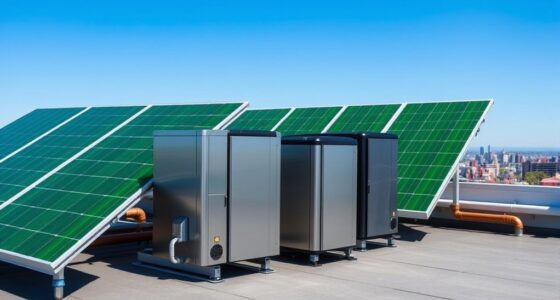
Variable speed compressors in HVAC systems help you save energy by adjusting their output to match your home’s needs, which means lower utility bills and less waste. They run more quietly and smoothly, reducing noise and wear on components, so your system lasts longer and requires less maintenance. Plus, they provide more consistent comfort by maintaining steady temperatures. Keep going to discover how these benefits work together to improve your indoor environment and save you money.
Key Takeaways
- Enhance energy efficiency by adjusting output to real-time demand, reducing power consumption and lowering energy bills.
- Operate more quietly than traditional units, minimizing noise disturbances and improving indoor comfort.
- Maintain consistent temperatures with precise control, preventing swings and improving overall comfort.
- Reduce system wear and tear, leading to fewer repairs and longer-lasting HVAC components.
- Integrate seamlessly with smart systems for remote control and optimized performance.

Variable speed compressors are transforming HVAC systems by providing more efficient and adaptable cooling and heating. When you opt for these advanced compressors, you’re making a smart choice to reduce energy consumption while improving overall comfort. Unlike traditional units that run at a fixed capacity, variable speed compressors adjust their output based on real-time needs. This means they operate at lower speeds most of the time, consuming less power and helping you save on energy bills. With their ability to modulate their output, these compressors prevent unnecessary energy use, offering a significant boost in energy efficiency. Over time, this can lead to substantial cost savings, especially in buildings with fluctuating heating and cooling demands.
Variable speed compressors boost HVAC efficiency and comfort by adjusting output based on real-time needs, saving energy and costs.
Another key benefit you’ll notice is the noise reduction. Traditional compressors often produce noticeable noise because they cycle on and off at full capacity. Variable speed models, however, run more smoothly and quietly. Since they operate at varying speeds, they avoid the loud start-stop cycles that cause noise disturbances. This quieter operation is particularly advantageous if your HVAC system is located near bedrooms, offices, or other quiet spaces. You’ll experience less disruption and enjoy a more peaceful environment, whether you’re sleeping or working. The reduced noise levels also contribute to a more comfortable indoor atmosphere, enhancing overall user satisfaction.
Additionally, the ability of variable speed compressors to fine-tune their operation means your HVAC system responds more precisely to your comfort preferences. Instead of large temperature swings caused by on/off cycling, these compressors maintain a steady temperature, providing more consistent heating and cooling. This not only improves comfort but also extends the lifespan of your system because it reduces wear and tear caused by frequent cycling. You’ll likely experience fewer breakdowns and require less maintenance over time, saving you money on repairs and replacement parts.
Furthermore, the enhanced control offered by variable speed compressors allows for integration with smart thermostats and home automation systems. You can set schedules and adjust settings remotely, optimizing performance and energy use even further. This level of control ensures your HVAC system operates efficiently, aligning with your lifestyle and energy-saving goals.

5000 Sq.Ft Energy Star Most Efficient 2024 Dehumidifier,DECIUU Max 100 Pint Dehumidifier for Basement with Drain Hose,Intelligent Humidity Control for Home Bathroom Garage Bedroom
Most Efficient 2024 Energy Star Dehumidifier: Tired of battling stubborn humidity? Our ENERGY STAR certified dehumidifier removes 70...
As an affiliate, we earn on qualifying purchases.
Frequently Asked Questions
How Do Variable Speed Compressors Impact Overall Energy Savings?
Variable speed compressors considerably boost your overall energy savings by adjusting their speed to match your system’s demand. This efficiency improvement means they use less power during low-load periods, reducing your energy bills. Plus, their cost-effectiveness shines over time because they operate more efficiently and last longer. You’ll notice consistent comfort with less energy waste, making your HVAC system both eco-friendly and budget-friendly.
What Maintenance Is Required for Variable Speed Compressors?
Like tending a fine instrument, you need to keep your variable speed compressor in top shape. Regularly check and replace filters to guarantee peak airflow, much like clearing the fog from a lens. Pay attention to lubrication requirements—using the right type and level of oil prevents friction and wear. Scheduled inspections and cleaning help maintain efficiency and extend your compressor’s lifespan, making sure it performs smoothly, just like a well-tuned orchestra.
Are Variable Speed Compressors Suitable for All Climate Zones?
Variable speed compressors are quite adaptable to many climate zones, offering excellent climate adaptability. However, you should consider potential installation challenges, as these units may require specialized setup and compatibility with your existing system. While they work well in diverse environments, consulting with a professional ensures proper integration, especially in extreme climates. Overall, their flexibility makes them suitable for most climate zones, provided installation hurdles are addressed effectively.
How Do They Compare Cost-Wise to Traditional Compressors?
You’ll find that variable speed compressors cost more upfront due to their advanced technology, but this initial investment pays off through long-term savings. They operate more efficiently, reducing energy bills over time. While the initial cost is higher, you’ll benefit from lower operating costs, fewer repairs, and increased comfort. So, in the long run, they’re a smart financial choice despite the higher initial investment.
What Is the Typical Lifespan of a Variable Speed Compressor?
You can expect a variable speed compressor to last around 10 to 15 years, depending on usage and maintenance. Its durability often surpasses traditional models due to its gentle start-stop cycles, which reduce wear and tear. Regular maintenance can prolong its lifespan, delaying replacement intervals. Keep an eye on performance and schedule routine check-ups to ensure it continues running efficiently for many years.

30 Pint Dehumidifier for Basement, 2500 Sq. Ft Dehumidifiers for Home with Drain Hose, 3 Modes, Smart Humidity Control, 24H Timer, 0.52 Gal Water Tank, for Whole House, Bedroom, Bathroom, Garage, Rv
Powerful 30-Pint Moisture Removal for Spaces up to 2500 Sq. Ft: High humidity can make rooms feel damp,...
As an affiliate, we earn on qualifying purchases.
Conclusion
In conclusion, switching to a variable speed compressor can make your HVAC system more efficient, cost-effective, and reliable. You’ll enjoy better temperature control, lower energy bills, and a quieter operation—no more “hocus pocus” with inconsistent cooling or heating. By embracing this modern technology, you’re truly ahead of your time, ensuring comfort and savings for years to come. Don’t let your system be stuck in the stone age; upgrade and reap the benefits today!

Waykar 158 Pints Crawl Space Dehumidifier with Remote Control and Pump, Dual Duct HVAC Commercial Whole-House Dehumidifier for Basement, Industry Water Damage Unit - 5-Year Quality Coverage
【158 Pint Crawl Space Dehumidifier】The Waykar whole-house dehumidifier extracts up to 158 pints of water per day (under...
As an affiliate, we earn on qualifying purchases.

ALORAIR Whole House Dehumidifier, 90 PPD Commercial Grade Whole Home Dehumidifiers for Garages, Water Damage Restoration, 2300 Sq.Ft dehumidifiers for Crawl Space
Energy Efficient Whole House Dehumidifier: 90 pints per day at AHAM condition, 70 Pint at DOE, up to...
As an affiliate, we earn on qualifying purchases.