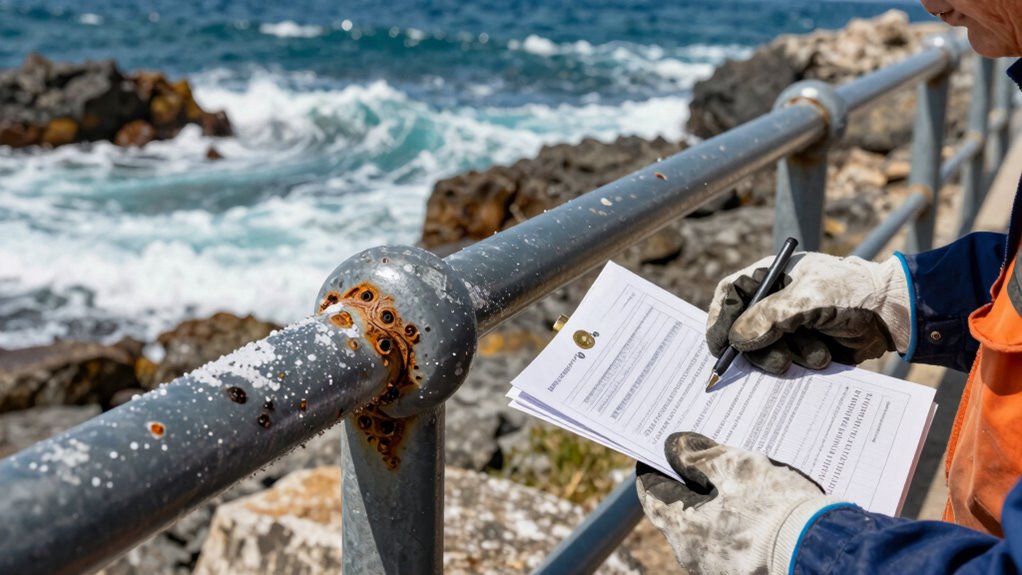

To prevent early corrosion, you should regularly inspect and clean exposed surfaces for marine growth and damage, using gentle power washing and applying high-quality marine coatings as needed. Incorporate corrosion-resistant materials and install monitoring systems to catch issues early. Keep up with maintenance routines that remove algae and barnacles, and use protective barriers like sacrificial anodes. Staying proactive and vigilant helps extend your structure’s lifespan—discover more effective strategies as you continue exploring.
Key Takeaways
- Conduct regular inspections to identify early signs of rust, corrosion, or marine growth on structures.
- Clean submerged and exposed surfaces frequently to remove algae, barnacles, and seaweed buildup.
- Reapply high-quality, marine-grade protective coatings and barriers as per manufacturer guidelines.
- Install sacrificial anodes and ensure proper drainage to prevent moisture retention and corrosion.
- Monitor environmental conditions and structural integrity regularly for proactive maintenance and early repairs.
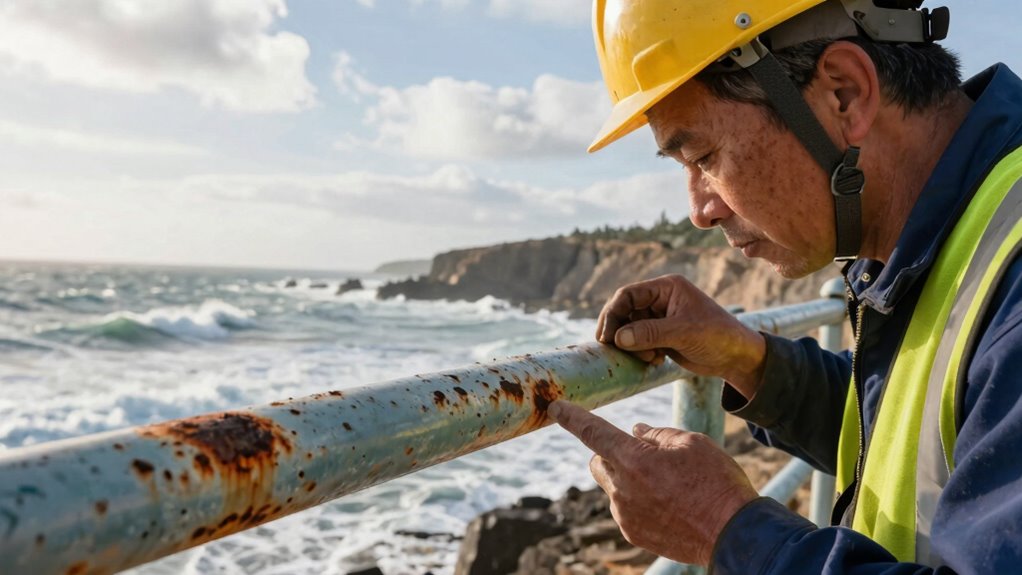
Maintaining a coastal property requires regular attention to guarantee it remains safe and resilient against harsh weather and erosion. One of the most critical aspects is preventing early corrosion, which can weaken structures and lead to costly repairs. To do this effectively, you need a thorough maintenance routine that addresses common issues like marine growth and the wear caused by salty air and moisture. Marine growth, including algae, barnacles, and seaweed, can cling to surfaces, accelerating corrosion by trapping moisture and creating a conducive environment for rust. Regularly inspecting and removing marine build-up is essential, especially on submerged or exposed parts of your property. Using appropriate protective coatings can greatly extend the lifespan of metal surfaces, creating a barrier that prevents moisture and salt from penetrating and causing corrosion. These coatings should be designed specifically for marine environments, offering resistance to salt spray, UV rays, and physical wear. Additionally, understanding the importance of preventing early corrosion can help you develop more effective maintenance strategies. Proper maintenance techniques, including timely repairs and corrosion inhibitors, can also significantly reduce the risk of damage. Your maintenance routine should include a scheduled cleaning of all surfaces prone to marine growth. Power washing can be effective in removing stubborn buildup, but you should use gentle techniques to avoid damaging protective layers. After cleaning, inspect the surfaces for any signs of damage or wear, such as cracks or peeling coatings. Reapplying protective coatings as needed is essential—these coatings not only prevent corrosion but also shield against UV damage and physical abrasion caused by wind-blown debris or salt spray. Make sure to choose high-quality, marine-grade coatings formulated explicitly for coastal conditions, and follow manufacturer instructions for application and reapplication intervals. Regularly applying a protective barrier can further enhance the defense against corrosive elements, ensuring longevity. Beyond coatings and marine growth removal, regular inspection of structural elements like pilings, beams, and fasteners is indispensable. Look for signs of rust, pitting, or discoloration, which indicate the early stages of corrosion. Address these issues promptly by cleaning the affected areas and reapplying protective coatings. Incorporating corrosion-resistant materials during repairs or renovations can also provide long-term benefits, especially in high-risk areas. In addition, implementing monitoring systems that detect early signs of corrosion can help prevent extensive damage before it becomes costly. Additionally, consider installing sacrificial anodes or other corrosion protection systems where applicable, especially on metal components that are constantly exposed to saltwater. Maintaining proper drainage around your property helps reduce moisture accumulation and prolongs the integrity of your structures. Being proactive in corrosion prevention is key to avoiding extensive repairs and ensuring your property’s longevity.

STAR BRITE Ceramics Metal Protect – SiO2 Polymer Protection – Durable Barrier Against Corrosion, Pitting, Salt Damage for Pontoons, Trailers, Towers 22 oz Spray (203322)
LONG-LASTING PROTECTION – SiO2 ceramic polymers create a durable barrier against corrosion, pitting, and salt damage, ensuring your…
As an affiliate, we earn on qualifying purchases.
As an affiliate, we earn on qualifying purchases.
Frequently Asked Questions
How Often Should Coastal Structures Be Inspected for Corrosion?
You should inspect coastal structures for corrosion at least twice a year, especially during peak marine growth seasons. Regular inspections help you identify early signs of corrosion that could compromise structural integrity. Keep an eye out for rust, paint deterioration, or marine growth buildup. Addressing issues early guarantees your structures stay resilient against harsh marine conditions and maintains their safety and longevity over time.
What Are the Best Protective Coatings for Saltwater Exposure?
Think of your structure as a ship braving relentless saltwater storms; you need armor that stands firm. Marine grade paints and sacrificial coatings act like a shield, absorbing the corrosive attack. Marine grade paints provide a tough, waterproof barrier, while sacrificial coatings sacrifice themselves to protect the underlying metal. Together, they form a formidable defense, extending your structure’s lifespan and keeping corrosion at bay amid the harsh coastal environment.
Can DIY Maintenance Effectively Prevent Early Corrosion?
Yes, DIY maintenance can effectively prevent early corrosion if you stay consistent with your efforts. Regularly inspecting your equipment, cleaning salt buildup, and applying protective coatings are key corrosion prevention steps you can do yourself. By addressing issues early and using proper techniques, you help extend the lifespan of your gear. Remember, staying proactive with DIY maintenance is essential in coastal environments to combat the harsh saltwater effects.
How Does Humidity Impact Corrosion Rates in Coastal Areas?
Did you know that humidity effects can increase corrosion rates by up to 80% in coastal areas? High humidity accelerates corrosion by creating a moist environment that promotes metal oxidation. When humidity levels are consistently high, it speeds up the deterioration of structures, making maintenance essential. To protect your assets, monitor humidity, and implement protective coatings that combat corrosion acceleration caused by the moist coastal air.
Are There Environmentally Friendly Corrosion Prevention Options?
Yes, there are eco-friendly corrosion prevention options. You can use eco-friendly inhibitors, which naturally protect metal surfaces without harming the environment. Biodegradable paints are another great choice; they provide a protective coating that breaks down safely over time. By selecting these environmentally conscious solutions, you reduce your ecological footprint while effectively preventing corrosion in coastal areas. Always look for certifications to verify the products are truly environmentally friendly.

Martyr Anodes, CMR03AL, Aluminum Rudder & Trim Tab Anode with Allen Screw – Marine Boat Sacrificial Anode for Saltwater & Brackish Corrosion Protection
High-quality Martyr anodes are pressure diecast and manufactured to strict quality standards through an ISO 9001 Quality Management…
As an affiliate, we earn on qualifying purchases.
As an affiliate, we earn on qualifying purchases.
Conclusion
Think of your coastal assets like a ship sailing through treacherous waters; regular maintenance is your lighthouse guiding the way. When you follow this checklist, you’re not just preventing early corrosion—you’re steering clear of costly repairs and extending your equipment’s lifespan. Imagine a weathered lighthouse standing tall after decades, a proof to diligent upkeep. Keep your maintenance steady and proactive, and your coastal assets will remain resilient against nature’s relentless assault, ensuring smooth sailing ahead.

"Dirty Bird", Boat Scraper, Hull Scraper, Heavy Duty Stainless Steel Scraper, Barnacle Scraper, Bottom and Hull Scraper, Marine Grade Scraper, Barnacle Remover Tool, Boat Hull Scraper
Boat Hull Scraper specifically designed for in the water boat bottom and hull cleaning
As an affiliate, we earn on qualifying purchases.
As an affiliate, we earn on qualifying purchases.

The Complete Guide to Home Inspection: The Essential Manual for Buyers, Sellers, and Homeowners to Assess, Document, and Protect Your Investment.
As an affiliate, we earn on qualifying purchases.
As an affiliate, we earn on qualifying purchases.