The main venting rule that affects your indoor tankless water heater costs is ensuring proper vent placement with correct materials and minimal bends. If you don’t follow local codes for clearance, material type, or vent configuration, you could face higher expenses for repairs or modifications later. Proper installation from the start might seem costly, but it saves money in the long run. Keep going to discover more about how venting standards can impact your overall setup.
Key Takeaways
- Installing approved venting materials correctly can increase upfront costs but ensures safety and code compliance.
- Proper vent placement and configuration to prevent backdrafting may require additional materials or modifications.
- Stricter venting standards for indoor tankless water heaters may necessitate more complex or specialized venting systems.
- Failing to meet venting rules can lead to costly fines, repairs, or safety hazards, impacting overall installation expenses.
- Adhering to updated venting regulations can influence the choice of venting materials and installation complexity, affecting costs.
When installing an indoor tankless water heater, understanding the venting rule is essential for safety and efficiency. Venting standards are crucial because they ensure that exhaust gases are safely expelled from your home, preventing dangerous buildup of carbon monoxide and other harmful fumes. These standards are outlined by local building codes and manufacturers’ installation regulations, which you must follow closely. Failing to adhere to these rules not only compromises safety but can also lead to costly fines or required modifications later on.
Proper venting is vital for safety and efficiency when installing an indoor tankless water heater.
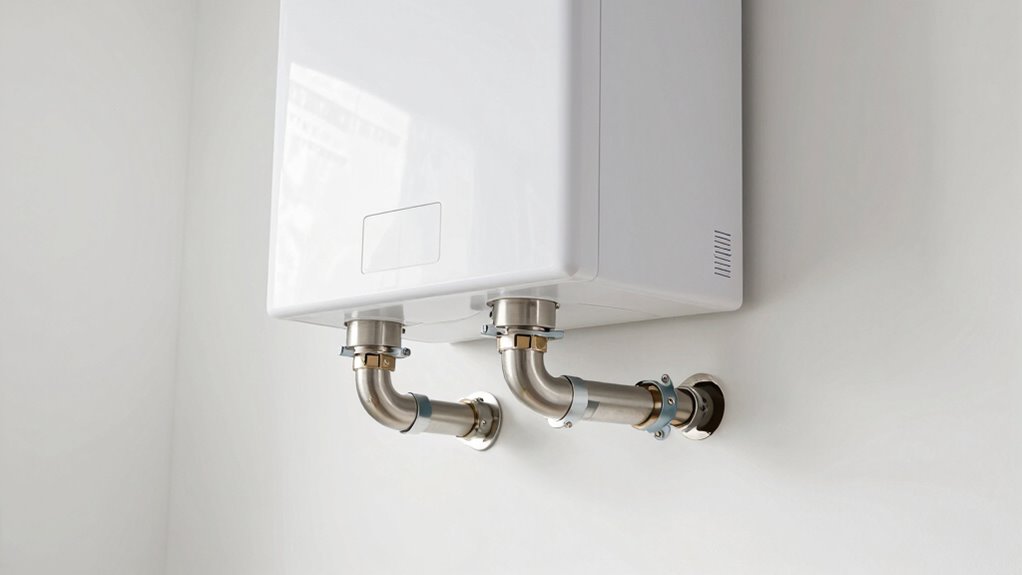
The venting regulations specify the type of venting materials you can use, the correct placement of vents, and the distances they should maintain from windows, doors, and other openings. For example, many codes require the use of approved, corrosion-resistant materials like stainless steel or PVC vent pipes designed specifically for high-temperature exhaust. These materials are tested to withstand the heat and corrosive byproducts of combustion, ensuring long-term safety and durability. Additionally, proper vent placement is essential to prevent exhaust gases from re-entering your home or affecting neighboring properties. Regulations often specify minimum clearance distances and specify whether vents must be directed upward or horizontally. Understanding these standards can help you avoid costly mistakes during installation. Moreover, consulting with professionals familiar with local building codes can provide added assurance that your installation will meet all safety requirements.
Installation regulations are equally important as they dictate how your venting system should be configured. These regulations help prevent issues like backdrafting, which can pull exhaust gases back into your living space, or blockages that can cause dangerous pressure buildup. They also cover the number of bends allowed in the vent pipe and the proper sealing methods to avoid leaks. If you ignore these regulations, you risk not only violating local codes but also compromising your system’s efficiency and safety. For example, improper venting can cause your tankless heater to operate inefficiently, leading to higher energy costs and shorter equipment lifespan. Following installation standards closely can also simplify inspections and ensure your system performs optimally. Properly installed venting not only aligns with safety protocols but also contributes to the longevity and performance of your heater.
Furthermore, understanding venting standards is vital because they are designed to ensure consistent safety practices across different installations. The costs involved in installing a venting system for your indoor tankless water heater can vary considerably depending on how strictly you follow these standards. Strict adherence to venting standards and installation regulations might mean purchasing specialized materials or hiring licensed professionals, which can increase upfront costs. However, neglecting these regulations can lead to much higher expenses later—such as repairs, potential fines, or even health hazards. Properly following these guidelines can also help prevent the need for future modifications, which can be both costly and disruptive. Additionally, understanding these standards can guide you in selecting the most cost-effective and safe solutions for your specific setup. Consequently, investing in proper installation and venting compliance not only keeps your home safe but can also save you money over the long term.
Ultimately, understanding and following the venting rule—grounded in clear standards and regulations—is key to a safe, efficient, and cost-effective indoor tankless water heater installation.

Blulu Stainless Steel Direct Vent Pipe Kit for Tankless Water Heater of 3" Od Elbow and 3" Od x 19.7 Length Horizontal Termination Pipe with Chimney Rain Cap and Clip for Water Heater and Ductwork
Package Include: you will receive 1 x vent pipe and 1 x vent elbow; This tankless water heater…
As an affiliate, we earn on qualifying purchases.
As an affiliate, we earn on qualifying purchases.
Frequently Asked Questions
How Does the Venting Rule Impact Overall Installation Time?
The venting rule considerably impacts your installation time by requiring a more efficient venting system that prioritizes safety. You’ll need to carefully plan the layout to meet new venting standards, which can take extra time. Ensuring the venting system’s efficiency and safety compliance means you might spend additional hours on installation, but it ultimately results in a safer, more reliable indoor tankless water heater setup.
Are There Specific Venting Materials Recommended for Indoor Tankless Units?
For indoor tankless units, you should use venting materials specifically designed for indoor compatibility, such as PVC, CPVC, or polypropylene. These materials are recommended because they withstand high temperatures and corrosive gases while being safe for indoor environments. Always check the manufacturer’s guidelines, as using the correct venting materials guarantees safety, efficiency, and compliance with local codes, ultimately making your installation smoother and more reliable.
Can Existing Vents Be Adapted to Meet New Venting Regulations?
Think of your existing vents like an old pair of shoes—they might seem fine but may not fit new standards. You can often adapt them, but vent compatibility varies. Sometimes, upgrading your vents is like getting new shoes—they provide a better fit and safety. Vent upgrade options include extending or replacing parts to meet regulations, ensuring your indoor tankless unit operates safely and efficiently without costly full replacement.
What Are Common Mistakes to Avoid With Indoor Venting?
You should avoid common mistakes like neglecting proper venting accessories, which are essential for safe, efficient operation. Make certain you follow installation tips like maintaining the correct vent pitch and clearance from combustibles. Don’t overlook sealing joints properly or using incompatible materials, as these can cause leaks or code violations. Always double-check manufacturer instructions and local codes to prevent costly errors. Proper venting ensures your tankless system runs safely and efficiently.
Does the Venting Rule Vary by Climate or Region?
Yes, venting rules can vary by region and climate considerations. You need to follow regional regulations, which often specify venting materials, clearances, and installation methods based on local building codes. Climate factors, like cold weather or high humidity, also influence venting requirements to prevent issues like freezing or corrosion. Always check local codes and consult with a professional to verify your indoor tankless water heater meets regional and climate-specific venting standards.

CAMPLUX 3" Horizontal Stainless Steel Vent Pipe Kit with Termination Hood for Gas Tankless Water Heater
Detachable Horizontal Vent Kit, designed for indoor tankless water heater, can be assembled in lengths to suit your…
As an affiliate, we earn on qualifying purchases.
As an affiliate, we earn on qualifying purchases.
Conclusion
Understanding the venting rule for indoor tankless water heaters can save you both time and money during installation. Did you know that improper venting can increase installation costs by up to 30%? By staying informed about these regulations, you guarantee a safer, more efficient setup that complies with code. Don’t overlook this step — it’s essential for avoiding costly revisions later. Stay ahead of the game, and enjoy reliable hot water without breaking the bank!

VancEpic 3" T304 Stainless Steel Vent Cover, Direct Venting System for Indoor Gas Tankless Water Heaters, Round Tube Air Ventilation and Vent Pipe Ductwork
All-Round Weatherproof Design: Durable exterior vent cover protects your tankless water heater from rain, snow, and debris while…
As an affiliate, we earn on qualifying purchases.
As an affiliate, we earn on qualifying purchases.

DiversiTech CVENT-2 2-Inch Concentric Kit for Tankless Gas Water Heater, High Efficiency Furnaces, 7.75" x 34.75" x 6.75", White
2-INCH CONCENTRIC VENT: Facilitates a streamlined installation process by offering dual-pipe configuration, specifically designed to accommodate high-efficiency furnaces,…
As an affiliate, we earn on qualifying purchases.
As an affiliate, we earn on qualifying purchases.