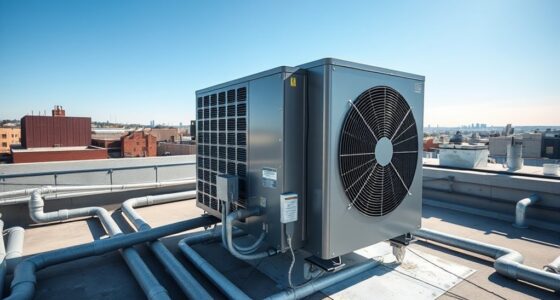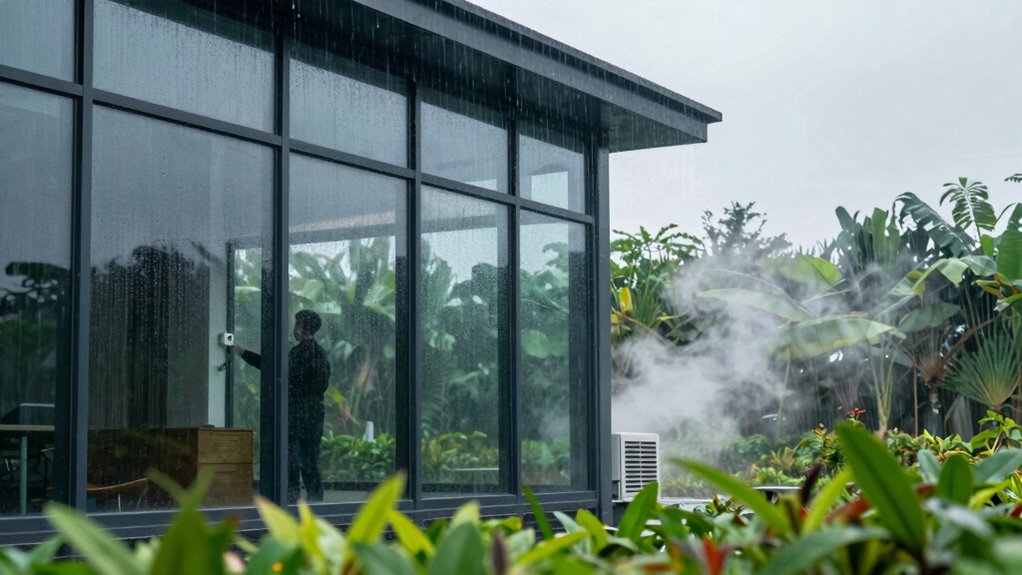
In humid climates, you’ll find cooling takes more energy because moisture makes heat removal harder. When humidity is high, your AC isn’t just lowering the temperature but also removing excess moisture, which demands extra power. This additional load strains the system, leading to increased energy use and shorter equipment lifespan. Managing humidity levels and using efficient ventilation can help, and exploring these strategies further can reveal even smarter ways to reduce your cooling costs.

Get backup power and energy gear delivered free — and shop member deals
- Fast, free delivery on millions of items
- Access to Prime Big Deal Days deals on October 6–7
- Prime Video, Amazon Music and more included
Key Takeaways
- High humidity increases the energy required for both cooling and dehumidification processes.
- Moisture-laden air makes cooling systems work harder, extending operation times and energy consumption.
- Managing indoor humidity with ventilation reduces strain on air conditioning units.
- Poor humidity control leads to mold growth and health issues, prompting longer cooling cycles.
- Efficient moisture management enhances cooling system performance and overall energy efficiency.

In humid climates, cooling energy becomes a critical factor in maintaining comfortable indoor environments. You often think about air conditioning units and how much electricity they consume, but the real challenge goes beyond just lowering temperatures. Humidity levels significantly influence how much energy you need to keep your indoor space comfortable. High moisture content makes it harder for your cooling system to work efficiently because it must do more than just lower the temperature; it also has to remove excess humidity. This extra load increases energy consumption, sometimes exponentially, compared to what you’d expect in drier climates.
Indoor air quality plays a vital role here. When humidity is high, stagnant, moist air can lead to mold growth and dust mites, which compromise your health and comfort. Proper ventilation becomes essential—not just to bring in fresh air but to control moisture levels effectively. Energy efficient ventilation systems help you achieve this by exchanging indoor air with filtered, conditioned outside air without wasting energy. These systems are designed to optimize airflow while minimizing heat and humidity transfer, ensuring your indoor environment stays healthier and more comfortable without skyrocketing your utility bills. Additionally, ventilation efficiency can significantly impact how well moisture is managed and how much energy your system consumes. Incorporating smart ventilation solutions can further enhance moisture control and energy savings.
You might be surprised how much more energy your cooling system consumes in humid areas compared to dry ones. The reason is that dehumidification demands additional power. Standard air conditioners primarily focus on cooling, but in humid climates, they need to be paired with dehumidifiers or integrated ventilation solutions that enhance indoor air quality while reducing moisture. When ventilation systems are energy efficient, they help balance indoor humidity levels with less energy, reducing the strain on your cooling units. As a result, understanding the importance of humid climate management can help you implement more effective cooling strategies and reduce overall energy consumption.
Furthermore, if you neglect proper ventilation and humidity control, your cooling system has to operate longer and harder, increasing wear and tear and decreasing its lifespan. That’s why investing in smart ventilation solutions that prioritize indoor air quality is crucial. These systems can reduce the overall energy needed for cooling by pre-conditioning incoming air, lowering the burden on your AC units. Properly managing indoor air quality not only improves comfort but also contributes to your system’s efficiency and longevity. When you pay attention to energy efficient ventilation, you’re not only creating a healthier indoor environment but also decreasing your overall energy costs.
Additionally, understanding the role of humid climates and their impact on energy consumption can help you make more informed decisions about your cooling strategies. In essence, the impact of humidity on cooling energy consumption is profound. It’s not just about lowering the temperature—it’s about managing moisture effectively. You need to integrate strategies that improve indoor air quality and promote energy efficient ventilation, which ultimately reduces the energy needed to keep your indoor space comfortable. By doing so, you make your cooling systems work smarter, not harder, and enjoy a healthier, more sustainable indoor environment in humid climates.
energy efficient dehumidifier for humid climates
As an affiliate, we earn on qualifying purchases.
As an affiliate, we earn on qualifying purchases.
Frequently Asked Questions
How Does Humidity Affect Indoor Air Quality?
Humidity impacts your indoor air quality by encouraging mold growth and trapping pollutants. High humidity levels can lead to indoor mold, which worsens air quality and affects your health. Using air quality sensors helps monitor humidity and pollutant levels, ensuring a healthier environment. Keeping humidity in check reduces mold risk and maintains cleaner air, making your indoor space safer and more comfortable.
Can Humid Climates Reduce the Lifespan of Cooling Systems?
Yes, humid climates can shorten your cooling system’s lifespan. Excess moisture leads to corrosion, mold growth, and increased wear on components. Dehumidification techniques help reduce humidity and protect your system, but maintenance challenges arise, requiring regular inspections, filter changes, and cleaning. If neglected, these issues accelerate system deterioration, causing frequent breakdowns and costly repairs. Proper upkeep and humidity control are essential to extend your cooling system’s longevity.
What Are Cost-Effective Ways to Improve Cooling Efficiency?
To improve cooling efficiency cost-effectively, focus on energy-efficient upgrades like programmable thermostats and sealing leaks around windows and doors. Regularly maintain your system with clean filters and coil cleaning to maximize performance. Implement cost-saving techniques such as shading windows and using ceiling fans to reduce indoor temperature. These measures lower energy consumption, save money, and extend your cooling system’s lifespan, making your home more comfortable in humid climates.
How Does Humidity Influence Thermal Comfort Beyond Temperature?
Humidity acts like an unwelcome guest, making your thermal comfort feel more intense than the thermometer shows. It influences your perception of temperature, often causing you to feel hotter or colder than actual readings. This impacts thermal regulation because your body struggles to cool itself through sweat evaporation in humid air. As a result, managing humidity levels becomes essential to maintain comfort and reduce unnecessary cooling energy use.
Are There Specific Materials Better Suited for Humid Environments?
You should choose materials with high durability and moisture-resistant construction for humid environments. These materials, like treated wood, composite, or certain metals, resist mold, corrosion, and decay better than standard options. Their moisture resistance helps maintain structural integrity and indoor comfort, reducing energy needed for cooling. Investing in these specialized materials guarantees long-lasting performance and minimizes maintenance costs in humid conditions.
smart ventilation system for indoor air quality
As an affiliate, we earn on qualifying purchases.
As an affiliate, we earn on qualifying purchases.
Conclusion
In humid climates, cooling your home takes more energy than you might expect. For instance, imagine a small office in Miami that spends twice as much on air conditioning during summer compared to a dryer city like Phoenix. The added moisture makes your AC work harder, increasing energy consumption. So, next time you think about cooling costs, remember that humidity isn’t just a background detail—it’s a major factor that can keep your energy bills climbing higher than you’d imagine.
portable dehumidifier for home use
As an affiliate, we earn on qualifying purchases.
As an affiliate, we earn on qualifying purchases.
energy-saving attic ventilation fan
As an affiliate, we earn on qualifying purchases.
As an affiliate, we earn on qualifying purchases.
Fall Picks
fall essentials
As an affiliate, we earn on qualifying purchases.