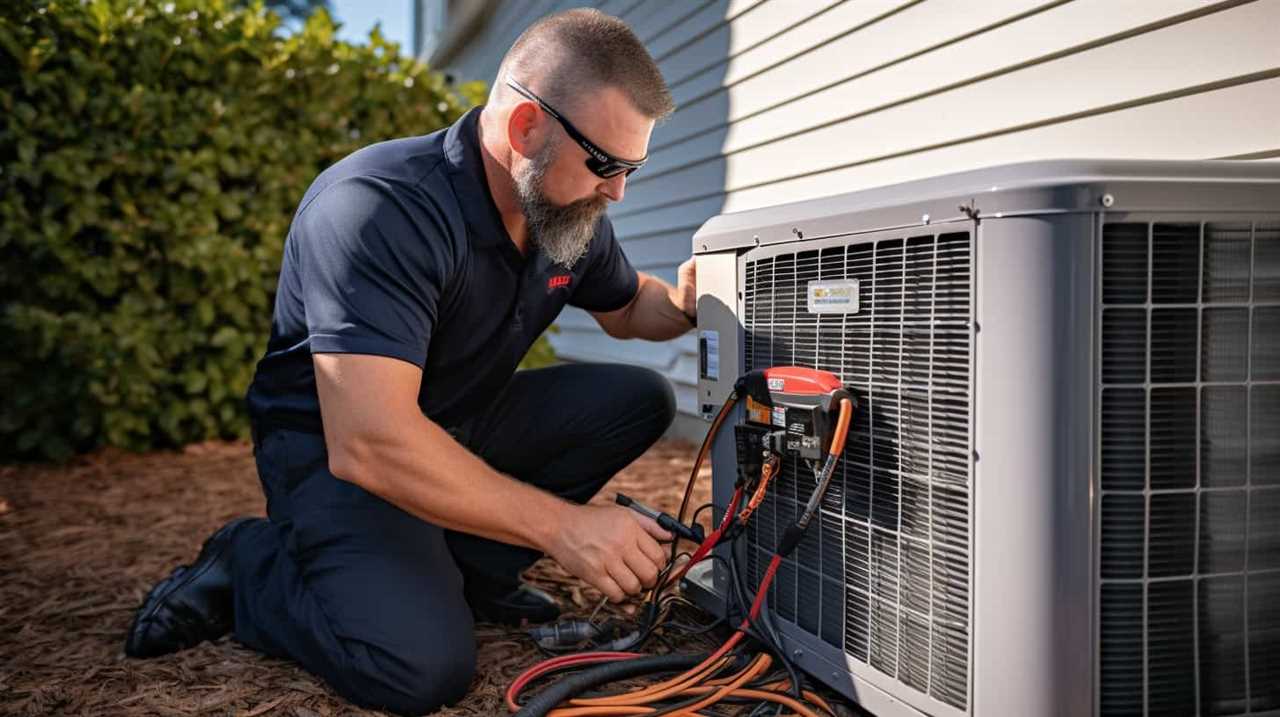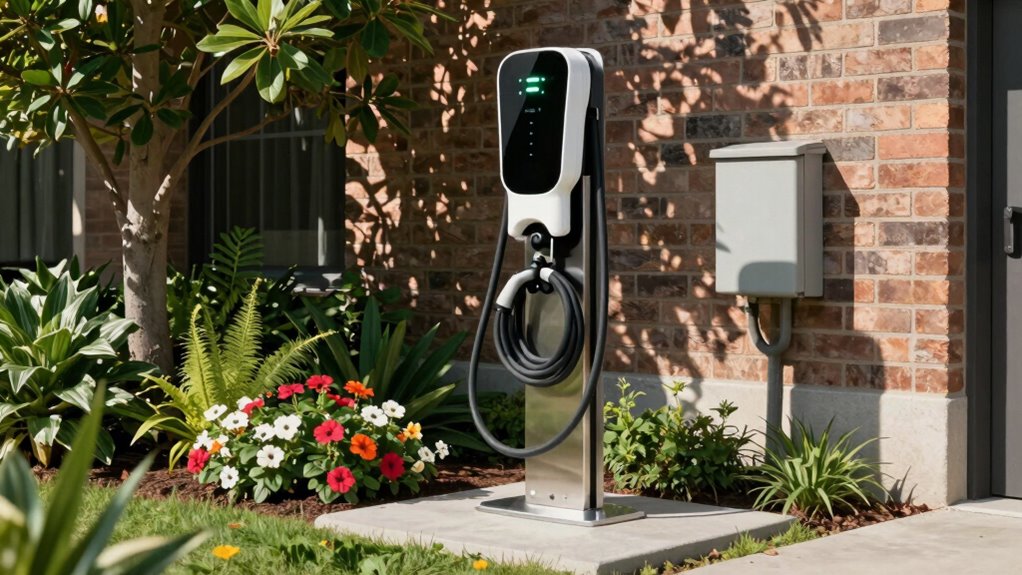
Outdoor EV charger installations need weatherproof enclosures, corrosion-resistant materials, and protections against environmental elements like rain, snow, and wind, which garage setups usually don’t require. You’ll also need outdoor-rated wiring, conduit, and grounding to guarantee safety and compliance with electrical standards. Additionally, you should plan for physical barriers to prevent damage from debris or pests. If you want to understand all the extra steps involved, keep exploring how outdoor installs differ from indoor ones.

Get backup power and energy gear delivered free with Prime
- Fast, free delivery on millions of items
- Prime Video, Amazon Music and more included
- Member-only deals all year
Key Takeaways
- Require weatherproof enclosures to protect against rain, snow, and extreme temperatures.
- Must use corrosion-resistant materials and outdoor-rated components for durability.
- Need specialized outdoor wiring, conduit, and grounding for safety and compliance.
- Require secure, weather-resistant mounting and protective barriers to prevent physical damage.
- Involve additional planning for environmental exposure and site-specific weatherproofing measures.
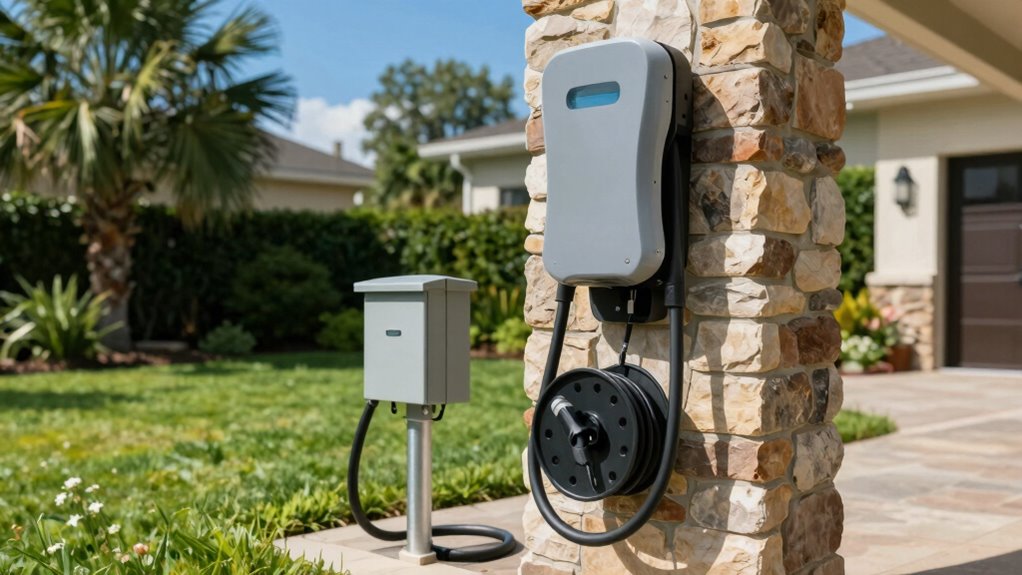
Thinking about installing an outdoor EV charger? You’ll want to understand that outdoor setups come with unique requirements that aren’t as critical in a garage. While garage installations benefit from the protection of enclosed spaces, outdoor chargers must withstand weather elements like rain, snow, wind, and extreme temperatures. This means durability and weatherproofing are top priorities, making sure the unit can operate safely and reliably outside year-round. You also need to take into account outdoor-specific electrical safety standards because exposed wiring and outdoor conditions increase risks. Proper grounding, surge protection, and weatherproof enclosures aren’t optional—they’re essential for safe operation.
Outdoor EV chargers require weatherproofing, durability, and strict safety standards for reliable, year-round operation.
Indoor safety is a different story. When you install a charger inside your garage, you generally don’t have to contend with the same exposure to moisture or debris, which simplifies the process. However, outdoor installations demand stricter adherence to electrical codes that address outdoor conditions. These codes specify the type of wiring, conduit, and enclosures you must use, ensuring the system can handle outdoor environmental stressors. If you ignore these codes, you risk electrical failures, safety hazards, or violations that could complicate future inspections or insurance claims. Additionally, understanding outdoor electrical standards is crucial to ensure compliance and safety.
Another key difference is in the installation process itself. Outdoors, you need to plan for a secure, weather-resistant mounting location that’s accessible yet protected from potential physical damage. You’ll also need to run wiring underground or along exterior walls, which requires extra precautions to prevent water ingress or corrosion. This often means using specialized outdoor-rated cable and conduit, and sometimes installing additional protective barriers. In contrast, garage setups usually involve running power from existing circuits within the building, making the process more straightforward. Additionally, outdoor environments may require corrosion-resistant materials to ensure longevity and safety. Proper planning can help mitigate potential damage caused by outdoor elements, which is especially important given the exposure to weather conditions outside. Incorporating protective barriers can further enhance the durability of outdoor installations against environmental stressors.
outdoor EV charger weatherproof enclosure
As an affiliate, we earn on qualifying purchases.
As an affiliate, we earn on qualifying purchases.
Frequently Asked Questions
How Do Outdoor Chargers Withstand Harsh Weather Conditions?
Outdoor chargers withstand harsh weather conditions through their weatherproof design and corrosion resistance. You’ll find these chargers are built with durable, sealed enclosures that keep moisture out, preventing damage from rain or snow. The corrosion-resistant materials, like stainless steel or coated metals, protect against rust and corrosion from humidity and salt. This guarantees your outdoor EV charger remains reliable and safe, even in extreme weather, without needing frequent repairs or replacements.
Are Outdoor Chargers More Secure Against Theft or Vandalism?
Outdoor chargers are generally more secure against theft and vandalism because they often feature theft prevention measures like lockable enclosures and tamper-resistant designs. Many models include vandalism deterrence features such as rugged, weatherproof casings and surveillance options. You can bolster security further by installing additional measures like security cameras or motion-activated lighting. These steps help protect your investment and guarantee your charger stays safe from potential threats.
What Maintenance Is Required for Outdoor EV Chargers?
Imagine a rainstorm hitting your outdoor charger just as you notice dirt buildup around the port. You should regularly inspect and clean your outdoor EV charger to prevent debris and water from causing damage, ensuring indoor safety and maintaining power efficiency. Check for corrosion, update firmware if needed, and keep the area clear of obstructions. Proper maintenance keeps your charger reliable, safe, and efficient, even in harsh weather conditions.
How Does Outdoor Installation Impact Home Insurance Policies?
Outdoor installation can impact your home insurance policies by affecting insurance implications and policy coverage. You might face higher premiums or be required to add specific endorsements to cover potential damage or theft of the charger. It’s essential to notify your insurer about the outdoor setup to guarantee proper coverage. Failing to do so could leave you underinsured in case of accidents or vandalism, so check with your insurer before installation.
Can Outdoor Chargers Be Easily Relocated if Needed?
Outdoor chargers can be relocated, especially portable options designed for flexible placement. These portable chargers are lightweight and easy to move, giving you the flexibility to change their location without hassle. However, permanent outdoor installations require more effort and professional help for reinstallation. If you anticipate needing to move your charger often, choosing a portable model offers the convenience of quick relocation, fitting your changing needs.
corrosion-resistant outdoor EV charging station
As an affiliate, we earn on qualifying purchases.
As an affiliate, we earn on qualifying purchases.
Conclusion
Remember, a stitch in time saves nine. When installing an outdoor EV charger, you need to address weatherproofing, secure mounting, and proper grounding—things a garage setup typically doesn’t require. By taking these extra steps now, you’ll prevent future headaches and guarantee safe, reliable charging come rain or shine. Don’t cut corners; investing a little extra now means fewer surprises later. Prepare your outdoor setup properly, and enjoy seamless charging no matter the weather!
outdoor-rated electrical wiring for EV charger
As an affiliate, we earn on qualifying purchases.
As an affiliate, we earn on qualifying purchases.
weatherproof EV charger mounting kit
As an affiliate, we earn on qualifying purchases.
As an affiliate, we earn on qualifying purchases.
Halloween Picks
halloween
As an affiliate, we earn on qualifying purchases.