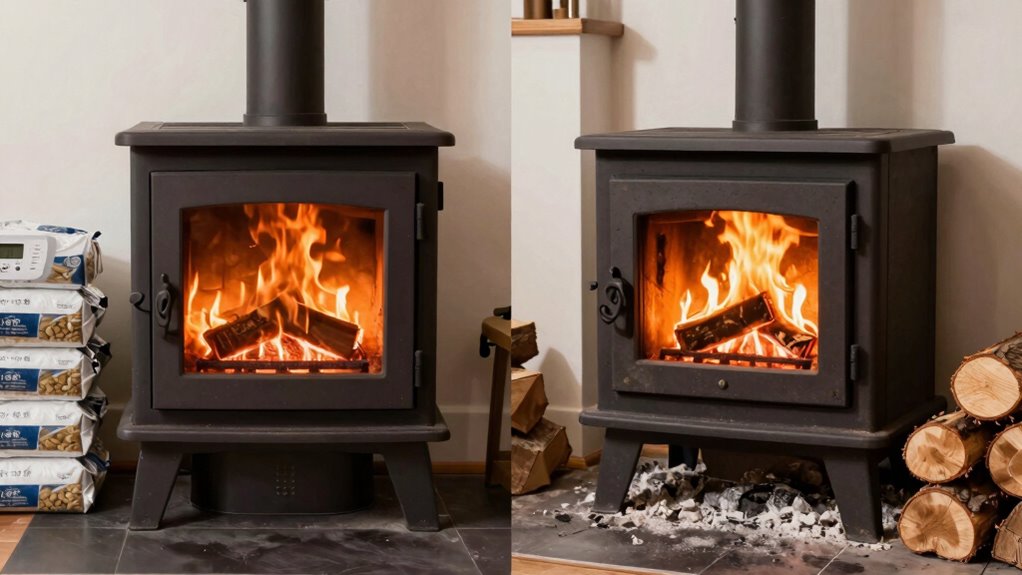

Pellet stoves require less maintenance than wood stoves because they produce less ash and creosote, making cleaning easier and less frequent. You’ll find pellet stoves more convenient with straightforward ash disposal and fewer chimney cleanings, thanks to cleaner-burning fuel. In contrast, wood stoves demand regular chimney inspections, ash removal, and safety precautions due to creosote buildup and hot ash handling. Curious about how these differences impact your upkeep? Keep going to discover the full details.

Get backup power and energy gear delivered free — and shop member deals
- Fast, free delivery on millions of items
- Access to Prime Big Deal Days deals on October 6–7
- Prime Video, Amazon Music and more included
Key Takeaways
- Pellet stoves produce less ash and creosote, reducing cleaning frequency and maintenance efforts.
- Wood stoves require more frequent ash removal and chimney cleaning to prevent hazards.
- Pellet stoves have simpler, quicker ash disposal due to a removable ash pan.
- Wood stoves demand regular chimney inspections and more involved cleaning routines.
- Pellet fuel burns cleaner and more efficiently, lowering overall maintenance compared to seasoned wood.

When choosing between pellet and wood heat, understanding the maintenance involved can make a significant difference in your decision. Both types require upkeep, but the nature and frequency of that maintenance vary quite a bit. If you prefer a system that’s easier to manage, knowing what’s involved in tasks like chimney cleaning and ash disposal can help you make an informed choice.
Pellet stoves typically produce less ash and creosote buildup, which means they generally require less frequent chimney cleaning. The ash they do produce is fine and mostly stays contained within a removable ash pan, simplifying disposal. You’ll need to empty this ash pan regularly, but it’s a straightforward task that doesn’t demand much time or effort. Because pellet stoves burn processed fuel, they tend to produce a cleaner burn overall. This reduces the buildup of creosote in your chimney, resulting in less frequent chimney cleaning appointments and a lower risk of chimney fires. Still, routine inspections are recommended to keep everything safe and efficient. Additionally, the calibration of pellet stoves ensures optimal performance and reduces waste, which can contribute to easier maintenance routines.
Pellet stoves produce less ash and creosote, requiring less chimney cleaning and easier ash disposal.
On the other hand, wood-burning stoves or fireplaces tend to generate more ash and creosote. Ash disposal becomes more frequent, and you’ll need to shovel out the ash after each burn cycle or as needed. Proper ash disposal isn’t just about cleanliness—it’s also about safety. Ash can retain heat for days, so you have to store it in a metal container away from combustible materials. Chimney cleaning for wood stoves is generally more involved because creosote buildup is common, especially if you don’t burn seasoned wood. Regular chimney inspections and cleaning are essential to prevent dangerous creosote fires, which can occur if buildup isn’t addressed. This means dedicating more time and potentially hiring professional chimney sweeps periodically, depending on your usage. Additionally, understanding the differences in maintenance requirements can help you better plan upkeep schedules and safety precautions. Being aware of fuel processing can also influence your choice, as pellet fuel is manufactured to burn cleaner and more efficiently.
The key difference comes down to how much maintenance each system demands. Pellet stoves tend to be more convenient, with less frequent chimney cleaning and simpler ash disposal. Wood stoves require more attention—more frequent ash removal, more vigilant chimney cleaning, and safety precautions for handling hot ash. If you’re looking for a low-maintenance setup, pellet heating might be the better choice. But if you enjoy the traditional experience and don’t mind the extra upkeep, wood heating could work fine. Either way, understanding these maintenance aspects ensures you’re prepared and helps you keep your heating system safe, clean, and efficient year-round.
As an affiliate, we earn on qualifying purchases.
Frequently Asked Questions
How Often Should I Clean My Pellet Stove’s Burn Pot?
You should clean your pellet stove’s burn pot at least once a week to maintain ideal pellet stove efficiency. Regular cleaning prevents ash build-up, ensuring proper combustion and consistent heat output. By keeping the burn pot clean, you support combustion enhancement, which prolongs stove life and enhances performance. During cleaning, remove any clinker or ash buildup to keep your stove running smoothly and efficiently, especially during peak heating seasons.
Are There Specific Tools Required for Pellet Stove Maintenance?
Like a craftsman wielding a fine chisel, you’ll need specific tools for pellet stove maintenance. A brush, vacuum, and screwdriver are essentials to keep it running efficiently. These tools help improve fuel efficiency and reduce noise levels by ensuring proper cleaning and adjustments. Regularly using them keeps your stove in top shape, preventing breakdowns and maintaining peak performance—think of it as tuning a finely crafted instrument for harmony and efficiency.
What Safety Precautions Are Necessary During Maintenance?
During maintenance, you should wear safety gear like gloves and goggles to protect yourself. Always guarantee proper ventilation checks to avoid inhaling dust or fumes. Turn off the stove and unplug it before starting any work. Keep the area clear of combustible materials, and work in a well-lit, ventilated space. Following these safety precautions helps prevent accidents and keeps you safe while maintaining your pellet stove.
How Does Humidity Affect Pellet Stove Operation?
Humidity levels considerably affect your pellet stove’s operation. High moisture content in the pellets caused by excessive humidity can clog the burn pot and reduce efficiency. To guarantee ideal performance, you need to control moisture by storing pellets in a dry, well-ventilated area. Proper moisture control prevents jams, maintains consistent heat output, and extends your stove’s lifespan, making your heating experience more reliable and efficient.
Can I Switch Between Wood and Pellet Heating Easily?
Switching between wood and pellet heating is like changing gears in a well-tuned car—you can do it, but it takes some adjustments. You’ll need to take into account fuel compatibility and chimney requirements, as each type demands different setups. While it’s feasible, expect to juggle equipment changes and cleaning routines. If you’re not ready for the extra work, sticking to one fuel type might keep things smoother and more efficient.
As an affiliate, we earn on qualifying purchases.
Conclusion
Choosing between pellet and wood heat is like selecting a trusted companion; each has its own upkeep quirks. Pellet stoves require less frequent cleaning and are more automated, but you’ll need to keep up with hopper refills and occasional cleaning. Wood stoves demand more hands-on effort, from regular ash removal to chimney maintenance. Ultimately, it’s about finding the balance that fits your lifestyle—like a dance where each step matters.
As an affiliate, we earn on qualifying purchases.
As an affiliate, we earn on qualifying purchases.
Fall Picks
fall essentials
As an affiliate, we earn on qualifying purchases.