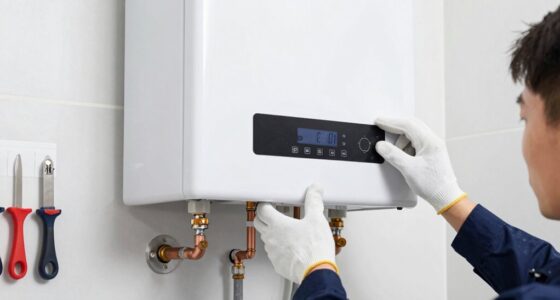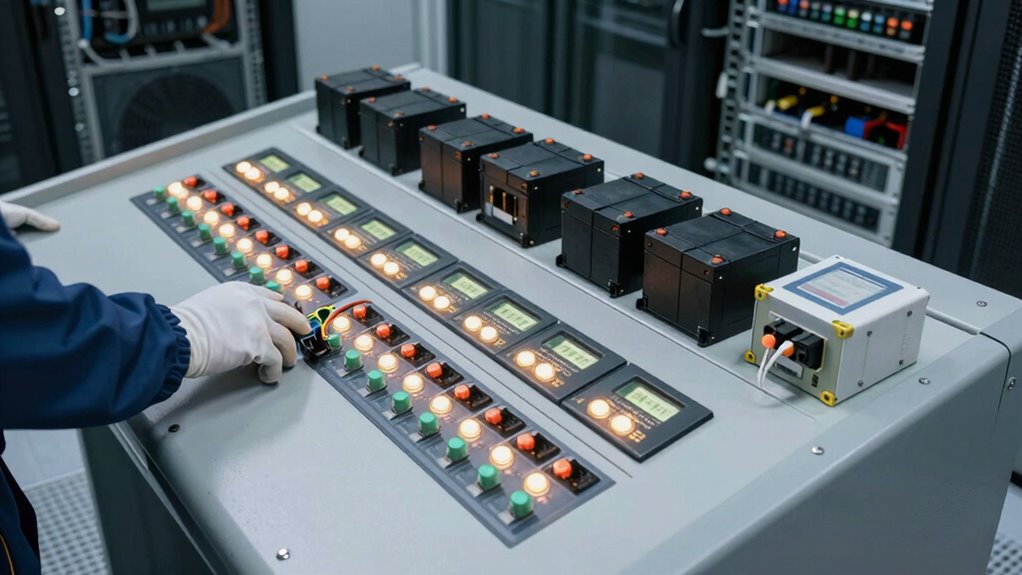

To prevent backup power disappointments, establish a regular maintenance schedule that includes monthly generator tests under load conditions, and inspections of batteries, fuel lines, and critical components every 3 to 6 months. Keep a detailed record of all checks, repairs, and tests to spot patterns and guarantee compliance with safety standards. Maintaining a clean environment and addressing issues promptly keeps your system reliable. Continue exploring to discover how to implement these practices effectively.

Get backup power and energy gear delivered free with Prime
- Fast, free delivery on millions of items
- Prime Video, Amazon Music and more included
- Member-only deals all year
Key Takeaways
- Schedule regular generator testing under load to verify operational readiness during outages.
- Conduct battery inspections every 3 to 6 months to prevent deterioration and ensure reliable backup power.
- Perform routine checks on fuel lines, filters, and critical components to detect leaks and corrosion early.
- Maintain a clean environment around backup systems to facilitate early problem identification and prompt action.
- Keep detailed records of maintenance activities to track system performance and adhere to safety standards.
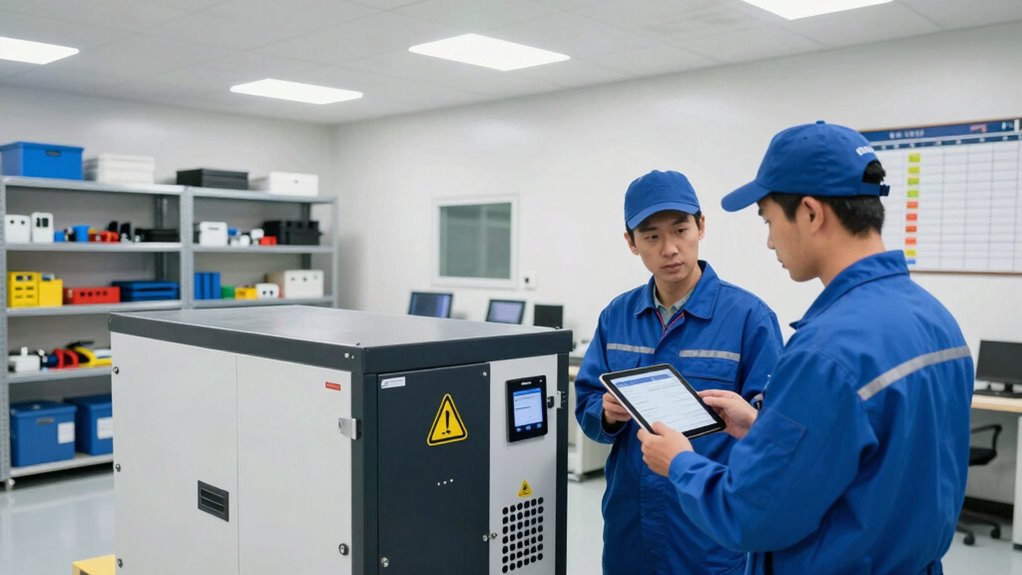
Regular maintenance is essential to guarantee your backup power systems operate reliably when needed. You never want to find out during an outage that your generator won’t start or your batteries are dead. To prevent these frustrating surprises, establishing a solid maintenance schedule is key. One of the most important tasks is regular generator testing. You should schedule these tests at least monthly to ensure your generator responds promptly when called upon. During testing, you run the generator under load conditions, which helps identify potential problems like fuel issues, starting difficulties, or abnormal vibrations. If you notice anything unusual during these tests, you need to address it immediately to avoid failure during an emergency.
Alongside generator testing, battery inspection plays a critical role in your maintenance routine. Backup power systems often rely heavily on batteries, which can degrade over time or become corroded. Regularly inspecting your batteries, ideally once every three to six months, helps catch early signs of deterioration. Check for corrosion on terminals, ensure connections are tight, and look for any swelling, leaks, or other physical damage. Monitoring the voltage levels of your batteries is also essential; if the voltage drops below recommended levels, it’s a sign they might need replacing soon. Proper battery maintenance prevents unexpected failures and prolongs their lifespan, saving you money and stress in the long run. Additionally, understanding battery lifespan can help you plan for replacements before failures occur. Staying informed about testing procedures and how they relate to overall system reliability can further improve your maintenance effectiveness. Conducting system diagnostics periodically can help identify underlying issues early, ensuring your backup system remains ready.
Regular battery inspections every 3-6 months prevent failures and extend lifespan.
In addition to testing and inspection, routine inspections of your entire backup system should be part of your schedule. This includes examining fuel lines, filters, and other critical components. Clean or replace filters regularly to keep the system running smoothly and prevent clogs or damage. Keep an eye out for leaks, corrosion, or loose connections, and address issues promptly. Maintaining a clean, organized environment around your backup power system can also help you spot potential problems early. Remember, preventive measures are always better than reactive repairs, especially during power outages when immediate dependability is essential. Regularly reviewing system components and their condition can help ensure optimal performance. Additionally, staying informed about maintenance best practices can help you adapt your schedule as your system ages.
Developing a detailed maintenance schedule and sticking to it ensures your backup power system remains dependable. It’s wise to keep detailed records of all inspections, testing, and repairs. This documentation can help you identify patterns, plan future maintenance, and ensure compliance with safety standards. Ultimately, consistent generator testing and battery inspection are your best defenses against backup power disappointments. When emergencies strike, you want to be confident that your system will kick in without hesitation, keeping your operations running smoothly and safely.
As an affiliate, we earn on qualifying purchases.
Frequently Asked Questions
How Often Should the Backup Power System Be Inspected?
You should inspect your backup power system at least quarterly. During these inspections, you need to perform battery testing to confirm the batteries hold a proper charge and check for corrosion or leaks. Also, evaluate fuel quality if you have fuel-based generators, as contaminated fuel can cause failures. Regular inspections help catch issues early, preventing unexpected outages and guaranteeing your backup power is reliable when you need it most.
What Are Common Signs of Backup Power System Failure?
You’ll notice warning signs like dimming lights or devices failing unexpectedly, like a warning shot across your bow. If your backup system’s battery lifespan is nearing its end or if system calibration is off, failures become more likely. Keep an eye on warning alarms and irregular performance, as these clues signal your backup power’s health. Regular checks help catch issues early, ensuring your system’s ready when you need it most.
Can Maintenance Be Performed Without Shutting Down the System?
Yes, maintenance can often be performed without shutting down your backup power system, especially if it has built-in system redundancy. Regular inspections and testing help guarantee components like batteries are functioning correctly and extend their lifespan. By scheduling preventive maintenance, you minimize downtime and avoid surprises during power outages, keeping your system reliable. This proactive approach ensures your backup power remains ready without risking disruptions or compromising system integrity.
How Long Does a Typical Backup Power System Maintenance Take?
A typical backup power system maintenance takes about 4 to 8 hours, depending on system size and complexity. During this time, you’ll perform load testing to verify the system handles actual power demands. You’ll also check battery lifespan, replacing batteries if needed, to prevent failures. Regular maintenance like this keeps your backup power dependable, reducing the risk of unexpected outages and guaranteeing your system is always ready when needed.
Are There Specific Tools Required for Backup Power Maintenance?
You’ll need specific tools for backup power maintenance, including a tools checklist that covers multimeters, screwdrivers, and wrenches. Following maintenance protocols guarantees safety and effectiveness. Make sure to have inspection mirrors, voltage testers, and cleaning supplies on hand. Proper tools help you perform tasks accurately, from checking connections to testing system performance, minimizing downtime. Stay prepared with the right tools to keep your backup power system reliable.
As an affiliate, we earn on qualifying purchases.
Conclusion
Don’t let overlooked maintenance guarantee your backup power into a disappointment. Regular checks and a solid schedule ensure your system’s reliability when it matters most. You might think it’s time-consuming or unnecessary, but the peace of mind it provides is worth it. Staying proactive keeps your power backup ready for any emergency, so you can focus on what truly matters. Invest a little now to prevent big problems later—your backup power system will thank you.
As an affiliate, we earn on qualifying purchases.
backup power system maintenance kit
As an affiliate, we earn on qualifying purchases.
As an affiliate, we earn on qualifying purchases.
Halloween Picks
halloween
As an affiliate, we earn on qualifying purchases.