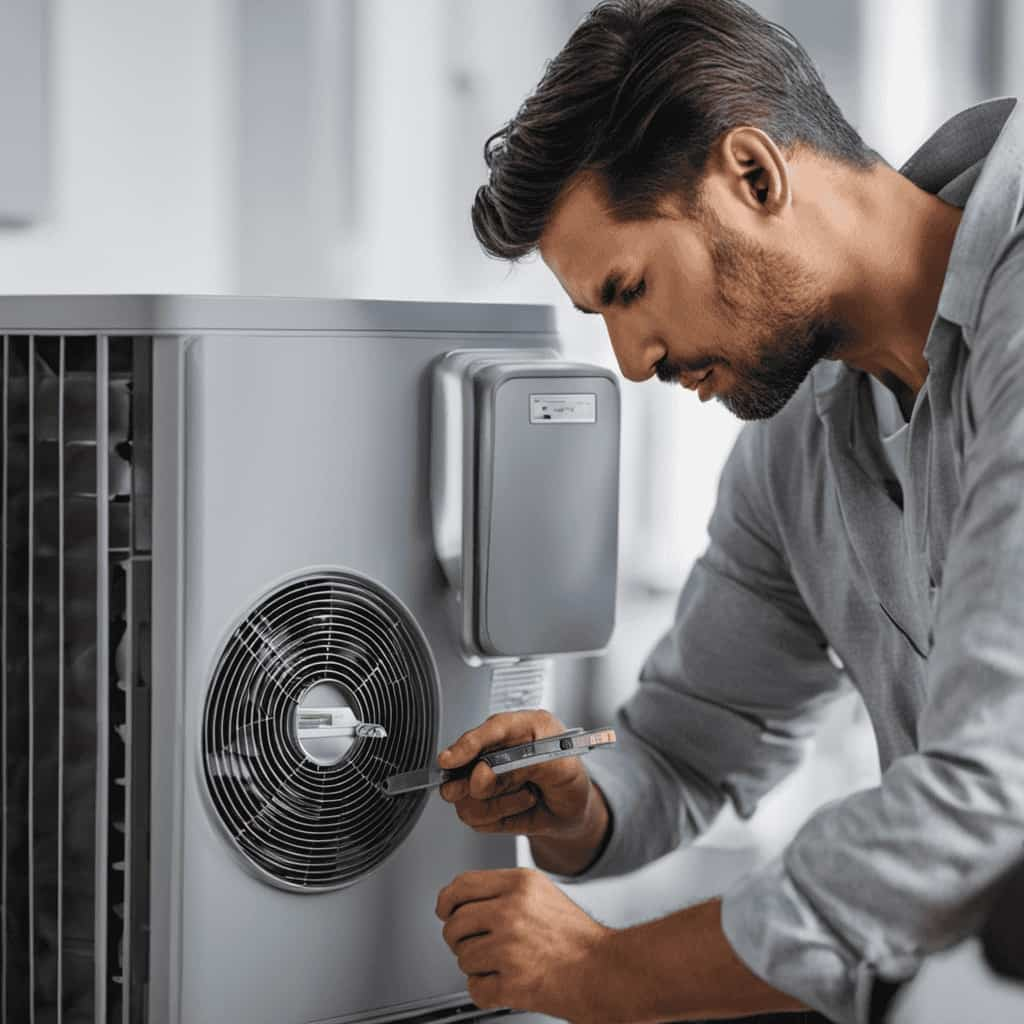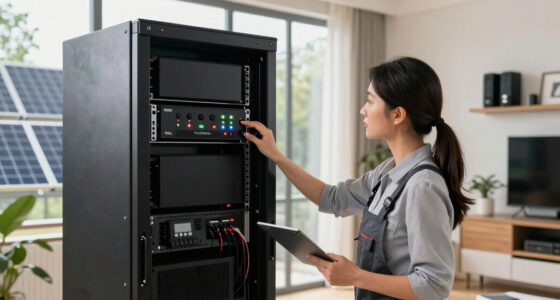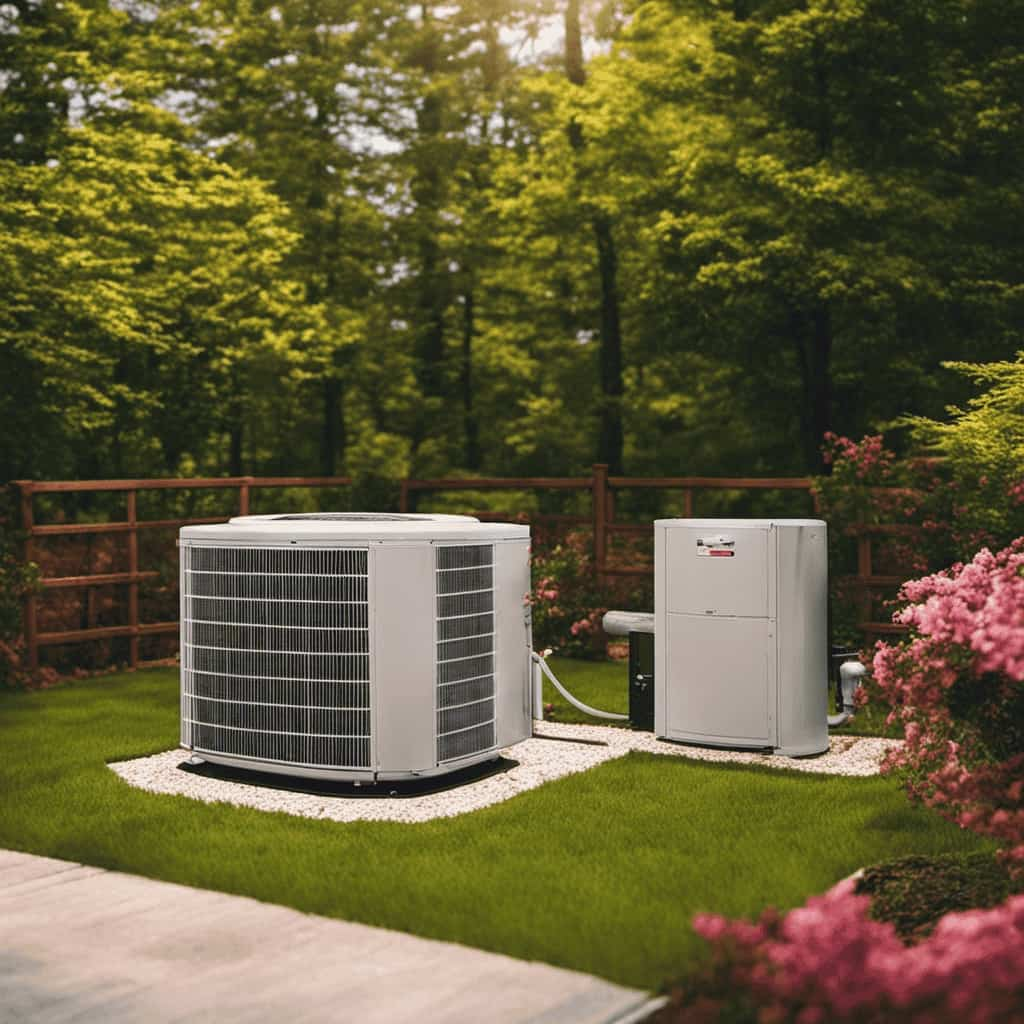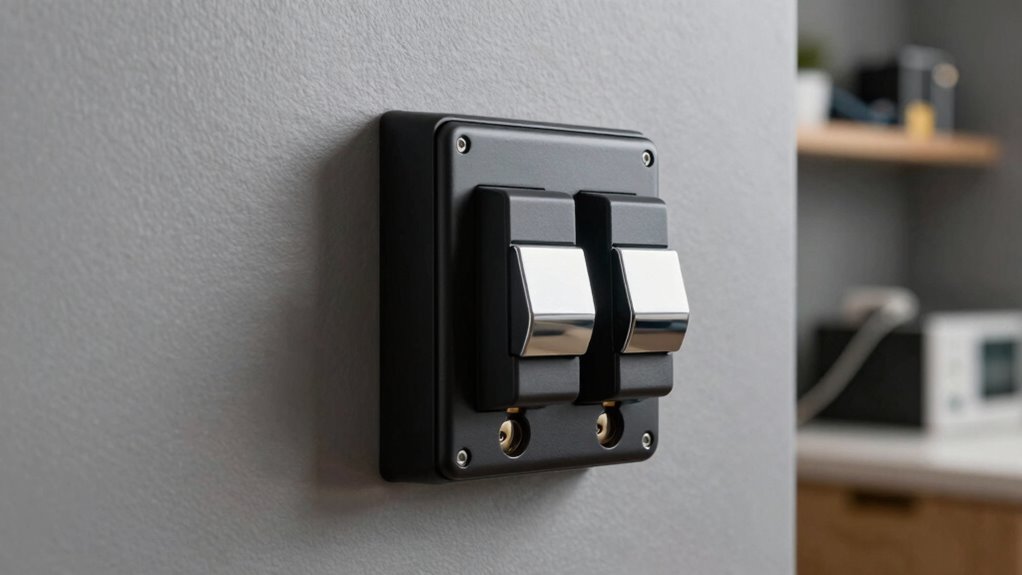

Choosing the right transfer switch can simplify your daily life during outages by ensuring compatibility with your generator, making setup easier, and providing reliable operation. The switch you select affects how smoothly you can restore power and operate safely at home. It’s important to evaluate your generator type and home system to avoid operational hiccups. Keep exploring to learn more about matching your needs for a safe, efficient setup that makes outages less disruptive.

Get backup power and energy gear delivered free with Prime
- Fast, free delivery on millions of items
- Prime Video, Amazon Music and more included
- Member-only deals all year
Key Takeaways
- Compatibility with your generator type directly impacts ease of daily operation and reliability during outages.
- Properly selected transfer switches simplify daily testing and maintenance routines.
- The switch’s location and installation ease influence daily convenience and accessibility.
- Choosing a switch with user-friendly features enhances routine operation and safety.
- Ensuring seamless integration with existing electrical systems minimizes disruptions during daily use.

Are you unsure which transfer switch is right for your needs? Choosing the right transfer switch can significantly impact your daily usability, so it’s essential to consider how it will work with your existing setup. One key factor is generator compatibility. Not all transfer switches work seamlessly with every generator model, so you need to verify compatibility before making a purchase. Some switches are designed specifically for portable generators, while others are optimized for standby or whole-house systems. Ensuring your transfer switch aligns with your generator’s specifications guarantees smooth operation during power outages and prevents potential electrical issues.
Verify your generator compatibility to ensure smooth, safe operation during power outages.
Another critical aspect to consider is installation considerations. Proper installation isn’t just about plugging in a device; it involves understanding your electrical system’s configuration and ensuring safety standards are met. A transfer switch that’s compatible with your home’s wiring and electrical panel can make installation smoother and more efficient. Some switches require professional installation, especially if they involve complex wiring or need to be integrated tightly with your main panel. It’s wise to evaluate whether you’re comfortable handling installation yourself or if you’ll need a licensed electrician. Proper installation also includes considering the location of the switch—ideally, it should be accessible, away from moisture, and near your generator hookup. Additionally, understanding generator compatibility can help prevent issues and ensure your system operates reliably when needed. Knowing the electrical system’s configuration can help you select a transfer switch that fits your existing setup perfectly. It’s also helpful to research installation requirements to ensure you’re prepared for a safe and efficient setup process. Considering local electrical codes can further ensure your installation complies with safety standards and regulations.
transfer switch for home generator
As an affiliate, we earn on qualifying purchases.
As an affiliate, we earn on qualifying purchases.
Frequently Asked Questions
How Does Transfer Switch Capacity Affect Daily Power Management?
Transfer switch capacity directly impacts your daily power management by determining how much load you can prioritize during an outage. A higher capacity allows you to handle more essential devices simultaneously, ensuring better load prioritization. It also affects backup duration, as larger switches support larger generators, providing longer-lasting backup power. Choosing the right capacity helps you optimize daily usability, balancing power needs and backup duration efficiently.
What Maintenance Is Required for Different Transfer Switch Types?
Did you know that proper maintenance can extend a transfer switch’s lifespan by up to 30%? You need to regularly inspect for corrosion, loose connections, and wear. For different transfer switch types, generator compatibility and installation requirements dictate specific upkeep. Make certain your switch stays reliable by cleaning contacts, testing operation, and following manufacturer guidelines—these simple steps keep your power system ready and safe during emergencies.
Can Transfer Switches Be Integrated With Smart Home Systems?
Yes, transfer switches can be integrated with smart home systems through smart home automation and wireless integration. You can connect compatible transfer switches to your Wi-Fi network, allowing you to monitor and control them remotely via smartphone apps or voice commands. This seamless integration simplifies managing power sources, enhances convenience, and guarantees your home stays protected during outages. Make certain to choose a transfer switch compatible with your existing smart home platform for smooth operation.
Are There Safety Concerns With Automatic Versus Manual Transfer Switches?
Automatic transfer switches generally pose fewer safety concerns if properly installed and maintained, as they include safety protocols to prevent electrical hazards. Manual switches require you to follow emergency procedures carefully to avoid shocks or damage. Both types need regular inspections and adherence to safety protocols. You should always understand emergency procedures and guarantee proper installation to minimize risks, regardless of the switch type you choose.
How Does Transfer Switch Cost Impact Long-Term Energy Savings?
Investing in a transfer switch might seem costly upfront, but it pays off in the long run. A higher-quality switch with battery backup and load prioritization helps you save energy by efficiently managing power during outages. Though the initial expense is higher, it prevents unnecessary energy use, reduces utility bills, and extends your system’s lifespan. In the end, the right switch turns out to be a wise investment that keeps your energy bills in check.
automatic transfer switch installation kit
As an affiliate, we earn on qualifying purchases.
As an affiliate, we earn on qualifying purchases.
Conclusion
Choosing the right transfer switch is like finding the perfect key to unlock seamless power transitions. It ensures your daily life flows smoothly, without the jarring interruptions of outages. When you select wisely, you’re planting a sturdy anchor in a sea of uncertainty, giving you confidence and control. Remember, the right switch isn’t just a device—it’s the silent guardian that keeps your home humming along, even when the storm clouds gather.
portable generator transfer switch
As an affiliate, we earn on qualifying purchases.
As an affiliate, we earn on qualifying purchases.
As an affiliate, we earn on qualifying purchases.
Halloween Picks
halloween
As an affiliate, we earn on qualifying purchases.