Heat pumps are an excellent addition to school renovation projects because they’re energy-efficient and can easily integrate with existing systems. They help you lower energy costs and reduce your school’s carbon footprint, supporting sustainability goals. Whether upgrading older buildings or constructing new ones, heat pumps offer versatile options suited for various needs. Plus, ongoing innovations make them more reliable and cost-effective. Keep exploring to discover how these systems can transform your school’s environmental impact and save you money.

Get backup power and energy gear delivered free with Prime
- Fast, free delivery on millions of items
- Prime Video, Amazon Music and more included
- Member-only deals all year
Key Takeaways
- Heat pumps can seamlessly integrate with existing HVAC systems during school renovations, enhancing energy efficiency.
- They support sustainability goals by reducing reliance on fossil fuels and lowering greenhouse gas emissions.
- Renovation projects can leverage financial incentives and rebates for installing energy-efficient heat pump systems.
- Heat pumps offer versatile options suitable for various building sizes and renovation scopes.
- Incorporating heat pumps educates students and staff on renewable energy technologies and environmental responsibility.

As schools seek more sustainable and cost-effective ways to upgrade their facilities, heat pumps have become an increasingly popular choice for renovations. These systems leverage renewable energy sources to provide efficient heating and cooling, making them an attractive option for institutions aiming to reduce their carbon footprint. Instead of relying on traditional HVAC systems that burn fossil fuels, heat pumps transfer heat from the air, ground, or water, harnessing renewable energy to deliver comfort while minimizing environmental impact.
Implementing heat pumps in your school renovation project can considerably boost your institution’s cost savings. Because they operate more efficiently than conventional systems, they consume less energy to produce the same amount of heating or cooling. Over time, this reduced energy consumption translates into lower utility bills, helping your school allocate funds to other important priorities like educational resources or facility improvements. Additionally, many regions offer incentives or rebates for installing energy-efficient equipment like heat pumps, further enhancing the financial benefits of your renovation. Leveraging renewable energy sources can enhance the overall sustainability of your project.
Heat pumps boost savings by reducing energy use and utility bills, supporting school priorities and sustainability goals.
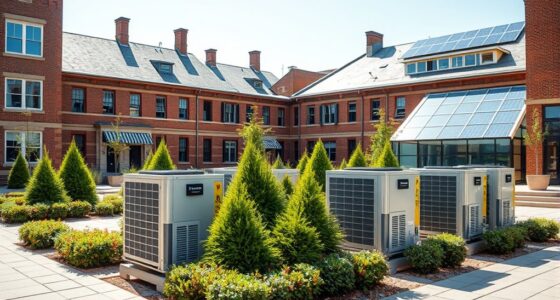
Heat pumps also provide versatility that fits seamlessly into various renovation scenarios. They can be integrated with existing infrastructure or used as part of an all-encompassing upgrade, offering flexibility in design and implementation. For example, in older buildings, ground-source heat pumps can be installed with minimal disruption, utilizing the stable underground temperatures to deliver reliable heating and cooling. In new constructions or extensive renovations, air-source heat pumps can be scaled to meet the building’s size and usage needs, ensuring ideal performance and energy savings. Considering the technology advancements in heat pump systems can help maximize efficiency and longevity in your project.
Another key advantage of incorporating heat pumps into your renovation plans is their potential for long-term sustainability. As a renewable energy-based technology, they contribute to your school’s environmental goals and help meet broader community or government sustainability standards. By reducing reliance on fossil fuels, you decrease greenhouse gas emissions and support efforts to combat climate change. This environmentally conscious approach can also serve as an educational tool for students and staff, demonstrating your school’s commitment to sustainability and innovation. Understanding the molecular-scale challenges involved in fabrication can inspire innovative solutions for more efficient and sustainable systems in the future. Additionally, advancements in heat pump technology continue to improve their efficiency and reduce costs, making them an even more attractive investment for schools.
energy efficient heat pump for school renovation
As an affiliate, we earn on qualifying purchases.
As an affiliate, we earn on qualifying purchases.
Frequently Asked Questions
Are Heat Pumps Suitable for All Climate Zones?
Heat pumps are generally suitable for most climate zones, but their effectiveness depends on climate adaptability and regional efficiency. In moderate climates, they perform well year-round, providing both heating and cooling. In colder regions, advanced models with improved efficiency can still work effectively, but you might need supplementary heating. Overall, choosing the right heat pump tailored to your area’s climate guarantees maximum performance and energy savings.
What Is the Typical Lifespan of a School Heat Pump System?
A school heat pump system typically lasts around 15 to 20 years, making it a durable choice for your renovation. Its energy efficiency helps reduce operational costs over time, leading to significant cost savings. Proper maintenance can extend its lifespan further. Investing in a reliable, long-lasting heat pump guarantees your school benefits from consistent, efficient heating and cooling, ultimately supporting your sustainability goals and budget management.
How Do Heat Pumps Impact Indoor Air Quality?
Heat pumps positively impact indoor air quality by improving circulation and providing consistent ventilation. They help maintain ideal indoor air quality by filtering out dust, allergens, and pollutants through integrated air filtration systems. This reduces airborne contaminants, creating a healthier environment for students and staff. Additionally, heat pumps can help control humidity levels, preventing mold growth and further enhancing indoor air quality.
What Are the Maintenance Requirements for School Heat Pumps?
You need to follow regular maintenance schedules for school heat pumps to keep them running efficiently. This includes checking and cleaning components like the coils and fans, and replacing filters regularly—usually every 1 to 3 months depending on usage and filter type. Keep an eye on refrigerant levels and perform system inspections annually. Proper maintenance guarantees peak performance, energy savings, and extends the lifespan of your heat pumps.
Can Heat Pumps Be Integrated With Existing HVAC Systems?
Yes, you can integrate heat pumps with existing HVAC systems, but you should consider cost considerations and installation challenges. You might need to upgrade some components to guarantee compatibility, which can add to costs. It’s crucial to evaluate your current system’s capacity and layout, as integration may require modifications. Planning carefully helps you avoid unexpected expenses and guarantees a smooth shift during installation.
As an affiliate, we earn on qualifying purchases.
Conclusion
By choosing heat pumps for your school renovation, you’re not just upgrading—you’re revolutionizing education itself. Imagine transforming your school into a powerhouse of efficiency, where comfort and sustainability collide in an unstoppable force. It’s more than a system; it’s a bold statement that your school is leading the charge into a greener, smarter future. Embrace heat pumps now, and watch your school become a beacon of innovation that others can only dream of matching.
air source heat pump for large buildings
As an affiliate, we earn on qualifying purchases.
As an affiliate, we earn on qualifying purchases.
As an affiliate, we earn on qualifying purchases.
Halloween Picks
halloween
As an affiliate, we earn on qualifying purchases.