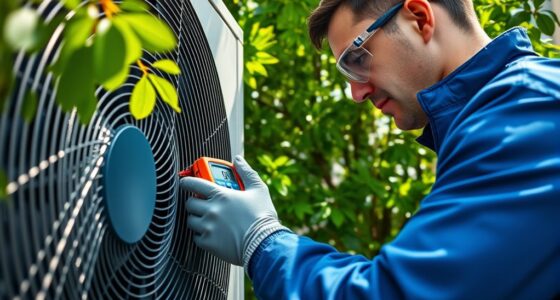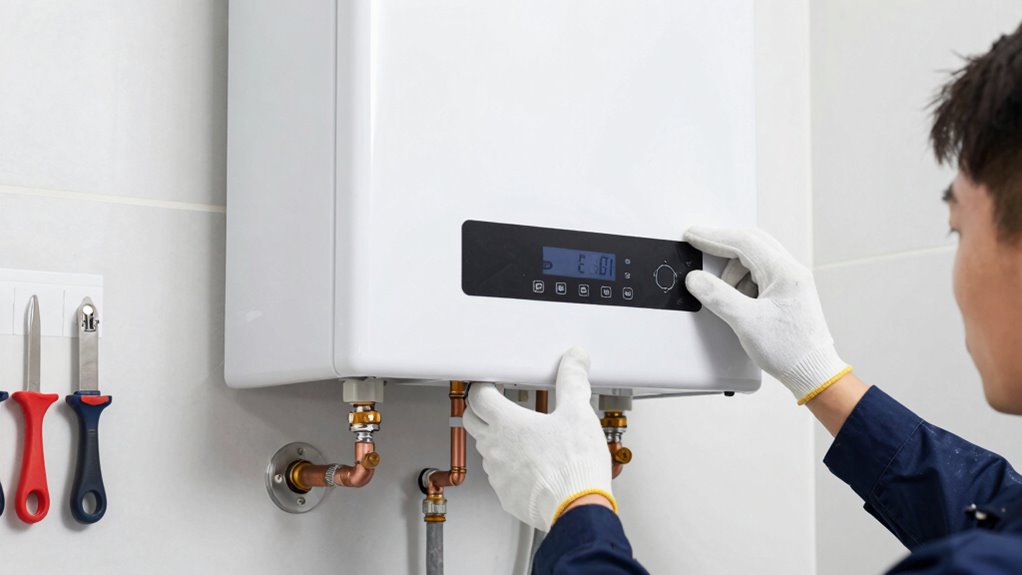

To keep your tankless system efficient, you should perform regular maintenance, including annual flushing to remove mineral buildup, inspecting and cleaning filters, and checking venting and gas connections for safety and proper operation. Follow the manufacturer’s guidelines for scheduling these tasks, and monitor performance to catch issues early. Maintaining your system helps save energy, prolongs its lifespan, and ensures reliable hot water. Continue on to discover detailed steps for each part of the schedule.

Get backup power and energy gear delivered free with Prime
- Fast, free delivery on millions of items
- Prime Video, Amazon Music and more included
- Member-only deals all year
Key Takeaways
- Perform annual flushing to remove mineral buildup and maintain heat transfer efficiency.
- Regularly inspect and clean filters to ensure consistent water flow and system performance.
- Check venting and gas connections periodically to ensure safety and proper operation.
- Follow manufacturer guidelines for maintenance tasks and recommended service intervals.
- Monitor system performance regularly to identify issues early and optimize energy efficiency.

Tankless systems are a popular choice for homeowners seeking efficient and on-demand hot water, but they require regular maintenance to keep them running smoothly. Proper upkeep not only guarantees your system operates at peak energy efficiency but also promotes water conservation. When you maintain your tankless water heater regularly, you prevent mineral buildup and corrosion, which can diminish performance and increase energy consumption. This proactive approach helps you save money on utility bills and reduces water waste, making your entire household more eco-friendly.
Regular maintenance of tankless systems boosts efficiency, prevents mineral buildup, and promotes water conservation for a more eco-friendly home.
A key step in maintaining your tankless system is flushing it annually. Over time, mineral deposits from hard water can accumulate inside the unit, leading to reduced heat transfer and higher energy use. By flushing your system once a year, you remove these deposits, restoring its efficiency. You can do this yourself with a descaling solution and a pump, or hire a professional for thorough service. Regular flushing keeps the heat exchanger clean, which is essential for maximum energy efficiency and water conservation, as the system won’t need to work harder to deliver hot water. Additionally, considering water quality and how it affects mineral buildup can further extend the lifespan of your system and improve overall performance. Regularly monitoring system performance can help detect issues early before they become costly repairs. Proper water testing and hardness levels can inform you when additional treatment is necessary, further protecting your investment.
In addition to annual flushing, you should also inspect your system’s filters monthly. Many tankless units have filters that trap debris and sediment. When these filters become clogged, your system’s flow rate drops, forcing it to work harder and consume more energy. Cleaning or replacing filters regularly ensures consistent hot water flow and maintains water conservation efforts. This small but significant task prevents unnecessary strain on your heater, prolongs its lifespan, and keeps your energy bills low.
Another essential part of your maintenance schedule involves checking the system’s venting and gas connections (if applicable). Ensuring proper ventilation not only guarantees safe operation but also helps your system perform efficiently. Blockages or leaks can cause your heater to operate inefficiently, wasting energy and increasing your carbon footprint. Regularly examining these components allows you to address issues early, maintaining safe and energy-efficient operation. Remember, ensuring the venting system is free of obstructions is crucial for optimal performance.
Finally, keep an eye on the user manual for specific maintenance recommendations from the manufacturer. Following their guidelines ensures you’re performing the right tasks at the right times, preserving your system’s energy efficiency and water conservation benefits. Staying consistent with maintenance not only prolongs the life of your tankless water heater but also ensures you’re doing your part to conserve water and reduce energy consumption. With a simple, regular maintenance schedule, you can enjoy reliable hot water while supporting sustainable living practices.
tankless water heater descaling kit
As an affiliate, we earn on qualifying purchases.
As an affiliate, we earn on qualifying purchases.
Frequently Asked Questions
How Long Does a Typical Tankless Water Heater Last?
A typical tankless water heater lasts around 20 years with proper maintenance. To maximize its lifespan and energy efficiency, follow regular maintenance, like flushing out mineral buildup and inspecting components. During installation, use correct tips to guarantee peak operation and avoid early wear. Staying on top of maintenance and proper installation not only prolongs the unit’s life but also keeps it running efficiently, saving you money in the long run.
Can I Perform Maintenance Myself or Should I Hire a Professional?
Think of maintaining your tankless water heater as tuning a fine instrument. You can perform basic DIY tips like flushing the system and checking for leaks, following a simple maintenance checklist. However, for complex tasks such as replacing parts or troubleshooting, it’s best to hire a professional. This way, you keep your system humming smoothly and avoid costly mistakes, ensuring your hot water flows reliably for years to come.
What Are Signs of a Failing Tankless System?
If you notice your tankless system’s flow slowing down, frequent pilot light issues, or inconsistent hot water, it’s a sign of trouble. Sediment buildup can clog the system, and pilot light problems may indicate a faulty ignition or gas supply. These issues reduce efficiency and could lead to system failure. Regular maintenance helps prevent this, so stay alert to these signs and consider professional help when needed.
How Much Does Professional Maintenance Usually Cost?
Wondering about the cost of professional maintenance? It typically ranges from $100 to $300, but don’t panic—there’s room for savings. A quick cost comparison reveals DIY tips that can cut costs, yet some tasks benefit from expert hands. Regular professional checkups guarantee your tankless system runs smoothly, preventing costly repairs. Stay vigilant, and you’ll keep your system efficient, saving money long-term. Ready to explore how to balance costs and care?
Are There Specific Brands More Reliable for Maintenance?
Yes, some brands are more reliable for maintenance due to their strong reputation and warranty coverage. Brands like Rinnai, Navien, and Noritz are known for durability and good customer support, making maintenance easier and more predictable. When choosing a brand, consider their reputation for longevity and whether their warranty covers parts and labor. This helps guarantee your system stays efficient and reduces unexpected repair costs over time.
tankless water heater filter replacement
As an affiliate, we earn on qualifying purchases.
As an affiliate, we earn on qualifying purchases.
Conclusion
Sticking to this maintenance schedule keeps your tankless system running smoothly and efficiently for years to come. Regular checks and cleanings prevent costly repairs and guarantee you always have hot water when you need it. Are you ready to take control of your system’s performance? With a little effort now, you’ll enjoy reliable hot water and peace of mind knowing your system’s in top shape. Isn’t it worth the effort?
tankless water heater venting inspection tool
As an affiliate, we earn on qualifying purchases.
As an affiliate, we earn on qualifying purchases.
tankless water heater maintenance parts
As an affiliate, we earn on qualifying purchases.
As an affiliate, we earn on qualifying purchases.
Columbus Day / Indigenous Peoples' Day Picks
long weekend sales
As an affiliate, we earn on qualifying purchases.