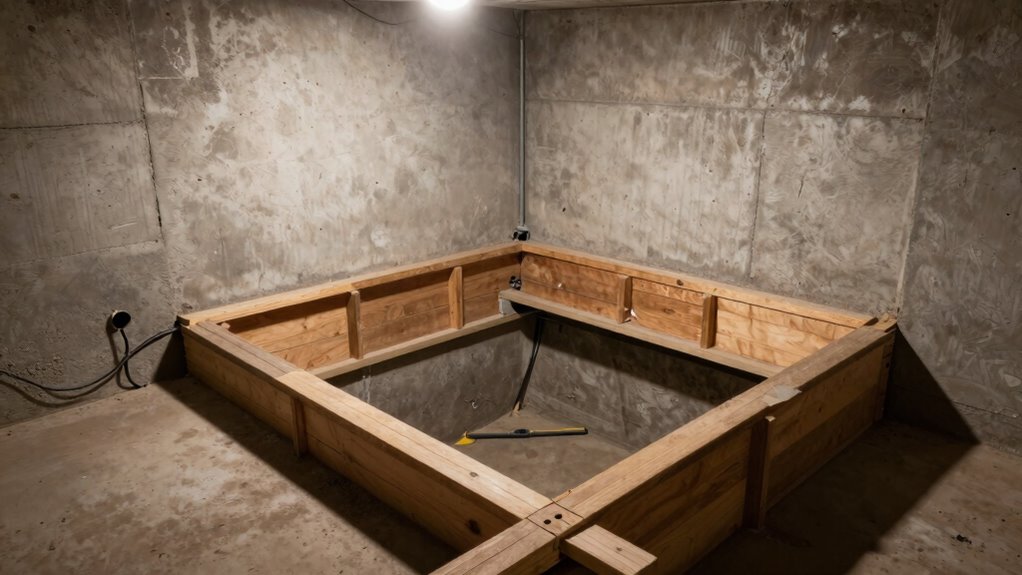

Choosing between a basement and a crawlspace depends on your space needs, moisture control, and budget. Basements offer more room for storage or future expansion but need proper waterproofing and moisture management. Crawlspaces are easier and cheaper to access but provide limited space and require moisture strategies to prevent mold. Your climate and site conditions also impact the best choice. Stay with us to discover more tips for making the right decision.
Key Takeaways
- Consider space needs and budget, as basements offer more room but are more costly than crawlspaces.
- Assess moisture risks; proper waterproofing and drainage are vital for basements, while moisture control strategies are crucial for crawlspaces.
- Evaluate site and climate conditions to determine which option better manages humidity and water intrusion.
- Factor in insulation and maintenance ease, with basements providing better insulation options and crawlspaces offering easier access.
- Prioritize long-term durability by implementing effective moisture management and sealing techniques in both options.
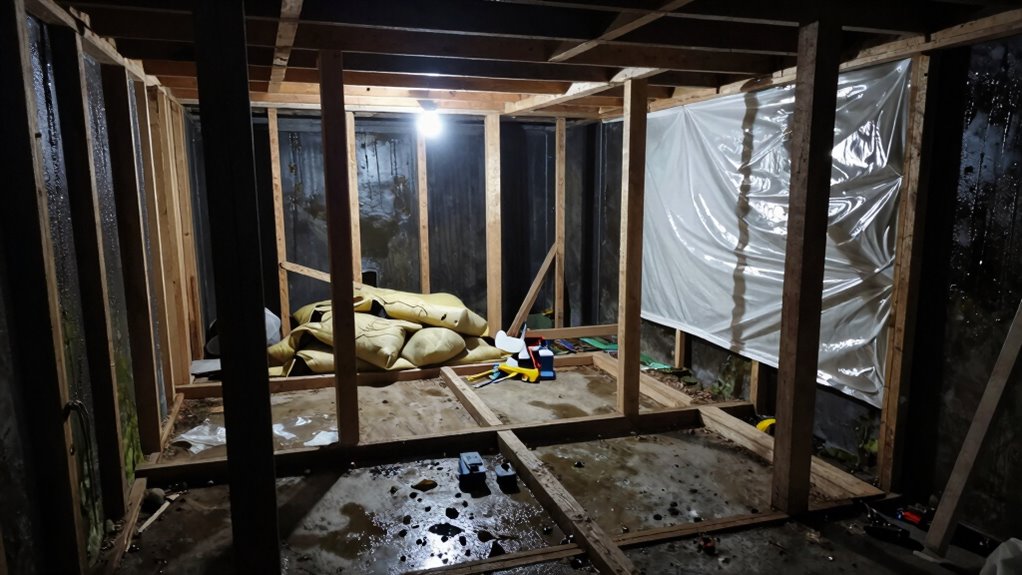
Choosing between a basement and a crawlspace for your home installation largely depends on your specific needs and site conditions. Your decision impacts how you handle moisture control and your insulation options, both of which are essential for maintaining a comfortable and durable living space. Basements typically offer more space, making them ideal if you plan to expand or need extra storage. Conversely, crawlspaces are less costly and easier to access for maintenance, but they come with their own set of moisture management challenges.
In terms of moisture control, basements tend to be more susceptible to water intrusion because they are below ground level. Proper drainage systems, sump pumps, and waterproofing membranes are vital if you want to keep moisture out. You’ll need to guarantee that the basement is well-sealed against humidity and leaks, which can otherwise lead to mold, wood rot, or structural issues. Crawlspaces, on the other hand, often have ventilation that can either help or hinder moisture management. If not properly sealed or vented, crawlspaces can trap humidity, creating a damp environment that fosters mold growth. To combat this, you might consider installing vapor barriers, dehumidifiers, or sealed vents to control moisture levels effectively. Additionally, understanding moisture management strategies is crucial for long-term durability in these spaces. Properly managing moisture not only protects your home’s structure but also contributes to healthier indoor air quality. Being aware of local climate conditions can also influence which space is more suitable for your installation needs.
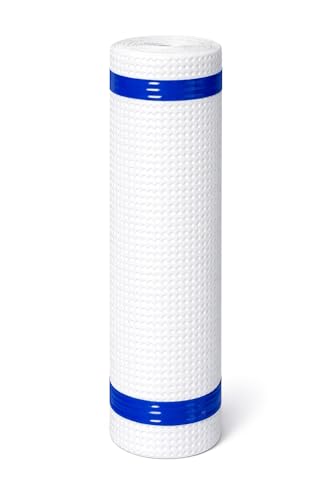
Whitecap Dimple Drainage Matting 4' x 50' – Heavy Duty Foundation Drainage Membrane for Crawl Space & Basement, Protects Vapor Barriers, Improves Water Flow, Waterproof Floor Underlayment
IMPROVES WATER FLOW & DRAINAGE Raised dimple design creates a continuous air gap that directs water toward drains…
As an affiliate, we earn on qualifying purchases.
As an affiliate, we earn on qualifying purchases.
Frequently Asked Questions
How Does Climate Affect the Choice Between Basement and Crawlspace?
Climate impact plays a significant role in choosing between a basement and a crawlspace. In humid or wet climates, a basement offers better moisture control since it’s less prone to moisture infiltration. Conversely, in dry or cold climates, a crawlspace may be more suitable, but you’ll need proper moisture barriers. Understanding your climate helps you decide which foundation minimizes moisture problems and guarantees a healthier, more durable space.
What Are the Long-Term Maintenance Costs for Each Option?
You’ll find that crawlspaces generally have lower initial costs, but they may incur higher long-term maintenance expenses due to moisture issues and pest control. Basements tend to have higher upfront costs but often require less ongoing maintenance. When considering future upgrades, basements offer more space and flexibility, which can reduce future costs. A thorough cost comparison helps you plan for ongoing expenses and guarantees your choice remains economical over time.
Can Existing Structures Be Converted From One to the Other?
Like forging a new path through uncharted territory, converting existing structures from a basement to a crawlspace or vice versa is possible but complex. You must consider foundation stability and ventilation requirements carefully. Reinforcements might be necessary to guarantee safety, and adjustments to ventilation are essential to prevent moisture issues. This process demands expert assessment, as improper conversion can compromise structural integrity and long-term durability.
How Do Local Building Codes Influence Installation Strategies?
Local building codes greatly influence your installation strategy, especially regarding material durability and ventilation requirements. You must select materials that meet code standards for safety and longevity, guaranteeing they withstand environmental factors. Additionally, codes dictate proper ventilation to prevent moisture buildup and mold. By adhering to these regulations, you’ll confirm your installation is compliant, durable, and promotes healthy indoor air quality, avoiding costly fines or future modifications.
What Safety Concerns Are Associated With Each Basement or Crawlspace?
Think of safety concerns in basements and crawlspaces as hidden traps waiting to be sprung. You must prioritize moisture control to prevent mold and structural damage, and pest management to keep unwanted critters at bay. Both areas pose risks like mold exposure, electrical hazards, and pest infestations, which can compromise your health and home’s safety. Regular inspections and proper maintenance are key to minimizing these dangers and ensuring a safe environment.

Spirecover Crawl Space Vapor Barrier, 10 mil 10'x100', Thick Plastic Sheeting, Drop Cloth Vapor Barrier Covering for Crawl Space Encapsulation, Heavy Duty Plastic sheeting, Black and White Panda Film
Panda Film – Black and White Panda Film is a heavy-duty poly film. Made of 100% virgin poly…
As an affiliate, we earn on qualifying purchases.
As an affiliate, we earn on qualifying purchases.
Conclusion
Ultimately, choosing between a basement or crawlspace hinges on your home’s needs and your preferred install strategy. Think of it like selecting the right saddle for your trusty steed—each has its strengths and quirks. By understanding the pros and cons, you can avoid ending up in a pickle, like a knight without armor. So, weigh your options carefully, and ride into the future with confidence, knowing you’ve made the best choice for your castle’s foundation.

ALORAIR Crawl Space Dehumidifiers 120 PPD Moisture Removal, Crawlspace Dehumidifiers Commercial Dehumidifier for Basement, Auto Defrost, cETL Listed
120 PPD Crawl Space Dehumidifier: The Sentinel HD55S Energy Star Certified dehumidifier removes up to 120 pints of…
As an affiliate, we earn on qualifying purchases.
As an affiliate, we earn on qualifying purchases.

Aquastrong Sump Pump 1 HP 4500 GPH Submersible Water Pump Thermoplastic Portable Utility Pump High Flow Water Removal for Swimming Pool Garden Pond Basement Window Wells with 10ft Long Power Cord
Efficient Sump Pump: Aquastrong sump pump with 1HP powerful motor. Draining water up to 4500GPH Per Hour( 75…
As an affiliate, we earn on qualifying purchases.
As an affiliate, we earn on qualifying purchases.