To winterize your heat pump, make certain the outdoor unit is free of snow, ice, and debris and keep airflow unobstructed. Check that the defrost cycle works correctly and avoid manual removal of frost. Insulate refrigerant lines, service seals around doors and windows, and consider protective covers that allow ventilation. Regular maintenance helps your system run efficiently and reliably. Keep these tips in mind to prevent costly repairs—feel free to explore more ways to prepare for cold weather.
Key Takeaways
- Regularly inspect and clean the outdoor unit, removing snow, ice, and debris to ensure proper airflow.
- Verify the heat pump’s defrost cycle is functioning correctly to prevent ice buildup.
- Insulate refrigerant lines and outdoor components to prevent freezing and heat loss.
- Seal gaps around doors, windows, and the outdoor unit for better insulation and efficiency.
- Use outdoor covers that allow ventilation to protect the unit from snow and moisture while preventing mold.
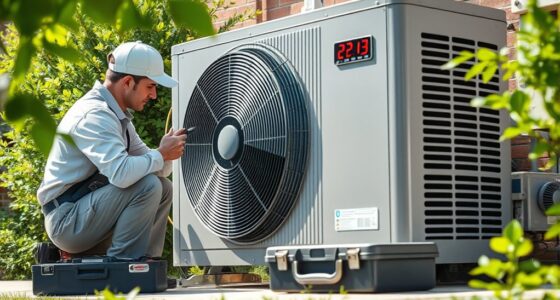
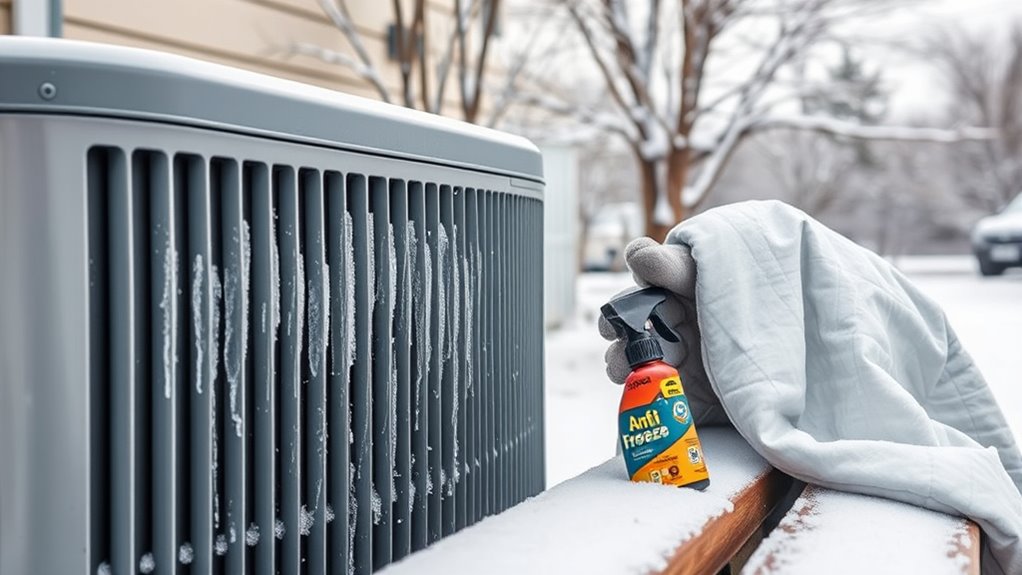
As winter approaches, it’s essential to prepare your heat pump to guarantee it runs efficiently and reliably throughout the cold months. Proper winterization helps prevent issues like frost buildup, which can impair your system’s performance and potentially cause damage. One of the key steps is addressing frost prevention. When temperatures drop, moisture can freeze on the outdoor unit’s coils, creating a layer of frost that hampers heat transfer. To combat this, verify your heat pump’s defrost cycle is functioning correctly. Regularly check for ice accumulation on the outdoor unit, especially after heavy snowfall or prolonged cold spells. If you notice frost forming, avoid manually scraping it off, as this can damage the coils. Instead, trust your system’s defrost mode to handle it. If your unit consistently develops frost, consider consulting a professional to inspect and improve its defrost cycle, or to see if additional frost prevention measures are needed. Ensuring the outdoor unit is free of debris and snow is also crucial for efficient operation.
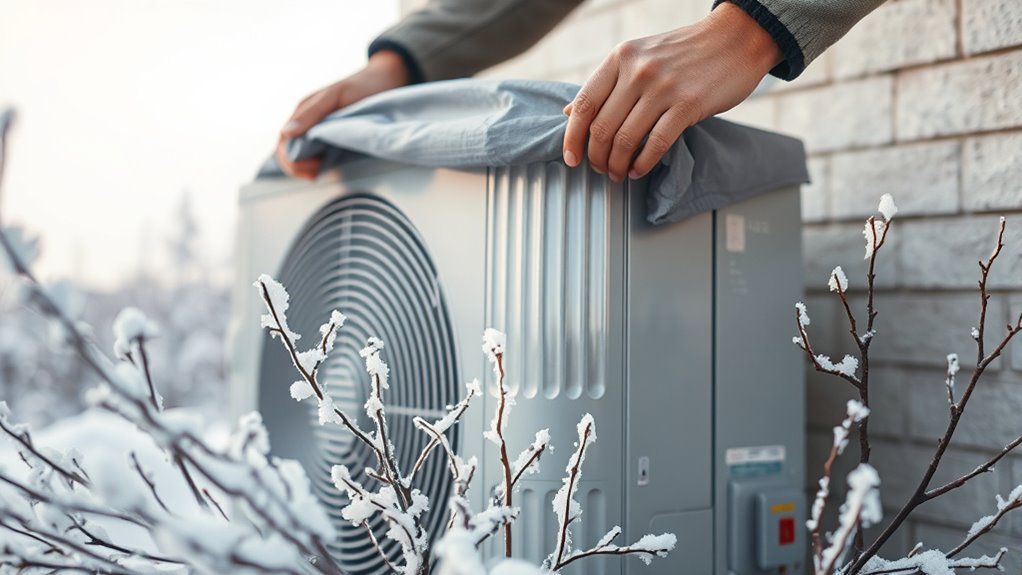
Alongside frost prevention, focusing on insulation techniques is essential for maintaining peak operation during winter. Insulation helps keep the heat within your home and reduces the workload on your heat pump. Start by inspecting and sealing any gaps around doors, windows, and the outdoor unit itself. Using weatherstripping or caulking can prevent cold air infiltration that forces your system to work harder. For the outdoor unit, installing an insulated cover or a protective shelter can shield it from snow, ice, and wind chill, while still allowing proper airflow. Additionally, you might consider insulating the refrigerant lines with foam or heat tape. This prevents them from freezing or becoming less efficient in transferring heat. Proper insulation techniques not only improve efficiency but also extend the lifespan of your heat pump by reducing strain during the coldest months. Regular maintenance checks can also help identify potential issues before they worsen.
Finally, verify your outdoor unit is clear of debris, snow, and ice, and keep the area around it free from obstructions. Regularly remove accumulated snow, but avoid using sharp tools that might damage the fins. When covering the unit, make sure the cover allows for ventilation so moisture doesn’t get trapped inside, which could lead to rust or mold. By combining effective frost prevention strategies with sound insulation techniques, you create a winter-ready environment for your heat pump. This preparation guarantees your system can handle the cold weather efficiently, providing consistent warmth and avoiding costly repairs down the line. Taking these steps now means you’ll stay cozy all winter long without surprises or system failures. Properly maintaining your system and understanding frost buildup can make all the difference during the chilly months.
Frequently Asked Questions
Can I Winterize My Heat Pump Myself or Should I Hire a Professional?
You can attempt DIY maintenance to winterize your heat pump if you feel confident, but for thorough and safe results, hiring a professional service is best. A professional can properly inspect, clean, and secure your system against cold weather, preventing costly damage. If you’re unsure or unfamiliar with HVAC systems, it’s smarter to invest in a professional service to guarantee your heat pump stays efficient and reliable all winter long.
How Often Should I Check the Refrigerant Levels During Winter?
You should check your refrigerant levels at least once a month during winter to prevent a refrigerant leak or a recharge emergency. Think of it as your heat pump’s lifeline—if refrigerant levels drop even slightly, your system could freeze or break down. Regular checks ensure peak performance and energy efficiency, saving you from costly repairs and cold surprises. Stay vigilant and keep your heat pump running smoothly all season long.
Will Winterizing My Heat Pump Affect Its Energy Efficiency?
Winterizing your heat pump can actually improve its energy efficiency during cold weather. Proper winter preparation guarantees the system runs smoothly, reduces strain, and prevents energy loss caused by ice buildup or debris. When you take steps like cleaning filters and checking insulation, you help your heat pump operate more efficiently. This means lower energy bills and reliable heating throughout winter, keeping your home comfortable even in the coldest months.
What Signs Indicate My Heat Pump Needs Urgent Maintenance Before Winter?
If your heat pump makes a common noise, like banging or rattling, or if you notice inconsistent heating, it’s time to get urgent maintenance before winter. These signs often indicate issues that can worsen in cold weather, risking system failure. Don’t ignore these symptoms—schedule a professional checkup promptly to ensure your heat pump runs efficiently and keeps your home warm during the chilly months.
Are There Specific Types of Cover or Insulation Recommended for Heat Pumps?
You might notice a coincidence when shopping for protective covers or insulation materials, but it’s best to choose specifically designed options for heat pumps. Use durable, weather-resistant protective covers that fit snugly, preventing snow and ice buildup. For insulation, opt for high-quality foam or reflective materials around the unit to enhance efficiency. Proper insulation helps retain heat, reducing workload and energy costs during cold months.
Conclusion
Now that you’ve winterized your heat pump, it’s like giving your home a cozy, ironclad fortress against the freezing chaos outside. Imagine your system working tirelessly, bravely battling snowstorms and icy winds, keeping your sanctuary warm and safe. With these simple tips, you’re not just preparing your heat pump—you’re armoring your home against the relentless cold, ensuring comfort that feels like a warm hug even in the harshest winter storms. Stay warm, stay protected!