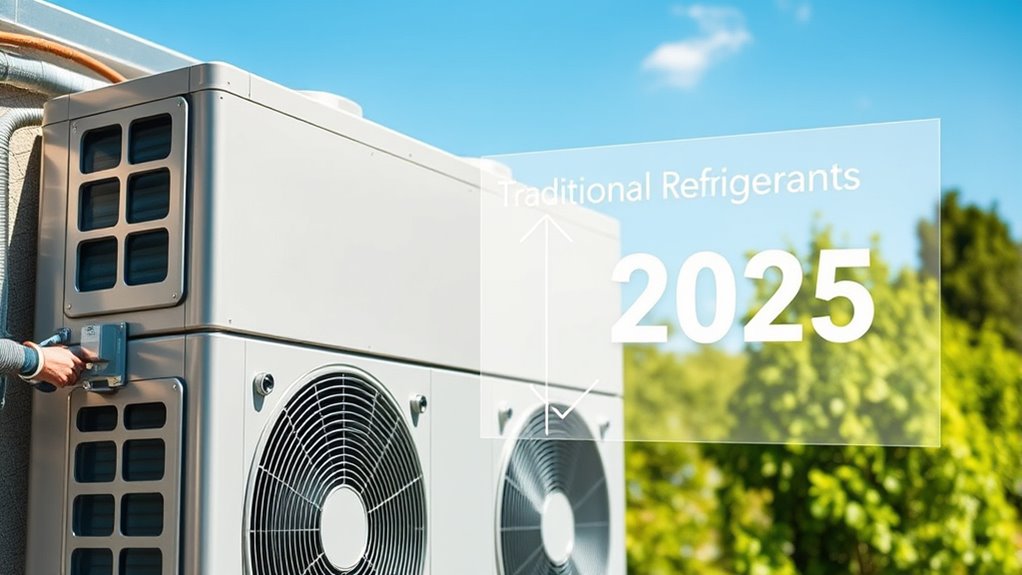

The 2025 refrigerant *shift* will impact your heat pump systems by phasing out high-GWP refrigerants, pushing you to adopt more eco-friendly alternatives like HFOs or natural gases. This *changeover* aims to reduce environmental harm while maintaining or improving efficiency. Manufacturers are developing new models optimized for these refrigerants, offering better performance. Staying informed will help you understand how these *alterations* affect your system’s operation and long-term savings, so keep exploring what’s coming next.
Key Takeaways
- The 2025 regulation mandates a switch to eco-friendly refrigerants, impacting heat pump design and compliance requirements.
- New refrigerants with lower GWP improve heat pump efficiency and reduce environmental impact.
- Transition may require system modifications and compatible components for optimal performance.
- Manufacturers are developing heat pumps specifically optimized for environmentally friendly refrigerants.
- Proper installation and maintenance are essential to ensure efficiency and longevity during the refrigerant transition.
As new regulations around refrigerants take effect in 2025, the shift to environmentally friendly alternatives becomes essential for heat pump users and manufacturers alike. This transition isn’t just about compliance; it’s about embracing eco friendly refrigerants that help reduce the environmental impact of heating and cooling systems. You’ll need to understand how these changes influence your heat pump’s efficiency, as these refrigerants are designed to perform at their best while minimizing harm to the ozone layer and reducing greenhouse gas emissions. The goal is to maintain, if not improve, the performance and reliability of your heat pump while aligning with new environmental standards.
Eco friendly refrigerants, such as hydrofluoroolefins (HFOs), natural substances like propane or ammonia, and other low-GWP (global warming potential) options, are gaining prominence. These alternatives are less damaging to the planet and are increasingly being integrated into modern heat pump systems. As a user, it’s vital to recognize that switching to these refrigerants doesn’t mean sacrificing efficiency. In fact, many eco friendly refrigerants are engineered to enhance heat pump performance by allowing systems to operate at their best with less energy consumption. This means you could see lower utility bills and a smaller carbon footprint, all without compromising comfort.
Eco-friendly refrigerants like HFOs and natural gases boost efficiency and reduce environmental impact without sacrificing comfort.
However, not all refrigerants are created equal, and the changeover may introduce some challenges. You might notice differences in system design or maintenance requirements, as newer refrigerants often demand different materials or components. It’s important to work with qualified technicians who understand the properties of eco friendly refrigerants to guarantee your heat pump is properly configured. Proper installation and regular maintenance will help maximize heat pump efficiency, regardless of the refrigerant used. Additionally, manufacturers are continuously improving the compatibility of their systems with these environmentally friendly options, so staying updated on the latest advancements can give you a significant advantage. Understanding refrigerant properties is crucial for ensuring your system functions optimally with the new options.
The shift also opens opportunities for innovation in heat pump technology. Manufacturers are developing models specifically optimized for eco friendly refrigerants, which often feature improved heat transfer capabilities and reduced energy consumption. As a consumer, this means you can expect more efficient, environmentally conscious options on the market. While the move to eco friendly refrigerants might involve a learning curve, the long-term benefits—lower environmental impact, better system performance, and potential cost savings—make it well worth your attention. You’ll play a part in supporting sustainable practices while enjoying reliable, efficient heating and cooling for years to come.

5000 Sq.Ft Energy Star Most Efficient 2024 Dehumidifier,DECIUU Max 100 Pint Dehumidifier for Basement with Drain Hose,Intelligent Humidity Control for Home Bathroom Garage Bedroom
Most Efficient 2024 Energy Star Dehumidifier: Tired of battling stubborn humidity? Our ENERGY STAR certified dehumidifier removes 70...
As an affiliate, we earn on qualifying purchases.
Frequently Asked Questions
How Will Refrigerant Transition Affect Heat Pump Costs Long-Term?
The refrigerant shift will likely raise heat pump costs long-term due to fluctuating refrigerant pricing and supply chain disruptions. You might see higher upfront prices as manufacturers switch to newer, more eco-friendly refrigerants. However, as supply chains stabilize and demand adjusts, costs should gradually decrease. Staying informed about refrigerant developments can help you make smarter purchasing decisions and potentially benefit from early adoption incentives.
What Training Will Technicians Need for New Refrigerants?
You’ll need refrigerant certification to handle new refrigerants safely and legally. Training programs will teach you about proper handling, system compatibility, and environmental regulations, ensuring technician safety. Staying updated on refrigerant properties and safety protocols is vital as regulations evolve. By completing certification and ongoing education, you can confidently work with new refrigerants, protecting yourself and ensuring optimal system performance.
Are There Any Environmental Risks With Alternative Refrigerants?
Think of alternative refrigerants as new ships crossing uncharted waters. While they aim to be environmentally safe, you must consider their chemical stability to prevent accidents. Some refrigerants pose risks like leakage or ozone depletion if not handled properly. Staying vigilant about environmental safety guarantees these new “ships” reach their destination without harming the ecosystem, emphasizing the importance of understanding their chemical properties and proper handling protocols.
How Quickly Will Older Heat Pumps Become Obsolete?
You’ll find that many legacy units will become obsolete within a few years as the refrigerant phaseout progresses. Manufacturers are phasing out older heat pumps that use high-GWP refrigerants, so newer models will soon replace them. Expect updates to happen gradually, but by 2025, most older heat pumps relying on outdated refrigerants will likely be retired or require retrofitting, encouraging you to upgrade for efficiency and compliance.
Will Refrigerant Changes Impact Heat Pump Performance?
Refrigerant changes can impact heat pump performance, but if designed with refrigerant efficiency in mind, you’ll notice minimal effects. Newer refrigerants often improve energy efficiency and reduce environmental impact, which can enhance heat pump durability over time. While some adjustments might be needed, your heat pump’s overall performance remains reliable, especially if it’s built to adapt to these refrigerant updates. Stay informed for superior operation and longevity.

ALORAIR Whole House Dehumidifier, 90 PPD Commercial Grade Whole Home Dehumidifiers for Garages, Water Damage Restoration, 2300 Sq.Ft dehumidifiers for Crawl Space
Energy Efficient Whole House Dehumidifier: 90 pints per day at AHAM condition, 70 Pint at DOE, up to...
As an affiliate, we earn on qualifying purchases.
Conclusion
As the 2025 refrigerant transition approaches, you’re standing at the edge of a new era for heat pumps. This shift is like charting uncharted waters, demanding adaptation but promising cleaner, more sustainable heating solutions. Embracing these changes now, you become a pioneer steering toward a greener future. With innovation guiding your way, you’ll find that this transition isn’t just a challenge—it’s an open door to a brighter, more sustainable world.

30 Pint Dehumidifier for Basement, 2500 Sq. Ft Dehumidifiers for Home with Drain Hose, 3 Modes, Smart Humidity Control, 24H Timer, 0.52 Gal Water Tank, for Whole House, Bedroom, Bathroom, Garage, Rv
Powerful 30-Pint Moisture Removal for Spaces up to 2500 Sq. Ft: High humidity can make rooms feel damp,...
As an affiliate, we earn on qualifying purchases.

Waykar 158 Pints Crawl Space Dehumidifier with Remote Control and Pump, Dual Duct HVAC Commercial Whole-House Dehumidifier for Basement, Industry Water Damage Unit - 5-Year Quality Coverage
【158 Pint Crawl Space Dehumidifier】The Waykar whole-house dehumidifier extracts up to 158 pints of water per day (under...
As an affiliate, we earn on qualifying purchases.